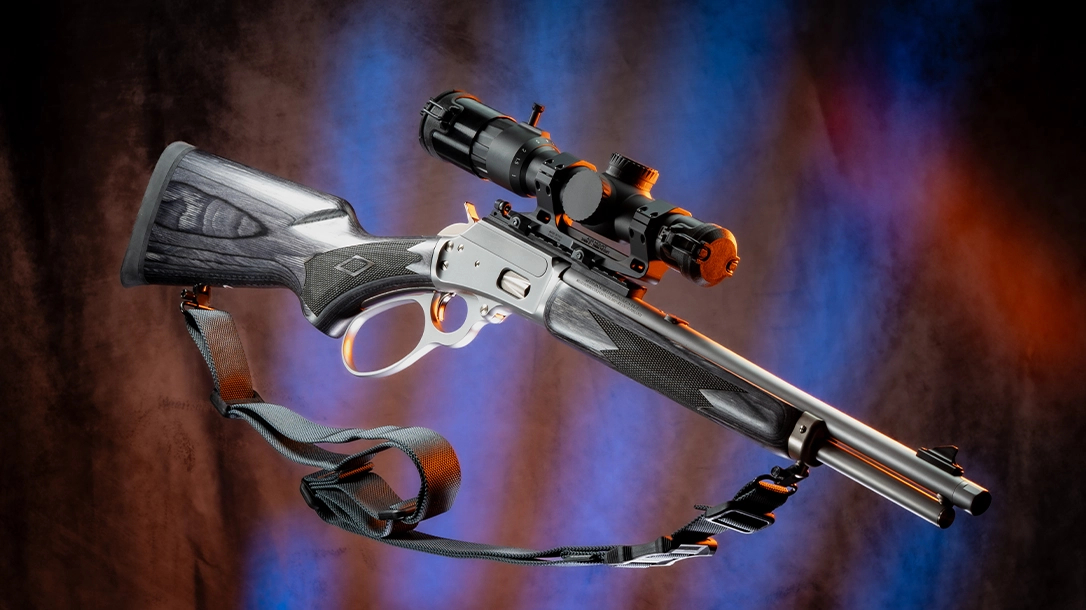
Over the past several years, the 10mm Auto has experienced a noticeable resurgence. Once viewed as a niche or overly powerful option for most shooters, it has steadily carved out a place as one of the most versatile handgun cartridges available. For those who spend time thinking about ballistic performance, it sits in a compelling space. It offers more energy than .357 magnum while stopping short of the full power of .44 magnum revolver cartridges. It is a cartridge that rewards both factory shooters and handloaders, thanks to its generous case capacity and ability to support a wide range of bullet weights and velocities.
Leading Up
That versatility is part of what makes its expansion into other platforms feel inevitable. Historically, the 10mm has lived in autoloading pistols and, to a lesser extent, revolvers. The idea of bringing it into a lever gun, a platform defined by its own long-standing traditions, is both surprising and entirely logical. It represents a convergence of modern cartridge performance with classic rifle design. The real question is not whether it belongs there. The question is how well it performs when given a longer barrel and a more stable shooting platform.
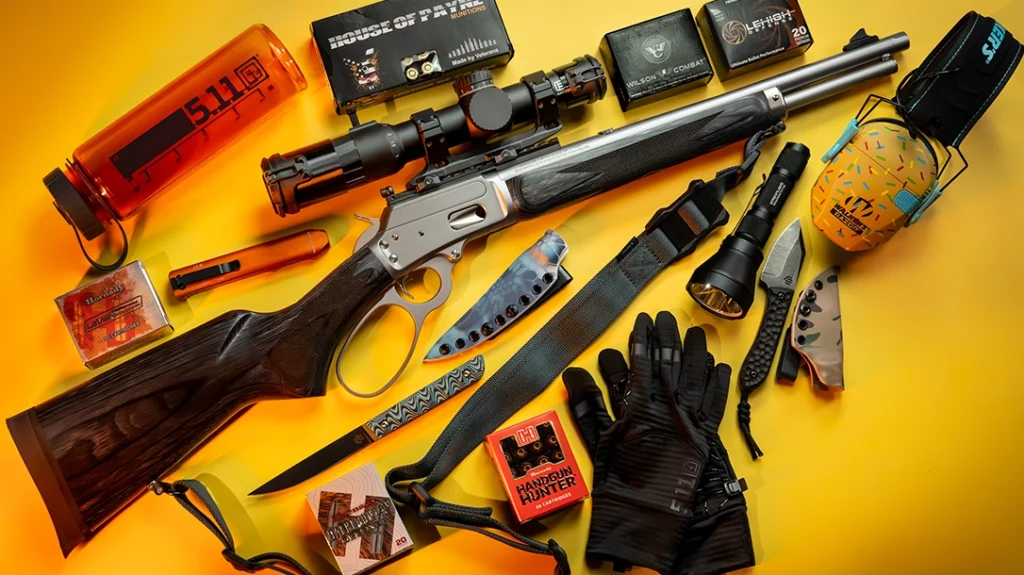
The development of the 10mm itself reflects this blend of innovation and real-world application. Introduced in the early 1980s through the efforts of Jeff Cooper and Dornaus & Dixon, the cartridge was designed to deliver magnum-level performance in a semi-automatic handgun. That vision came to life in the Bren Ten, a pistol that pushed the limits of what shooters expected from an autoloader. The cartridge gained national attention following the 1986 FBI Miami shootout, where law enforcement began reevaluating handgun effectiveness. While the FBI ultimately moved away from full-power 10mm loads in favor of more manageable alternatives, the cartridge never lost its appeal among shooters who understood its full potential. Today, that potential is being explored in new ways.
Marlin and the Trapper Line
Marlin’s history stretches back to 1870, and throughout that time the company has built a reputation on durable, practical firearms designed for real use. Lever guns, in particular, have always occupied a special place in that lineage. They are rifles built for movement, for close-range encounters, and for environments where maneuverability matters just as much as power.
Advertisement — Continue Reading Below
The Marlin Trapper series represents a modern continuation of that philosophy. Introduced in its current form under Ruger’s stewardship in 2022, the Trapper is defined by its compact footprint and field-oriented design. With shorter barrels, durable finishes, and practical features like threaded muzzles and improved sights, it brings the classic lever-action platform into a more contemporary context without losing its identity.
The 10mm variant is perhaps the most interesting expression of that idea. Built on the Model 1894 action, it marks the first time a factory lever gun has been chambered in 10mm Auto. It features a 16.1-inch cold hammer-forged barrel with a 1:16 right-hand twist, a 10-round tubular magazine, and a lightweight 6.3-pound base configuration. From the outset, it is clear what this rifle is trying to be. It is not chasing long-range precision. It is focused on portability, compatibility, and real-world effectiveness.
Building a System
Once I got the rifle in hand, the goal was to build it into something that reflected how I would actually use it.
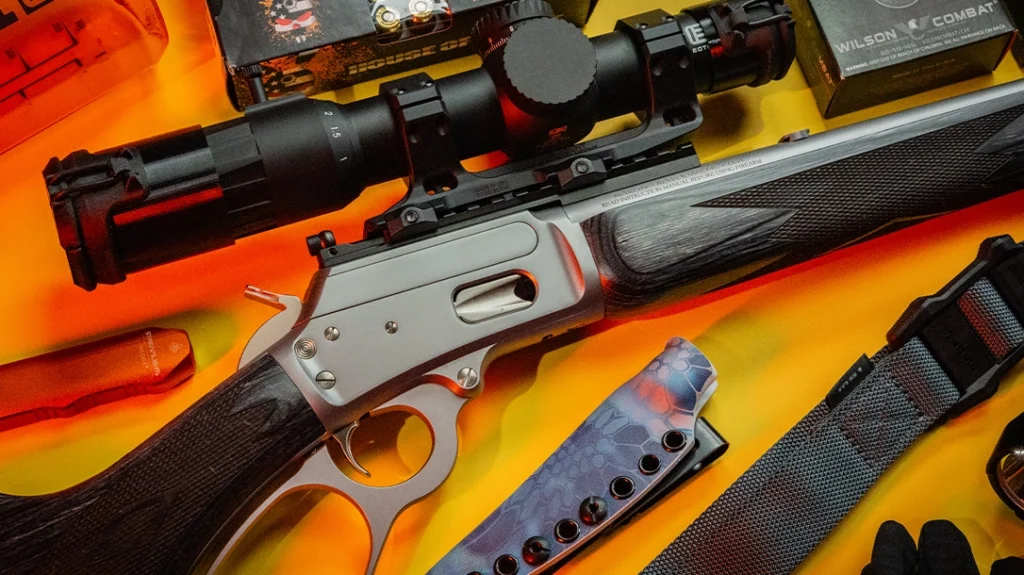
The first addition was a ghost ring Picatinny rail adapter from Skinner Sights. Their work continues to impress, and this piece provided a solid interface for mounting optics without sacrificing the rifle’s overall character. From there, I mounted the EOTech Vudu 1–10×28 FFP LPVO.
This optic offers a wide range of capability. At 1x, it behaves almost like a red dot, allowing for fast target acquisition in close quarters. At higher magnification, it provides the precision needed to stretch the rifle’s effective range. The first focal plane reticle scales with magnification, which makes holdovers consistent regardless of zoom level. It is a system that complements the rifle’s versatility rather than limiting it.
Advertisement — Continue Reading Below
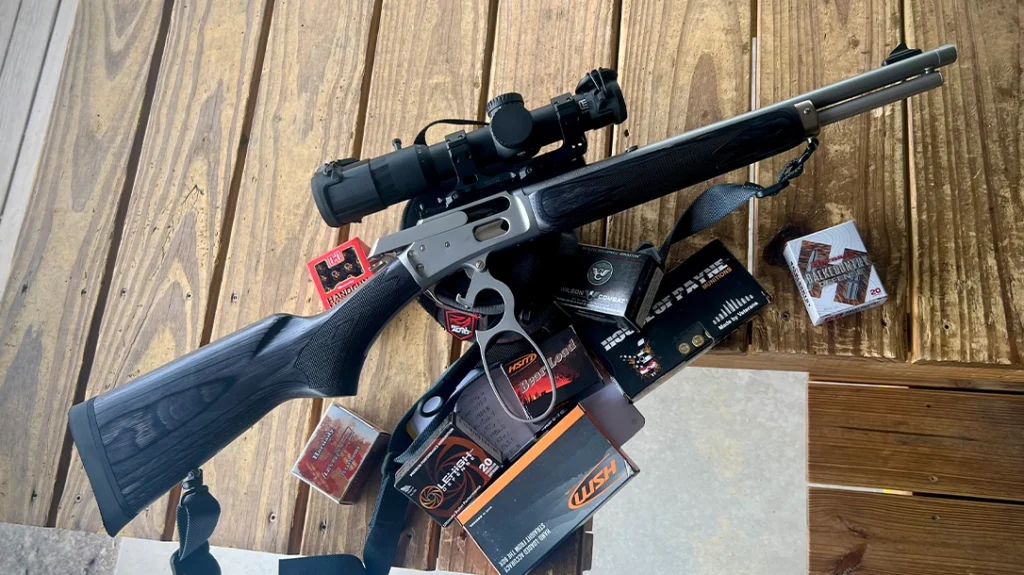
To support the optic, I used a Reptilia AUS mount. The machining quality and attention to detail are immediately apparent. Torque values are clearly marked, and the mount provides a solid, repeatable interface. At 39mm height, it offers a comfortable cheek weld and proper eye alignment. It is one of those components that simply works.
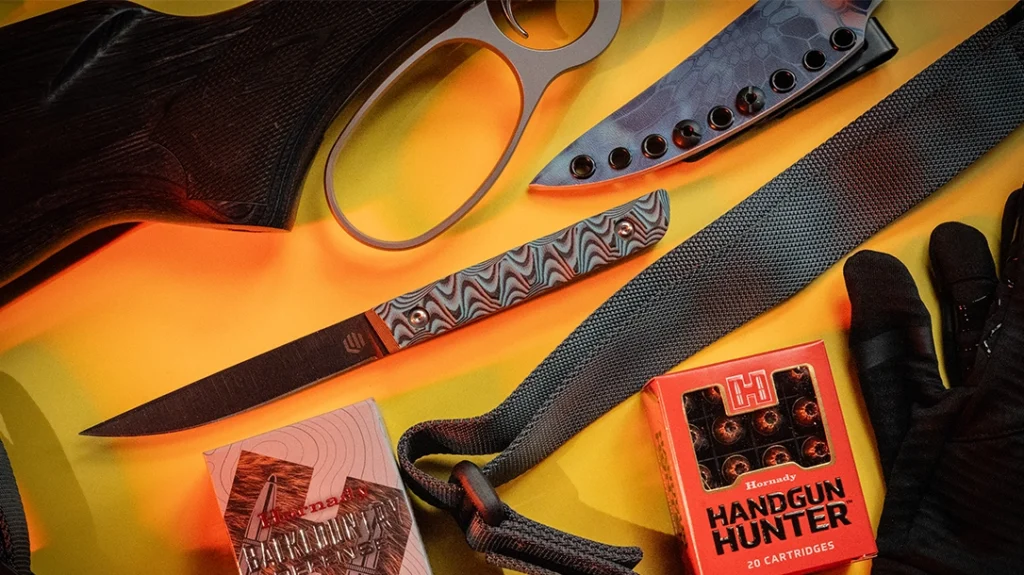
Additional details rounded out the setup. Scope Bumper lens covers provided protection without adding unnecessary bulk. A Magpul sling attached to the factory-installed swivel studs completed the package. It is worth noting that Marlin includes those studs from the factory, which is not always a given.
In this configuration, the rifle weighs in at 8 pounds, 6 ounces. It is not ultralight, but the weight contributes to stability and overall shootability.
Fit, Finish, and First Impressions
Out of the box, the rifle presents extremely well. The laminate stock features sharp, clean checkering, and the overall fit and finish reflect a high level of attention to detail. The stainless receiver carries a blasted finish that feels both durable and refined, while smaller components show a slightly warmer brushed look.
Advertisement — Continue Reading Below
The threaded muzzle is cleanly executed, complete with a well-fitted thread protector and gasket. This opens the door for suppressor use, which makes a great deal of sense given the cartridge and intended role of the rifle.
The trigger is another highlight. Breaking cleanly at 3 pounds, 2.8 ounces, it offers a crisp, predictable release that supports accurate shooting without requiring additional work.
On the Range With The Marlin 10mm Trapper
The first range session revealed an issue. The ejector had failed and cumbled sometime between arrival and initial use. While this is never ideal, it is part of working with mechanical systems. Marlin’s response was prompt. After identifying that a replacement part did not resolve the issue, they requested the rifle back for inspection.
The repair process was quick, and the rifle returned in the same condition it was sent. With a new ejector properly fitted, the rifle functioned flawlessly in subsequent testing. It is worth noting that while issues can occur, how a manufacturer responds matters just as much. In this case, Marlin handled it well.
Advertisement — Continue Reading Below
Back on the range, the rifle performed exactly as expected. Zeroing was straightforward, and once dialed in, it demonstrated consistent accuracy. At 125 yards, hits on steel were cake. Extending out to 300 yards, I was able to consistently connect with an 8-inch plate. That distance represents the complete performance envelope of what this cartridge is realistically suited for, but the capability is there.
Velocities and Performance
Velocity testing was a major focus. Using a Garmin Xero chronograph, I recorded five-shot averages across a range of loads:
- HSM 200g Bear Load – 1246.6 fps
- HSM 180g JHP UHP – 1173.4 fps
- HOP 180g TMJ – 1424.8 fps
- Wilson Combat 140g TAC XP – 1516.4 fps
- Wilson Combat 180g XTP – 1376.1 fps
- Wilson Combat 155g XTP – 1482.0 fps
- Lehigh Defense 150g XD – 1334.1 fps
- Lehigh Defense 190g WFN – 1063.1 fps
- Lehigh Defense 115g XD – 2025.8 fps
- Hornady LeverEvolution 150g FTX – 1318.1 fps
- Hornady 200g DGH – 1132.5 fps
- Hornady 135g Monoflex – 1335.2 fps
The results highlight something important. Longer barrels do not always guarantee higher velocities across every load. Some rounds gained significant speed compared to pistol-length barrels, while others showed minimal change or even slight decreases. The HOP 180g TMJ, for example, gained roughly 200 feet per second, while heavier loads showed less dramatic changes.
This reinforces the importance of understanding your specific ammunition. Chronographing your loads is not optional if you want to truly understand point of impact and terminal performance.
One issue did arise during testing. I experienced multiple instances of case separation with Hornady brass. This has been reported back to the manufacturer, and it appears likely to be related to a specific lot rather than a broader issue. Transparency here matters, and it is something to keep an eye on. Though I suspect this was isolated.
Advertisement — Continue Reading Below
The 10mm Ecosystem
What makes this rifle particularly compelling is how it fits into a broader system.
For many shooters, the 10mm is already a cartridge they carry on their hip. Pairing a sidearm with a rifle that shares the same ammunition creates a level of logistical simplicity that is hard to ignore. It reduces the need to carry multiple calibers and allows for a more streamlined approach to both training and field use.
The rifle also benefits from the cartridge’s performance envelope. With increased velocity from the longer barrel and improved control from the platform itself, the 10mm begins to push into territory that overlaps with traditional revolver cartridges. It does not replace them, but it offers a compelling alternative.
Final Shots
The Marlin 10mm Trapper represents a unique intersection of tradition and modern thinking. It takes a platform with deep historical roots and pairs it with a cartridge that has found new life in recent years.
Advertisement — Continue Reading Below
There are areas for future improvement. A lighter configuration would be welcome, as laminate stocks and stainless components contribute to overall weight. That said, the current setup offers stability and durability that are difficult to overlook.
What matters most is that Marlin is listening. This rifle exists because shooters asked for it, and it has been executed with a level of quality that supports real use.
For those already invested in the 10mm ecosystem, it is an easy recommendation. For those looking to explore a versatile, compact rifle that can handle a wide range of roles, it is equally compelling.
The Marlin 10mm Trapper is one of those rifles that feels like it was built for people who spend time thinking about this stuff.
WHY OUR ARTICLES/REVIEWS DO NOT HAVE AFFILIATE LINKS
Affiliate links create a financial incentive for writers to promote certain products, which can lead to biased recommendations. This blurs the line between genuine advice and marketing, reducing trust in the content.
Advertisement — Continue Reading Below