The cycle repeats itself every year. Winter’s snow and bitter temperatures eventually give way to spring rain, longer days, and the first signs of green returning to the landscape. Then, almost overnight, the clouds part, the sun finally feels warm again, and summer arrives. If you’re from the Midwest or Northeast, you know exactly what I’m talking about. After months of gray skies and cold weather, that first stretch of sunshine can feel like a reset button.
Summer quickly fills with vacations, cookouts, fishing trips, and days spent outdoors. But somewhere between all the fun, a thought creeps into the back of your mind: deer season isn’t that far away. Suddenly, opening day feels closer than you realized. So you dust off your bow, grab a target and a few arrows, and head outside for a practice session. That’s when you notice the warning signs. The string looks worn. The draw weight feels heavier than you remember. Your peep isn’t lining up quite right, and nothing seems to feel the way it did last season.
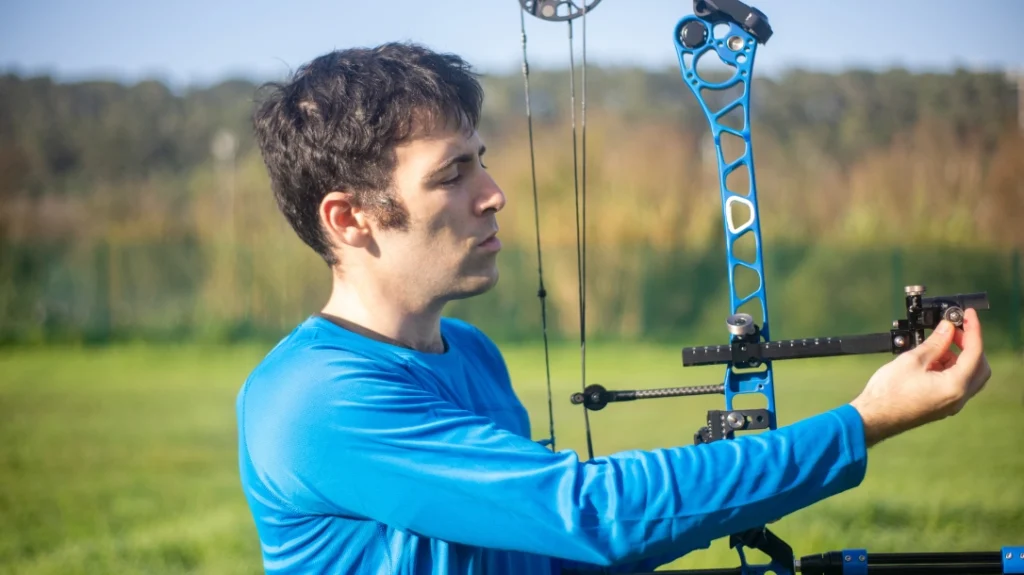
Fortunately, you’ve discovered the problem early. Finding those issues now gives you plenty of time to get everything dialed in before the first deer steps into range.
So, what do you do? You head to your local archery pro shop for a preseason tune-up.
Advertisement — Continue Reading Below
Why Your Bow Needs a Preseason Checkup
Before you freak out, compound bows require a bit of tuning. Just like your car, they need an annual oil change and tire rotation to get things right. What you can’t do is wait too long. This will lead to something far more catastrophic, including cracked limbs and broken strings.
To help with this article, I’ve consulted my friend Chad, a former colleague and store manager at a large dealer in Ohio. This is what he lists as the things he checks when someone brings in a bow before the season:
- Draw Weight & Length
- Strings & Cables
- Cam Timing
- Peep and D-Loop
- Everything Else
Setting Up Draw Length & Weight
None of us are as young as we used to be, and maybe that “New Year, New Me” gym membership was a waste. That’s okay. Fortunately, modern compound bows have a tunable draw-weight range. While you can likely do this with a simple Allen key, a pro shop will have a proper scale and can give you an exact number. If you are already there, might as well have it done.
This is also a good time to confirm your draw length. Maybe it was never set properly to begin with, or it was just guessed when you went into a big-box store. Not a problem. An archery tech can take your measurements and confirm your draw length. Depending on your bow model, they may need to swap out or order new mods to adjust the length.
New Strings & Cables
This is usually where most people run into problems—they don’t properly care for their strings and cables. This is as simple as applying string wax after use and definitely before putting them away for the season. And like anything, it’s better to keep a bow in a well-dehumidified environment. That will help preserve everything.
Advertisement — Continue Reading Below
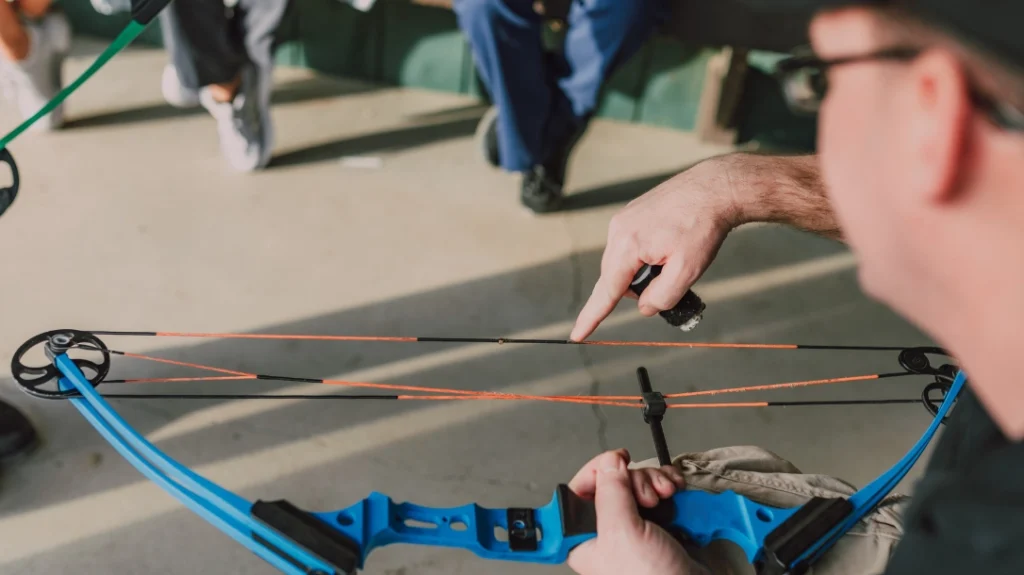
While you might be able to order a replacement set of strings and cables, installing them is another matter. It requires time and know-how. A pro shop will have the proper vise and the experience to make the process painless. They can also reinstall a string-drive drop rest (if that’s what you use), tie in a D-loop, and add a peep sight.
Cam Timing
Over time, bows can go out of time. This can be due to string stretching, poor storage, or simply being careless with the bow. If you are unsure what timing is, think of it as the synchronization of the cams as they rotate. They need to be timed perfectly, but not over-rotate.
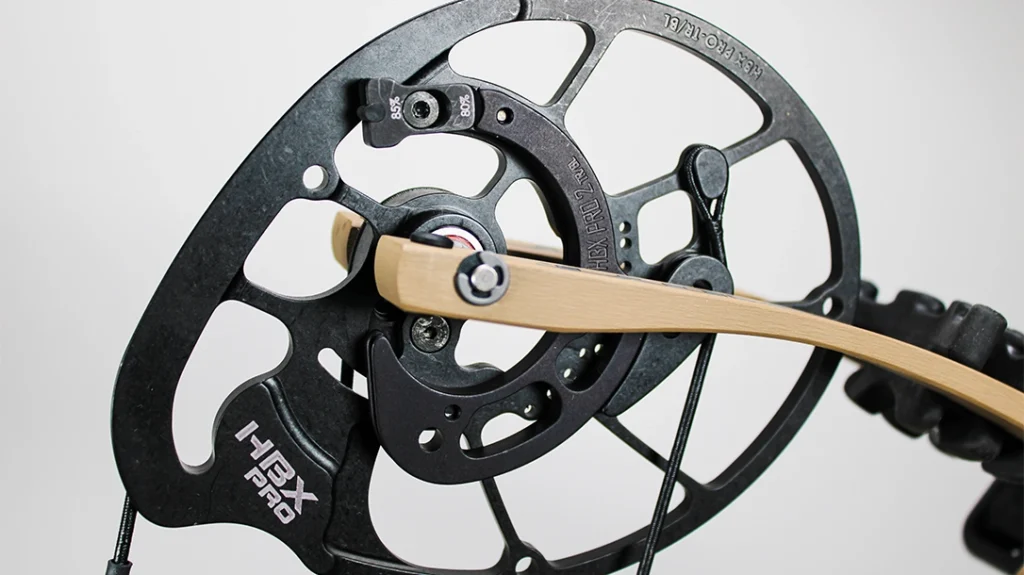
A pro shop can determine the timing on a drawing board. From there, they can address the issue. They will also check that your cam and cam pins aren’t bent, which often happens when being careless.
Advertisement — Continue Reading Below
Adjusting Peep & D-Loop
These items are commonly worn through and can be easily replaced (cheaply, I may add). You may be able to look up these processes and learn to do them yourself; that’s cool! But if that doesn’t interest you, any archery tech worth his salt can do this with their eyes closed (literally; I’ve seen one do it).
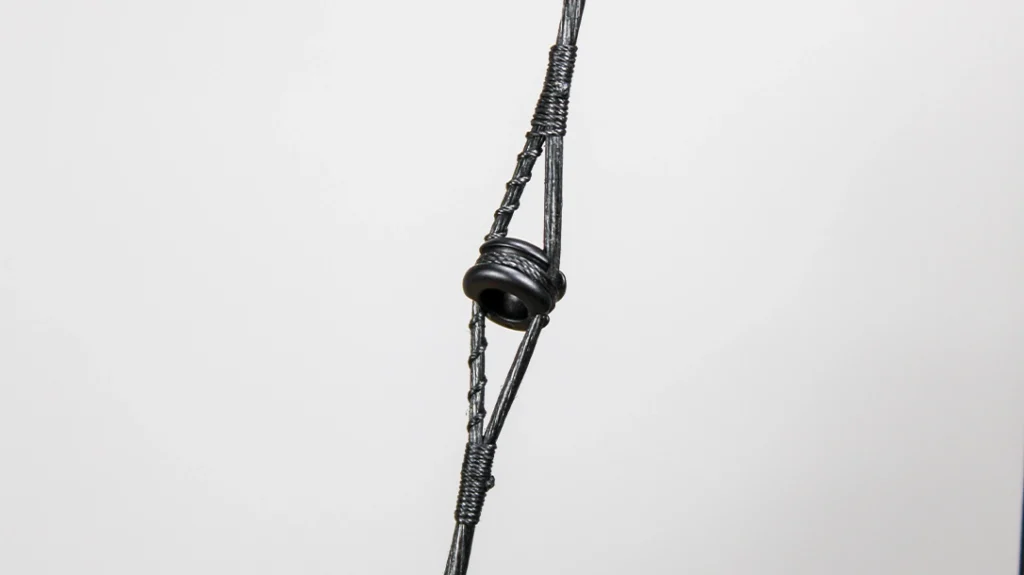
Over time, the peep and D-loop can turn. Sometimes this can be easily adjusted; other times, they may need to be replaced. Personally, I’ll have the D-loop replaced yearly. It’s really based on usage and storage.
Check Everything
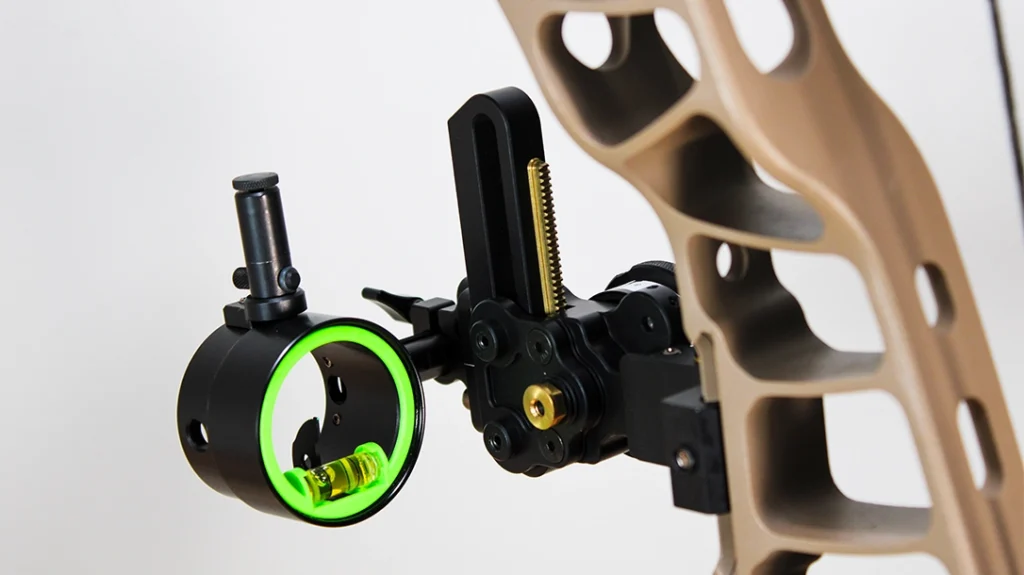
Since your bow is at the pro shop, you might as well have the tech give it a once-over. They will double-check the limbs for cracks or delamination, make sure everything is torqued properly, and ensure none of the attachments are coming loose. I also go over the release and make sure all the screws are torqued. That’s not something you want to fail mid-draw.
Advertisement — Continue Reading Below
Sighting It In
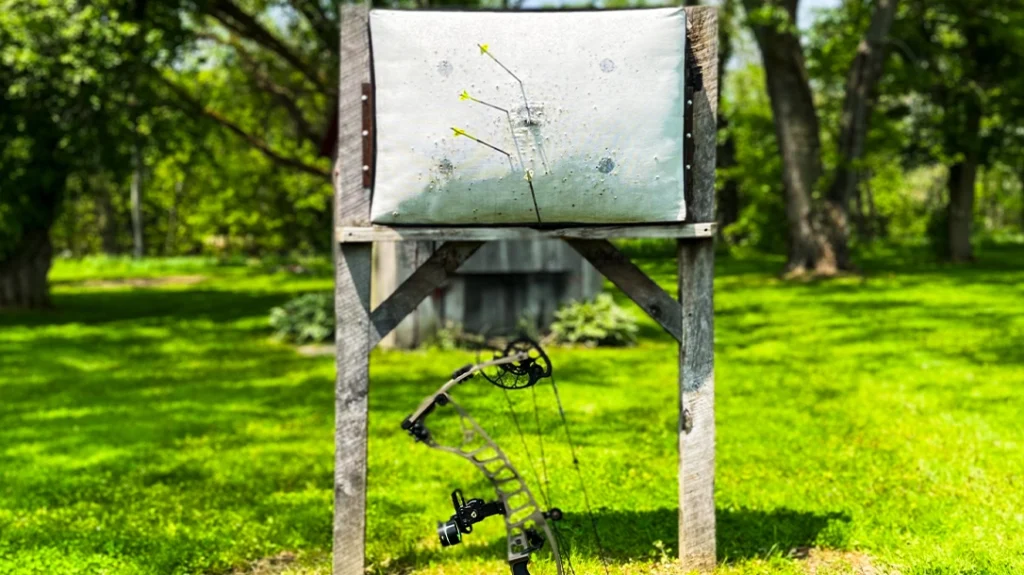
Once you have had everything looked over, the bow properly tuned, and everything back in working order, the next step (just as with a rifle) is to sight in. The sights you are using may be close, but they still need to be confirmed or adjusted, especially if you changed the draw weight or swapped strings.
Get Ahead of Opening Day
Getting your bow ready for the season isn’t complicated, but it does take a little attention before opening day sneaks up on you. From checking draw weight and replacing worn strings to correcting cam timing and ensuring your peep and D-loop are still in good shape, a preseason tune-up can prevent bigger problems later. Once everything is dialed back in and your sights are confirmed, you’re good to go. Remember, don’t wait until the week before deer season to realize something’s wrong. A little maintenance now means more confidence when the moment finally comes.
WHY OUR ARTICLES/REVIEWS DO NOT HAVE AFFILIATE LINKS
Affiliate links create a financial incentive for writers to promote certain products, which can lead to biased recommendations. This blurs the line between genuine advice and marketing, reducing trust in the content.
Advertisement — Continue Reading Below