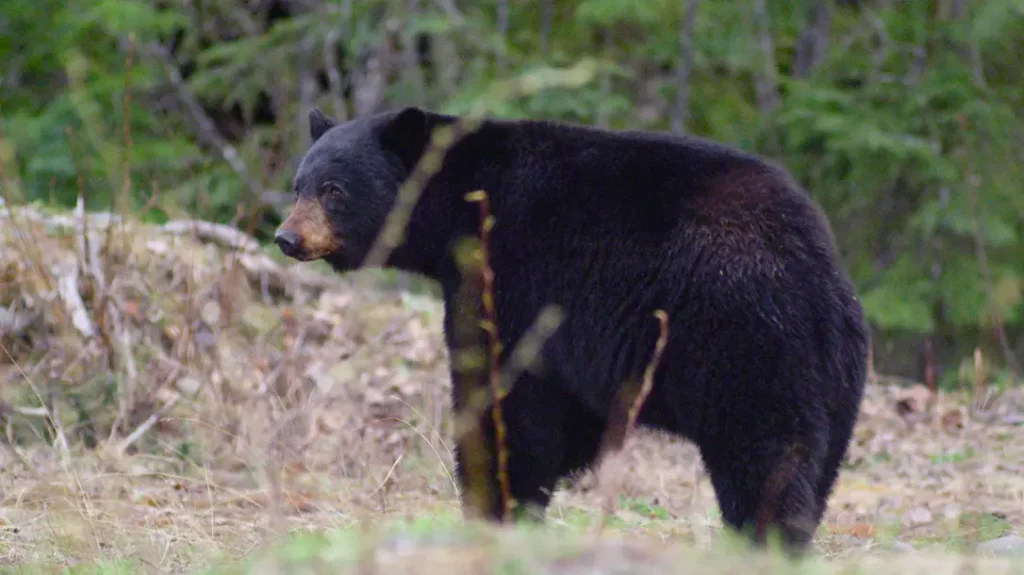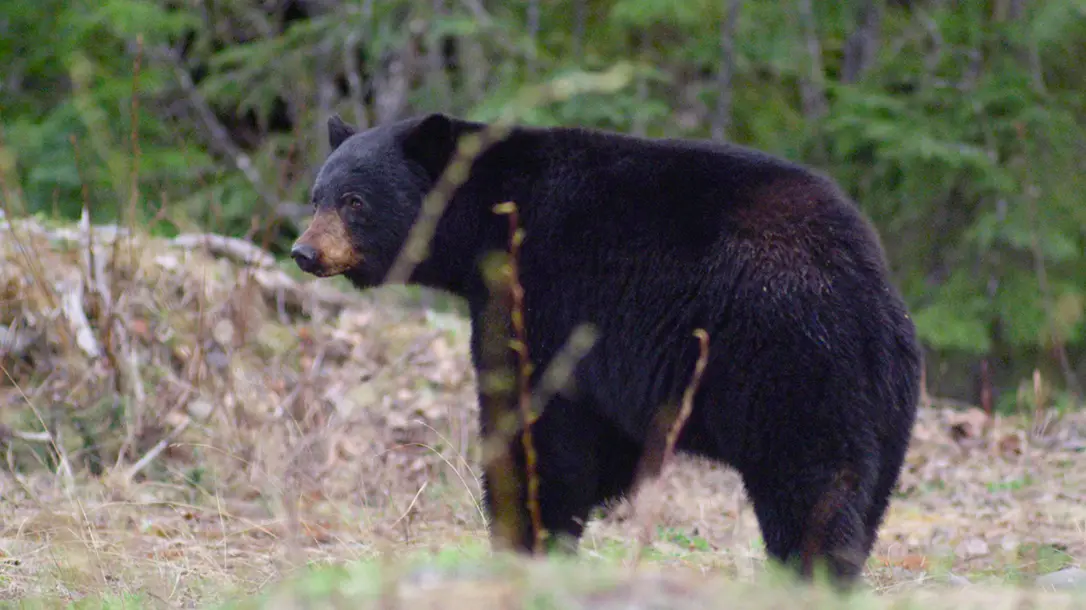
While I have had the pleasure of hunting a wide variety of animals, nothing compares with the hunt for spring black bear. These large apex predators roam the forests as kings and queens of their domain. And though by their initial appearance they may seem slow and cumbersome, they are quite the opposite. Black bears are agile, incredibly fast, and cunning beyond what their friendly look may suggest. Recently, I had the opportunity to travel to the Poplar Forest in the northernmost part of Alberta, Canada. This would be in pursuit of spring black bears.
Spring Black Bear Hunt – Northern Alberta, Canada
I have found this part of the country to be almost mesmerizing in beauty. The vast forests and open skies are unlike anything I’ve experienced elsewhere in the world. It is also home to one of the most concentrated and largest bear populations in the world. The last estimate put the number of bears in this province at over 40,000. My goal was to patiently wait and hunt for a large, older boar. This would prove challenging and exciting at the same time.
This would be my second trip to this region, and I was fortunate to find space with the same guide that served me so well last year. WL Guide Services is very good at what they do. They know these forests like the back of their hand, and I knew I could trust them to point me in the right direction.
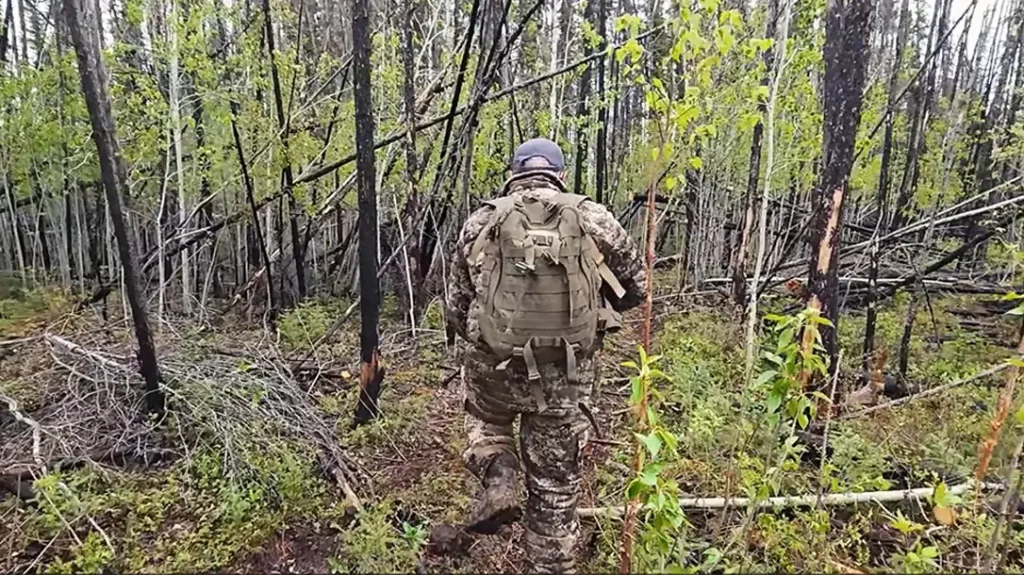
Dense Forests – Close Shots
Because of the forest’s density, this would be a baited hunt. Given the forest’s terrain and our inability to see beyond 25 to 50 yards, a spot-and-stalk hunt is almost impossible. An additional challenge in these close quarters is the presence of a large number of bears. It is significantly safer for hunters to work from stands than to roam the thick forest. While hunting other animals from stands is about getting the best vantage point, in bear hunting, it’s about protecting your safety as well.
Advertisement — Continue Reading Below
The items you choose to carry on a bear hunt in forests like this are quite a bit different than what we experience on a spot and stalk of other animals. My choice of rifle for this hunt would be the Springfield Waypoint 2020 chambered in 300 PRC. Optic-wise, I would be using the EOTECH Vudu LPVO. Now, to some, mounting an LPVO on a rifle designed to shoot out to 1800 yards may seem a bit ridiculous. However, as I mentioned, our longest shots are generally 25 to 50 yards, in many cases, significantly closer than that.
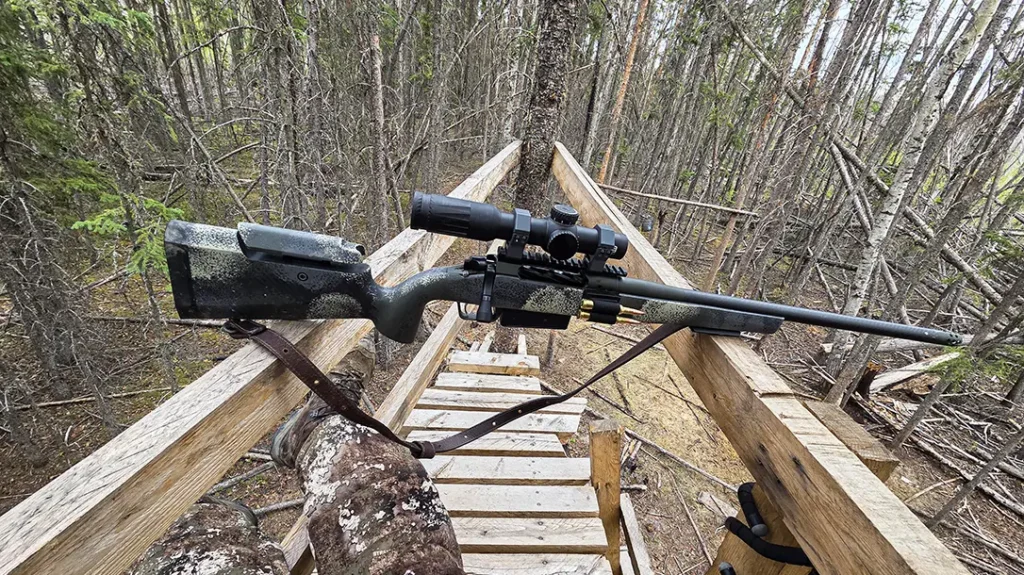
Shot Placement
One feature that is a must on any optic you decide to bring is an illuminated reticle. In many cases, our bear may come into position as the light begins to dim. Bringing your scope up and trying to lay a black reticle onto a black bear will break your heart. The reticle will simply disappear. This also helps you ensure perfect placement of your shot. The anatomy of a bear is quite different from that of other game animals we hunt across North America. Their lungs and hearts tend to be lower and more forward in their chest than in those of a deer or elk. With that said, shot placement is once again critical. You do not want to be tracking a wounded bear.
A couple of the factors that make bear hunting difficult are judging their size and sex. As a general rule, we try to hunt large older boars. To the untrained eye, a sow and a boar can look a great deal alike. Bears in this part of Canada tend to be very large, so be patient and wait for something worthy of taking.
Advertisement — Continue Reading Below
Waiting
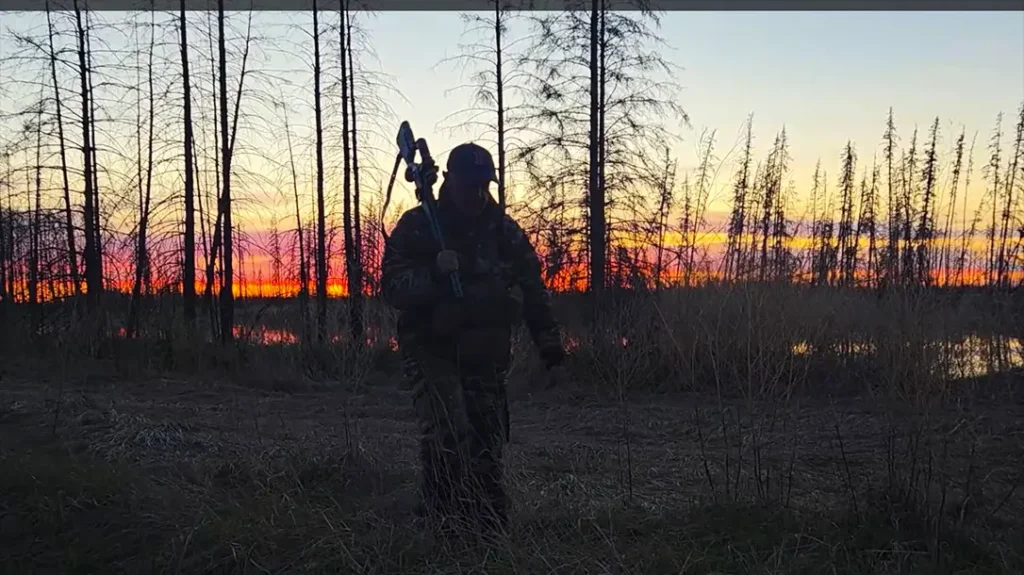
I had a couple of sits where I saw a large number of bears, yet not one that I would consider a true shooter. Each time, I would quietly pack my gear and slip back out to get ready for the next day. One sit, however, turned out to be quite different. Within about 10 minutes of arriving and setting up, a large boar began to make its way into the area. I watched him intently for quite some time, and during that time, a large sow and her cubs began moving around the perimeter. I took my time sizing the bear and making sure it was an older boar.
When I was absolutely certain that this was a bear that I would take, I took my time and quietly raised my rifle. It was around 10 p.m., so light was beginning to fade, and the illuminated reticle was worth its weight in gold. The bear wandered the area quite a bit, but at one point paused and gave me a good broadside target. I smoothly pressed the trigger and fired a solid hit. The Black Hills 300 PRC 212gr ELD-X round is impressive. I obviously had a through-and-through shot, and there was immediate blood on the ground. While not being arrogant, I will say I placed the shot extremely well, and the bear ran only about 15 feet before it expired just behind my stand.
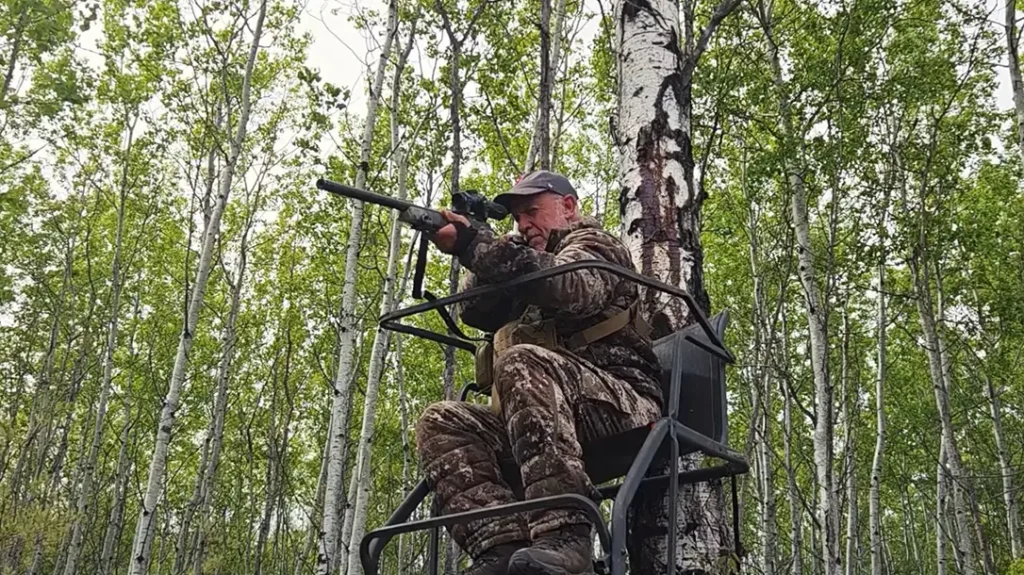
Adrenaline Dump
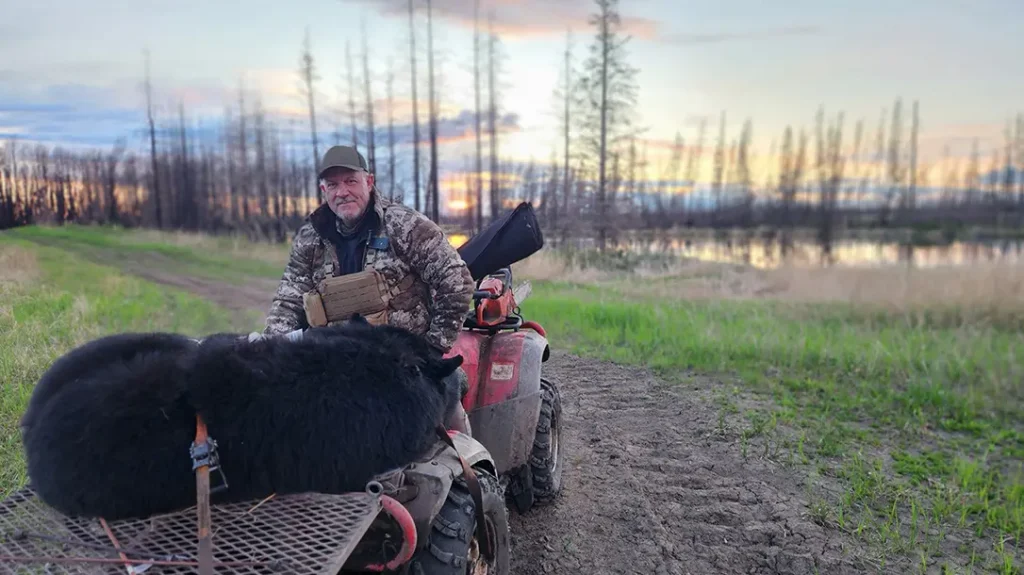
The initial calm that I forced upon myself in order to break a good shot quickly faded away as the adrenaline dump hit. I found my hands slightly shaking and myself out of breath. With another large bear in close proximity, I contacted the guide and asked for assistance in recovering the bear. He arrived within the hour, and we made quick work of loading the boar onto the back of the quad and making our exit.
While not a true jumbo bear, it was still a large six-foot-five boar with a well-worn coat. But in the end, I’m not a true animal trophy hunter. I also find that the majority of hunters that I come across aren’t out in the field simply to gather horns or hides. The trophy I took home from this hunt was the entire experience. Spending time in camp with good people, breaking bread, and making friends. Bear camp in northern Alberta is unlike any hunting camp I’ve ever experienced. Perhaps it’s a mix of beauty and the opportunity to hunt a savvy, cunning apex predator on its home turf.
Advertisement — Continue Reading Below
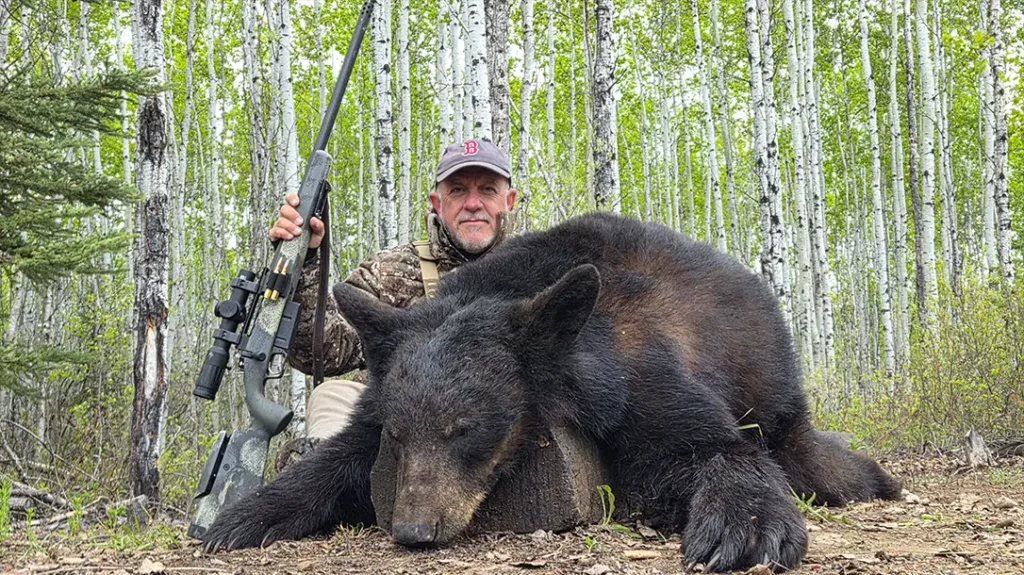
Spring Black Bear Hunt
In the end, it is something you must experience yourself to truly understand. If you are like me and hunt for the experience and are dedicated to conservation and wildlife management, then a northern Alberta spring black bear hunt needs to be on your bucket list.
Chapter I
If you enjoyed this story, I encourage you to see Into the Black -Chapter I from this enjoyable adventure as well.
WHY OUR ARTICLES/REVIEWS DO NOT HAVE AFFILIATE LINKS
Affiliate links create a financial incentive for writers to promote certain products, which can lead to biased recommendations. This blurs the line between genuine advice and marketing, reducing trust in the content.
Advertisement — Continue Reading Below