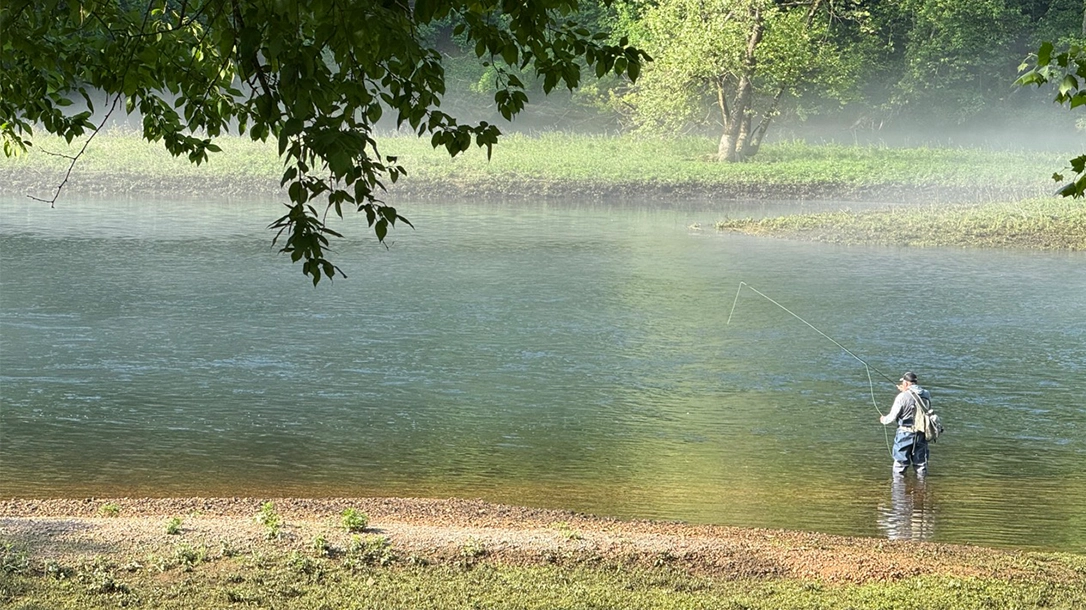
Every angler who spends time wading streams eventually has a story. A misread current. A slick rock hidden under a thin film of algae. A step that felt solid until it wasn’t. Moving water is relentless and indifferent, and even skilled waders get humbled by it. The good news is that most wading accidents are preventable. The right gear, combined with a few time-tested techniques, goes a long way toward keeping you vertical and dry.
The Case for a Wading Staff
A wading staff is one of those pieces of gear that feels unnecessary right up until the moment it saves you. Many experienced waders resist carrying one because it occupies a hand that could otherwise hold a rod or a net. That reasoning tends to change after the first serious stumble.
Advertisement — Continue Reading Below
A staff gives you a third point of contact with the river bottom, which dramatically improves stability on uneven or slick surfaces. It also lets you probe the bottom ahead of each step, helping you gauge depth and substrate before committing your weight. In fast or deep water, this can be the difference between a cautious crossing and a swim.
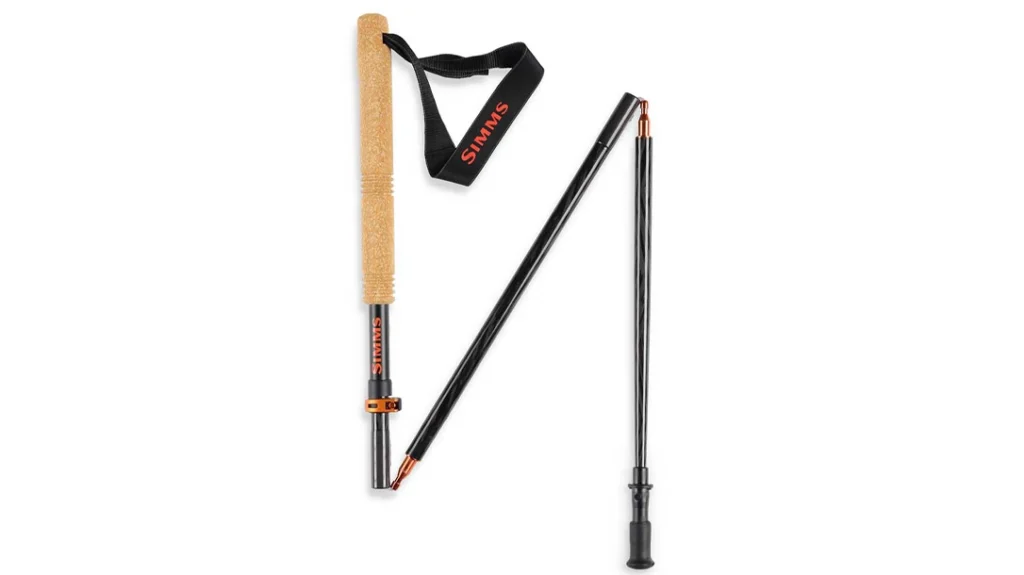
Most modern wading staffs fold or collapse and attach to a retractor clip on your wading belt, so they stay out of the way when you don’t need them and deploy quickly when you do. Look for a staff with a comfortable grip, a wrist lanyard, and a carbide or tungsten tip that will bite into rock. Lightweight aluminum and carbon fiber options are both popular. Avoid improvised substitutes like tree branches, which can snap under load and give you false confidence.
Felt vs. Rubber Soles: A Legitimate Debate
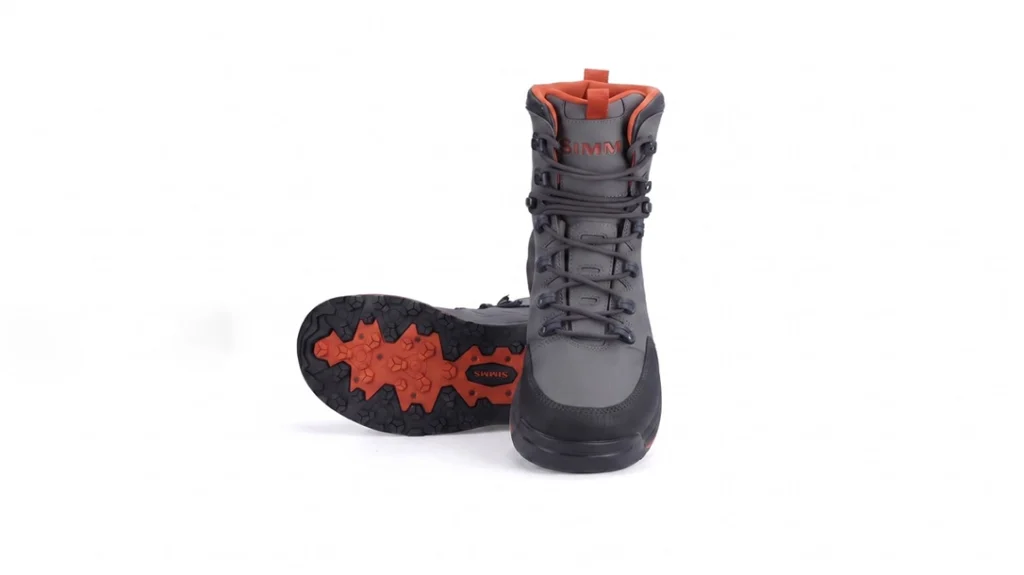
The wading boot sole conversation has been going on for years, and both camps have legitimate arguments. Felt soles dominated the market for decades because they grip algae-covered rock with remarkable effectiveness. The fibers conform to irregular surfaces and provide traction that rubber simply cannot match on certain substrates, particularly the smooth, slick granite or sandstone common in western trout streams.
Advertisement — Continue Reading Below
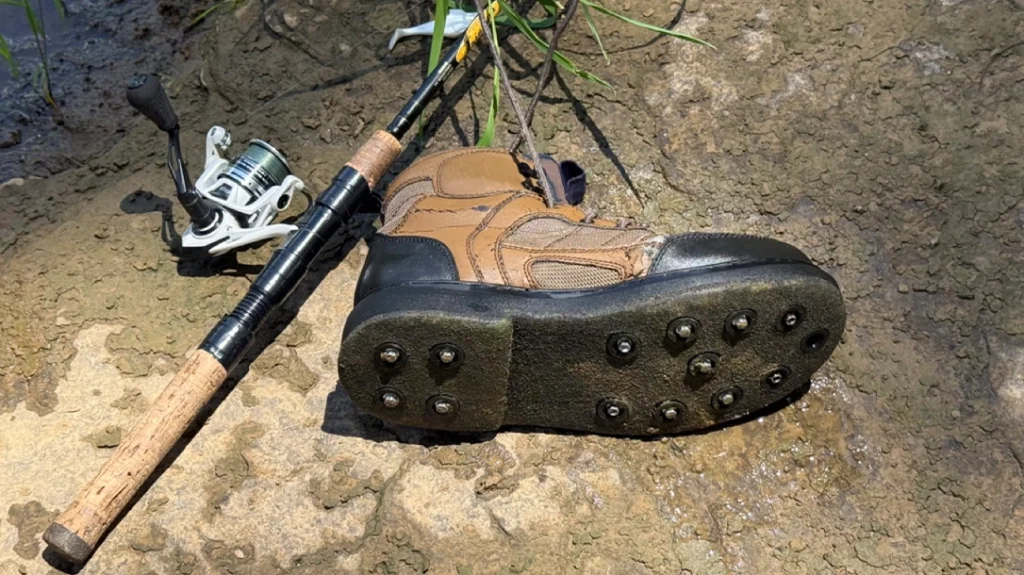
The problem with felt is biological. Felt soles trap water, sediment, and microorganisms and can transport invasive species like New Zealand mud snail, didymo algae, and whirling disease between watersheds. Several states have banned felt soles entirely for this reason, and even in states where they remain legal, many conservation-minded anglers have switched voluntarily. Always check local regulations before selecting your soles.
Advertisement — Continue Reading Below
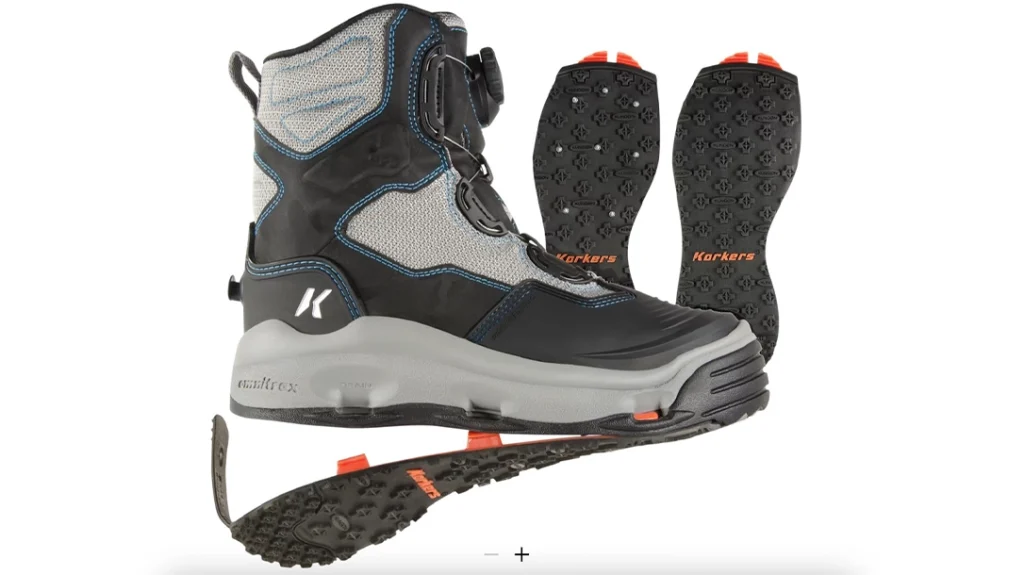
Rubber soles have improved substantially over the past several years. Studded rubber soles perform especially well across a wide range of conditions. Carbide studs bite into rock in a way that plain rubber cannot, and rubber dries faster and does not harbor organisms the way felt does. On muddy banks, wood, or boat decks, rubber is also far safer than felt, which becomes dangerously slippery on those surfaces. If you wade a variety of water types and habitat, studded rubber is often the more versatile and responsible choice.
Reading the River Before You Step In
Gear matters, but wise judgment matters even more. Before wading any unfamiliar stretch of water, take a few minutes to read the river from the bank. Look for the seams between fast and slow water, identify any hydraulic features like holes or eddies behind large rocks, and note where the current appears to compress and accelerate. These are the places that can turn a manageable crossing into a serious situation fast.
Advertisement — Continue Reading Below
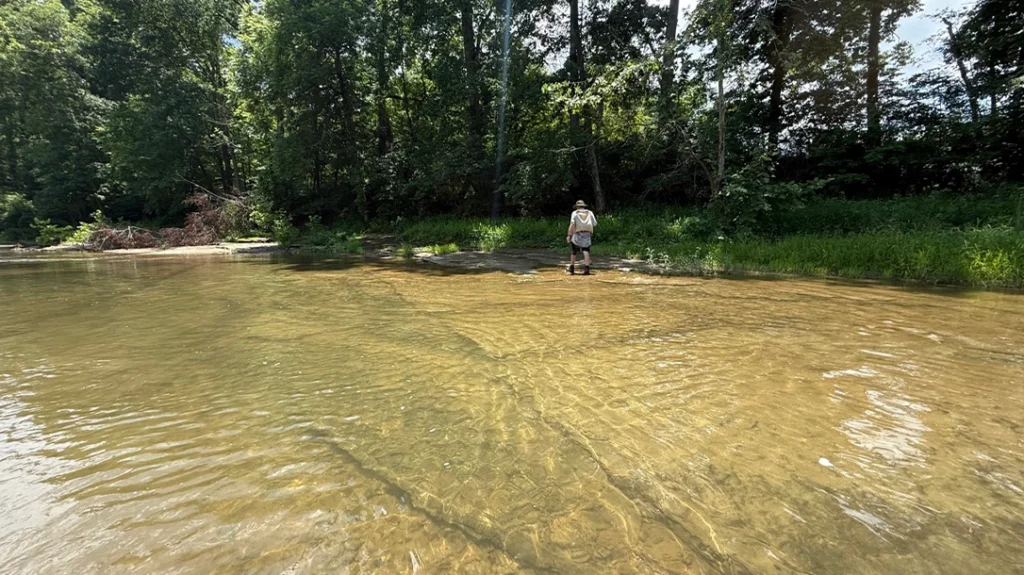
Wade perpendicular to the current whenever possible, and angle slightly downstream as you move. This reduces the surface area of your body fighting the flow. Shuffle your feet rather than crossing them, keeping your base of support wide. Move one foot at a time and confirm your footing before shifting your weight.
Depth is not always the primary danger. Fast, knee-deep water can be more hazardous than slow, thigh-deep water. If the current is pushing hard against your legs and you feel your feet beginning to skate on the bottom, trust that sensation and back out. There is rarely a fish worth a dangerous crossing.
Advertisement — Continue Reading Below
If You Do Go In
Even with good gear and sound technique, swims happen. If you get swept off your feet, resist the instinct to fight the current head-on. Roll onto your back, face downstream, and keep your feet up and in front of you to fend off rocks. Let the current carry you toward calmer water or an eddy, then work your way to shore. A properly fitted wading belt can slow water from flooding your waders and buying time. It is not a flotation device, but it helps.
A personal flotation device designed for wading, such as a belt-style inflatable PFD, is worth considering for big water or solo trips in remote areas. Some waders won’t leave the truck without one.
Advertisement — Continue Reading Below
Stay Humble, Stay Safe
The anglers who wade safely for decades are not necessarily the most athletic or the most experienced. They are the ones who treat moving water with respect, make gear decisions thoughtfully, and know when to find a better crossing or simply not cross at all. The fish will be there another day.
WHY OUR ARTICLES/REVIEWS DO NOT HAVE AFFILIATE LINKS
Affiliate links create a financial incentive for writers to promote certain products, which can lead to biased recommendations. This blurs the line between genuine advice and marketing, reducing trust in the content.