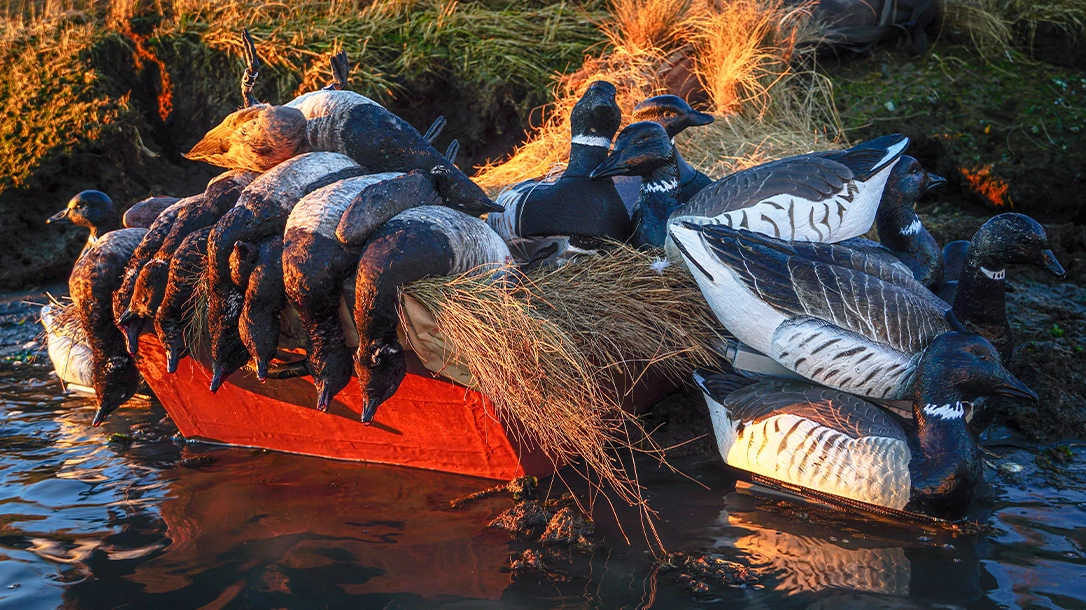
While waterfowling is now one of my favorite hobbies and ways that I make my living as a guide, it was never something I did growing up. Even with living on Long Island and having the culture all around me, it wasn’t until I was older, I realized what the culture truly meant. The sneak boxes, hand carved decoys, and the way a black duck worked the decoy stool; it was a bayman’s winter way of life.
Long Island waterfowl hunting isn’t just a pastime, it’s a living thread that ties modern hunters to centuries of tradition, grit, and coastal heritage. From the windswept bays to the salt marshes that stretch along the Atlantic Flyway, this narrow strip of land in New York has long been one of the most storied waterfowling regions in America. Full of rich history, it makes for one of the most unique waterfowl hunting opportunities within a stone’s throw of the Big Apple.
The Market Hunting Era
To understand Long Island’s waterfowl roots, you have to go back to the 18th and 19th centuries, when market hunting ruled the Atlantic flyway. Back then, waterfowl weren’t pursued for sport, they were a commodity. Canvasbacks, redheads, black ducks, and brant filled the skies in numbers that are hard to imagine today, and professional gunners made their living supplying city markets, particularly in nearby New York City. Many hunters would go out shooting hundreds of brant and black ducks a day to make ends meet. There were no regulations or bag limits, not even steel requirements like today. Just people making a living off the migration.
Advertisement — Continue Reading Below
These hunters weren’t sitting in layout blinds with a dozen decoys. They used massive “punt guns” which were essentially small cannons mounted to boats. They could take dozens of birds with a single shot. South Shore bays like Great South Bay and Moriches Bay became ground zero for this kind of hunting. It was efficient, unregulated, and ultimately unsustainable.
The Rise of Conservation & Sport Hunting
By the late 1800s, it became clear that waterfowl populations were in serious decline. The birds that once filled the skies were taking a crucial hit. Overharvest, combined with habitat loss due to urbanization, pushed many species to the brink. This sparked one of the earliest conservation movements in North America, and Long Island played a key role in that shift.
Advertisement — Continue Reading Below
Wealthy sportsmen began establishing private duck clubs across the island, like the Pattersquash Gun Club and Peconic River Sportsmans Club, particularly on the South Shore. Places like Bellport, Patchogue, and the Hamptons became hubs for a new kind of waterfowling, one focused on sport, stewardship, and tradition. These clubs didn’t just hunt birds; they managed habitat, enforced limits, and helped lay the groundwork for modern conservation laws.
The passage of the Migratory Bird Treaty Act in 1918 changed everything. Seasons, bag limits, and federal protections brought an end to market hunting and ensured that waterfowl would remain a renewable resource. What followed was the golden age of American waterfowling, and Long Island was right in the middle of it all in the Atlantic flyway.
Decoys, Craftsmanship, Culture
One of the most unique aspects of Long Island waterfowl history is its decoy carving tradition. The region became famous for its working decoys. Hand-carved wooden blocks designed not just to look good, but to fool wary birds in rough coastal conditions. There’s something about a hand-carved cork or wood decoy that moves through the water like no other.
Advertisement — Continue Reading Below
Names like the Ward brothers from nearby Maryland often get the spotlight, but Long Island had its own legacy of talented carvers, like the renowned Al McCormick. These weren’t decorative pieces, they were tools of the trade; true gunning stool that could be beat up and still put birds up. Often weighted and painted with a level of realism that still holds up today. Many of these decoys are now considered folk art, displayed in museums or passed down through generations of hunters.
Waterfowling here also developed its own identity. Layout boats, sneakboxes, and sculling were all part of the Long Island hunter’s playbook. The conditions demanded it with the shallow bays, shifting tides, and heavily pressured birds required both skill and adaptability to be successful. It made hunters think outside the box to put up a limit of birds.
The Atlantic Flyway Advantage
Geographically, Long Island sits in a prime location along the Atlantic Flyway, making it a critical stopover for many species of migrating birds. Each fall and winter, waves of ducks and geese move down from Canada and New England, funneling into the island’s bays, marshes, and inlets.
Advertisement — Continue Reading Below
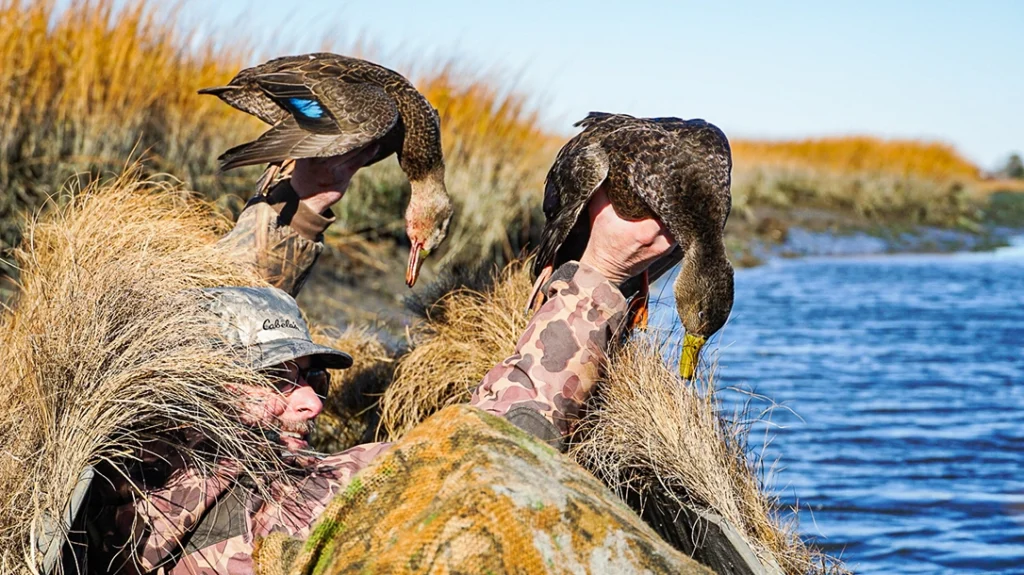
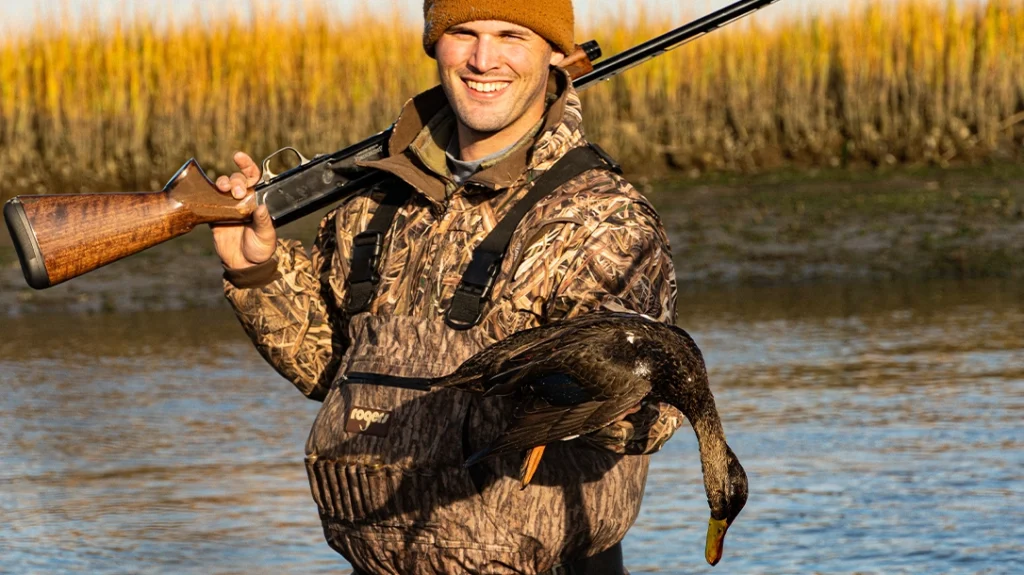
Black ducks have long been the crown jewel of Long Island waterfowling. There’s not many places in the word where you can see as many black ducks in one place like Long Island. These birds thrive in the salt marsh environment and are notoriously wary, making them a true test for any hunter.
Diver ducks, like scaup (or Broadbill as we islanders call them), bufflehead, and longtail ducks also play a major role, especially in the deeper waters of the Long Island Sound and offshore areas. It’s a diverse fishery, so to speak, and no two hunts are ever the same.
Advertisement — Continue Reading Below
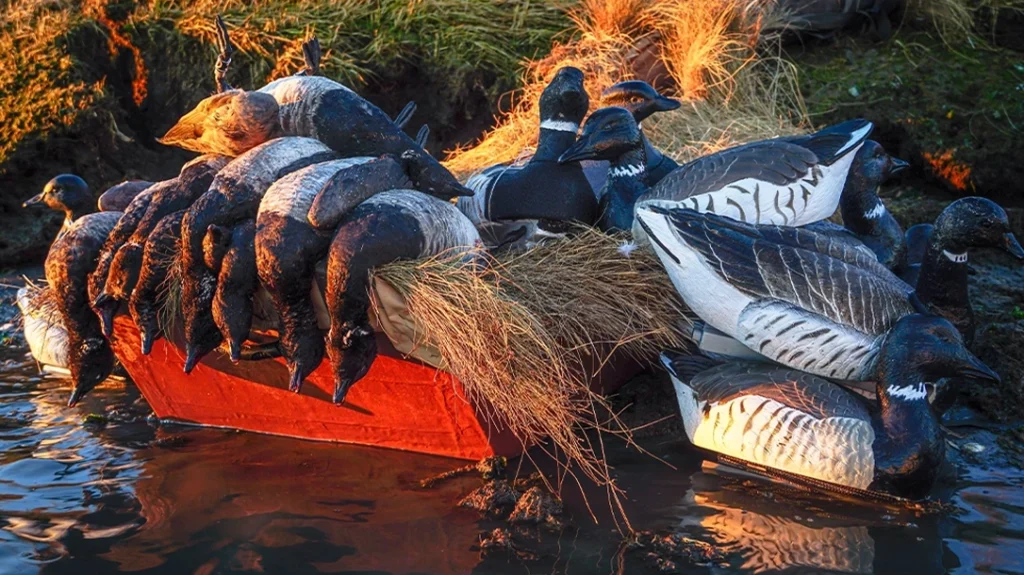
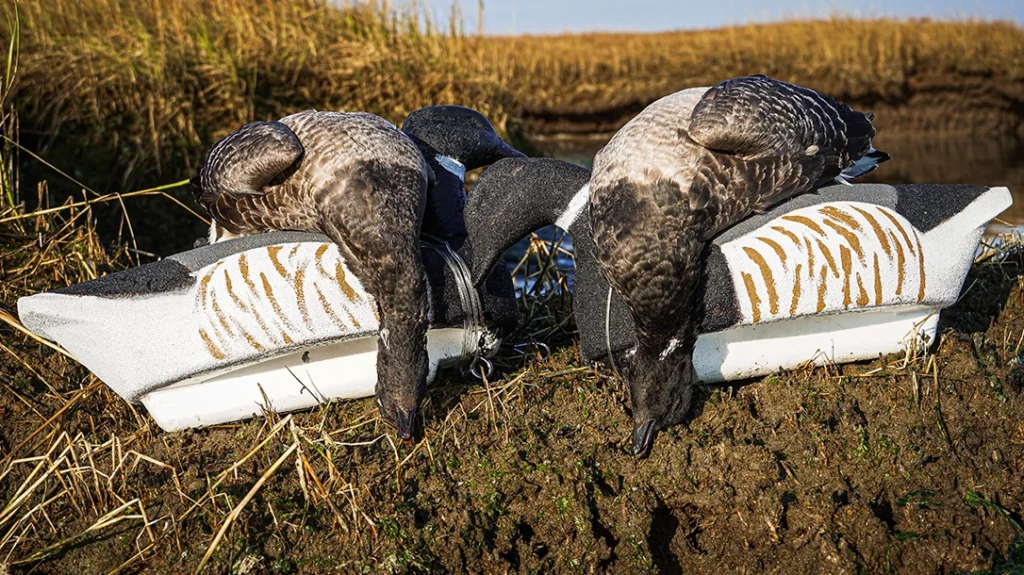
What many people consider today as being almost a nuisance are the Atlantic Brant. These birds in particular, have an almost cult-like following among Long Island gunners. Their fast, low flights over open water and tight flocks demand precise shooting and well-placed decoys. The “sea goose” of the north atlantic, these were and still are a prize bird among all waterfowlers across the nation.
Modern-Day Hunting & Challenges
Today, Long Island waterfowl hunting is a blend of tradition and modern reality. Public access exists, but it’s limited compared to the vast private club lands that still dominate much of the prime habitat, especially as you move into the east end. Hunters who are willing to scout, learn the tides, and put in the work can still find success, but it’s not easy.
Advertisement — Continue Reading Below
Development pressure is one of the biggest challenges. Long Island has seen significant population growth from what it was back in the day. With that comes habitat loss and increased competition for space. Marshes that once held thousands of birds have been altered or disappeared entirely due to people intrusion and weather.
At the same time, conservation efforts continue. Organizations like Ducks Unlimited and the New York State Department of Environmental Conservation work to restore wetlands, improve water quality, and protect the very ecosystems that make this hunting possible. Hunters remain a key part of that equation, contributing through licenses, stamps, and advocacy. Every dollar spent truly makes a difference.
A Tradition Worth Preserving
After learning the true history of what Long Island waterfowling was and still is over the years, it makes it one of the most special places to pull the trigger every season. Especially when hunting over decoys I’ve restored myself, it’s like going back in time watching birds work the rig from my grassed in sneak boat.
There’s something different about waterfowl hunting in Long Island. Maybe it’s the history beneath your feet, or the knowledge that generations before you stood in the same marsh, watching the same sunrise. Maybe it’s even the challenge of fooling birds that have seen it all. Whatever it is, Long Island waterfowling isn’t just about the strap at the end of the day. It’s about connection to the land, to the birds, and to a tradition that has endured for centuries. And as long as there are hunters willing to carry that torch, the story of this history rich island and its hunting heritage will keep going. One black duck, brant, or broadbill at a time.
WHY OUR ARTICLES/REVIEWS DO NOT HAVE AFFILIATE LINKS
Affiliate links create a financial incentive for writers to promote certain products, which can lead to biased recommendations. This blurs the line between genuine advice and marketing, reducing trust in the content.