Over the last several years, I have noticed a shift in footgear for hunting. I am seeing more rubber boots on people’s feet in the woods. This is both in person, on TV, or videos coming across on various platforms. Rubber boots seem to have displaced more traditional leather/fabric/synthetic footwear.
I finally succumbed to this and have been using rubber boots the past few hunting seasons here in West Virginia and Virginia. As with most things involving hunting, understanding specific situations/scenarios and staying flexible in your approach is the key.
Advantages of Rubber Boots for Hunting
Rubber boots have several inherent advantages. First, is waterproof protection. After all, being created from a single piece of rubber overlay eliminates seams and other areas where water can seep into the boot. Rubber boots do not absorb any exterior moisture, thus avoiding becoming heavier when wearing in soggy or snowy conditions. Plus, you can’t beat the ease of cleaning off your rubber boots. There is no hesitation in just taking a water hose to them. Something most of us hesitate to do when wearing leather boots.
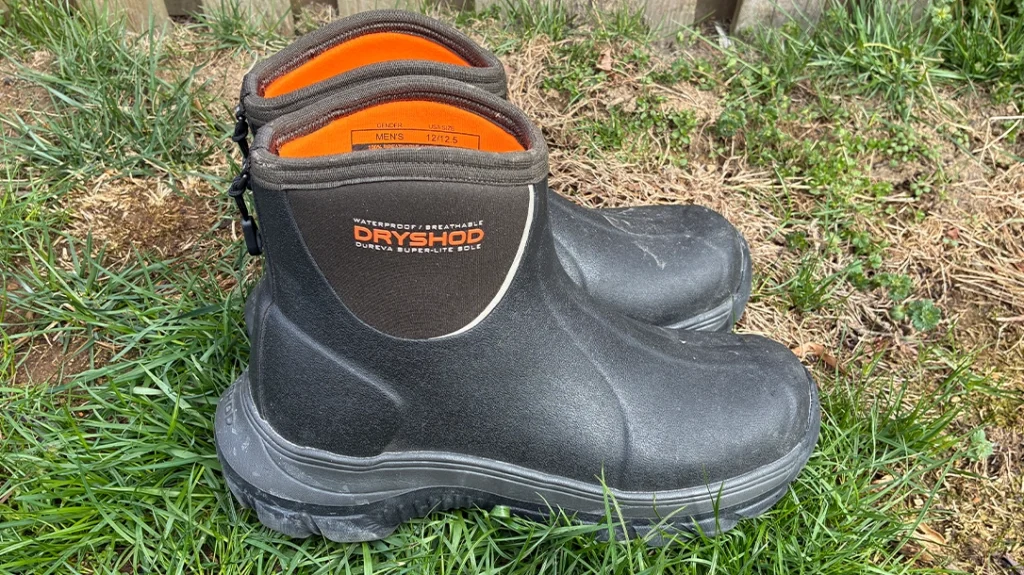
Scent control is another touted positive with rubber boots. Yes, deer and other animals can smell rubber. The rubber boots’ advantage over leather and synthetic boots when it comes to scent control is that they trap odor and don’t allow the human scent of your stinky feet to escape. The ability to tuck your pant leg into the rubber boot reduces the amount of scent transferred to nearby vegetation as you brush against it. While best to stay off game trails, rubber boots offer some discretion here.
Advertisement — Continue Reading Below
Rubber Boots Made For Hunting
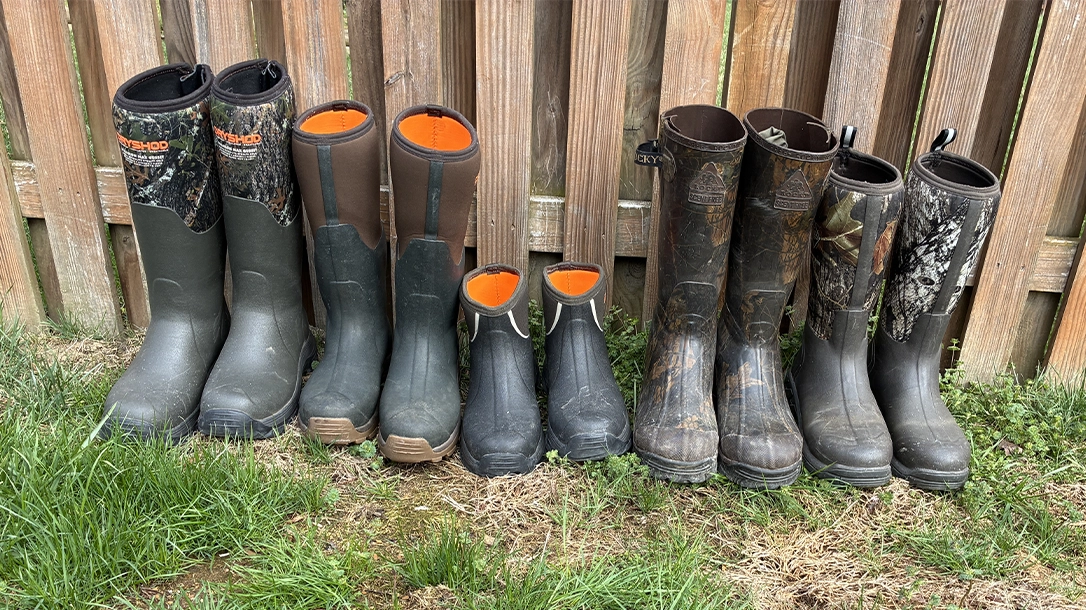
For rubber hunting boots, we aren’t talking farm chore boots found in the barnyard. We are referring to rubber boots specifcally made to chase the wild. For example, the Dryshod boots I have been using, such as the Evalusion (both Ankle and Hi Boots) and Haymaker Hi Boot, are not only 100% waterproof, but also compression-fitted and sized to athletic shoe standards, feature steel shank and sturdy tuck board sub sole for protection and support, and outsole with multi-lug tread slip-resistant soles to enhance safety and stability in slippery areas.
The days of clunky rubber boots preventing you from making discreet stalking footsteps are over, thanks to being able to flex and contour to ground elements. A midsole keeps cold from transmitting up into your feet from the outsole, all while your feet are in a comfortable moisture-wicking sock liner.
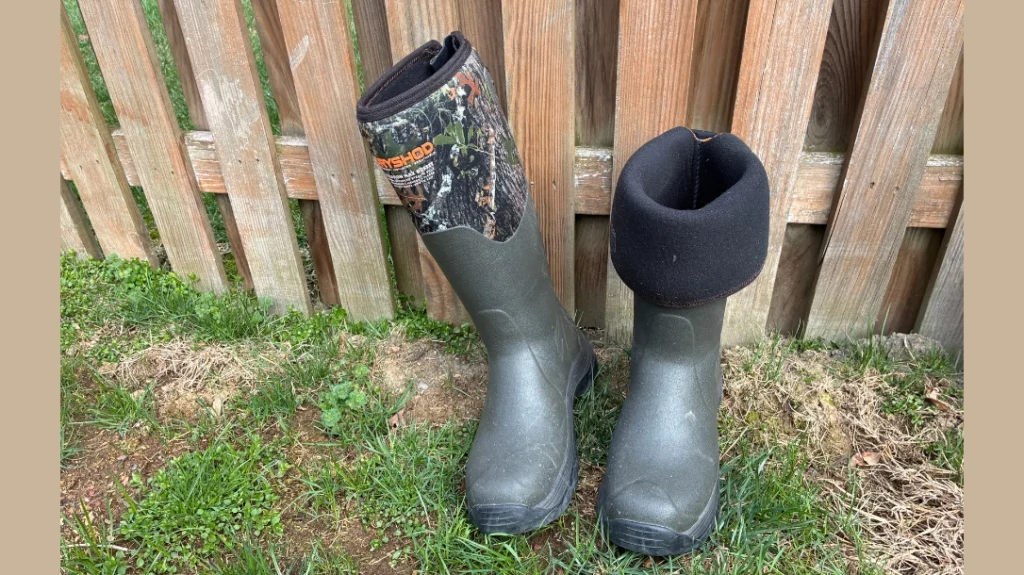
A specifically designed rubber hunting boot, such as the Dryshod and other brands, is not merely a rubber shell. Multiple layers under the rubber address insulation for keeping feet warm, as well as keeping your feet dry related to sweating, which is an often-heard complaint of rubber boots. Rubber boots are much easier to get on and off compared to laced-up leather boots. This is not something easily dismissed when you get my age or if you are wearing multiple layers.
Rubber hunting boots have continually gotten lighter thanks to technological improvements in materials. For example, the Dureva outsole in the Dryshod Evalusion mentioned above eliminates the need for a secondary rubber outsole, allowing the Evalusion to be a pound lighter than their own Haymaker series. Similar advancements are happening across the industry. Such weight reduction lets you go farther and for longer without the fatigue commonly associated with waterproof boots.
Advertisement — Continue Reading Below
Not Necessarily for the Long Haul
If you are walking for miles in steep, undulating terrain, sticking with your traditional leather/synthetic boots is a good decision. We aren’t talking hiking boots either. Something with 8-10 inches of shaft that goes over and beyond your ankle, along with sturdy soles and tread for support when you are walking, especially considering you are probably carrying another 30 or more pounds of gear in terms of rifle, water, snacks, knife, etc. However, if expected movement is more subdued, say meandering slowly along a trail, a walk to your ground blind or stand, wet conditions from snow or rain present, scent control paramount, extreme cold conditions, a ride in on a four-wheeler or ATV to a staging point approaching final distance on foot, rubber boots definitely have a role to play.
WHY OUR ARTICLES/REVIEWS DO NOT HAVE AFFILIATE LINKS
Affiliate links create a financial incentive for writers to promote certain products, which can lead to biased recommendations. This blurs the line between genuine advice and marketing, reducing trust in the content.