The Smith & Wesson Model 29 has appeared on-screen, lived in holsters across generations, and in many cases, found its way into family stories as a revolver that simply worked. It is widely considered one of the greatest revolvers ever produced. What often surprises people is that neither the revolver nor the cartridge it chambers originated purely within the walls of Smith & Wesson. Both owe their existence to one of the most influential figures in revolver history, Elmer Keith.
A Visionary
Keith was not simply a writer or enthusiast. He was a relentless experimenter who spent decades pushing the limits of the .44 Special through careful handloading and real-world field use. His goal was not novelty. He was chasing performance, specifically a handgun cartridge that could deliver the kind of power required for serious hunting applications. Through his work, he demonstrated that a heavier bullet pushed at higher velocity could achieve deeper penetration and more reliable terminal performance than anything commercially available at the time. His influence, paired with collaboration from Smith & Wesson and Remington, led directly to the creation of the .44 Remington Magnum in the mid-1950s.
To harness this new level of performance, Smith & Wesson introduced the Model 29, built on the robust N-frame and engineered to handle pressures well beyond previous handgun cartridges. Together, the cartridge and revolver established a new benchmark. This was no longer just a sidearm. It was a legitimate hunting tool. Over time, the Model 29 evolved through numerous engineering changes and feature variations, expanding into a platform that could be adapted for a wide range of uses. With 11 core engineering revisions and well over 100 feature configurations, the question becomes less about whether the platform could evolve and more about how far it could go.
Advertisement — Continue Reading Below
The Stealth Hunter
In the mid-to-late 1990s, Smith & Wesson made a deliberate push into the growing world of handgun hunting. Optics were becoming more common, and shooters were beginning to stretch the effective range of revolvers in ways that demanded more specialized platforms. Around 1997, the Stealth Hunter line emerged as part of that effort, built on the Smith & Wesson Model 629 and designed with modern hunting in mind.
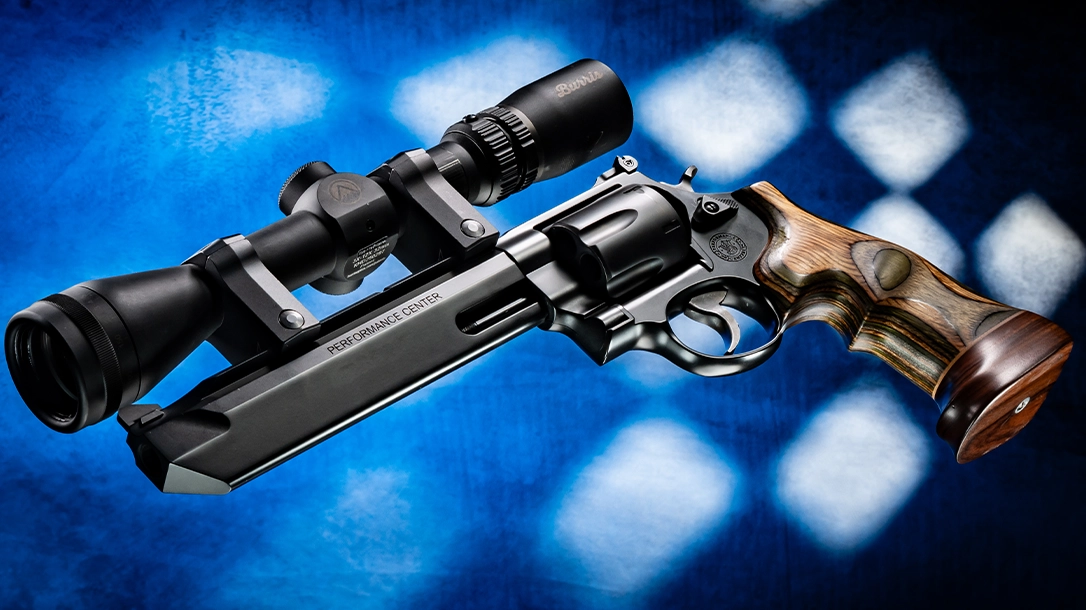
The Stealth Hunter stood apart immediately. A black PVD stainless finish, slab-sided heavy barrel, and an integral scope rail gave it a purpose-driven appearance that reflected its intended role. This was not a traditional revolver with a scope added as an afterthought. It was a system designed from the ground up to support optics and extended-range shooting. The stainless black PVD coating we see on this model was introduced around 2009. In many ways the Stealth Hunter served as a bridge between the classic big-bore revolver and the modern handgun hunting platforms we see today.
Advertisement — Continue Reading Below
Ballistics Best: Validation
That evolution was put to the test in a meaningful way during Athlon’s Ballistics Best Hunting Revolvers competition. Set against some of the strongest .44 Magnum offerings in the industry, the 629 Stealth Hunter rose to the top.
It was named 2025’s Best Hunting Revolver.
That kind of recognition is not handed out lightly. It reflects performance, consistency, and the ability to deliver results across multiple shooters and conditions. It also reinforced something that becomes clear the moment you spend time behind this gun. The Stealth Hunter is not just a niche variant. It is a refined and highly capable hunting platform.
Advertisement — Continue Reading Below
Building the System
Once I got my hands on it, the goal was simple. Build it into something I would actually carry into the woods.
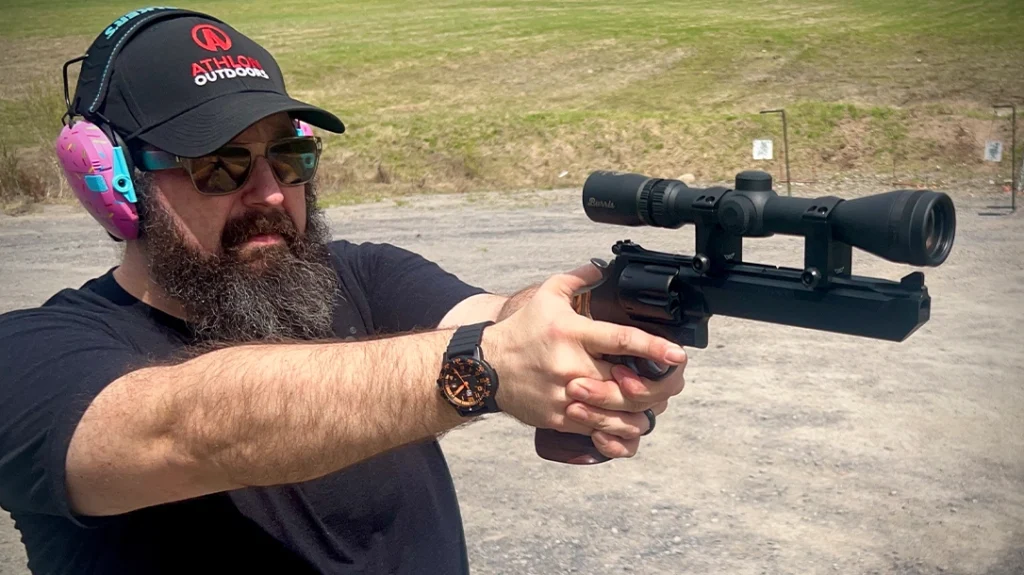
The first change was the grip. I went with a Hogue Monogrip, specifically a larger profile with a single finger groove. The fit against the N-frame is excellent, locking into the hand without creating unnecessary pressure points. The flatter butt gives you a stable interface when shooting off a bag or improvised rest, and the single groove allows for a more natural hand placement. Instead of forcing your grip into position, you can establish it quickly and consistently.
Advertisement — Continue Reading Below
Up top, I mounted the Burris 3-12×32 Handgun Scope. This optic has become something of a standard for me on large-frame revolvers. The long eye relief makes it usable under recoil, and the 3-12x magnification range opens up real capability at distance. With an adjustable objective for parallax and fine 1/8 MOA adjustments, it allows you to dial in precisely without fighting the system. It has also proven itself repeatedly. This particular optic has been zeroed across multiple revolvers, including a .460 Magnum, and continues to hold-up without issue.
To secure it, I used a set of Warne high rings. These feature steel sleeve thread inserts in an otherwise aluminum body, keeping weight down while maintaining durability where it matters. The large side fasteners make installation straightforward, and once mounted, they inspire confidence. There is no question about whether the optic is staying in place.
On the Range
With everything set, I brought the Stealth Hunter to the range to see how it would perform as a complete system.
Advertisement — Continue Reading Below
Zeroing at 50 feet was straightforward, and once dialed in, the revolver had no trouble reaching out. At 125 yards, it consistently delivered hits on steel, and with a bit of refinement in trigger control, those hits tightened into the A-zone on a USPSA silhouette. Shooting from a Real Avid medium bag provided a stable base, allowing the weight of the revolver to work in your favor rather than against you.
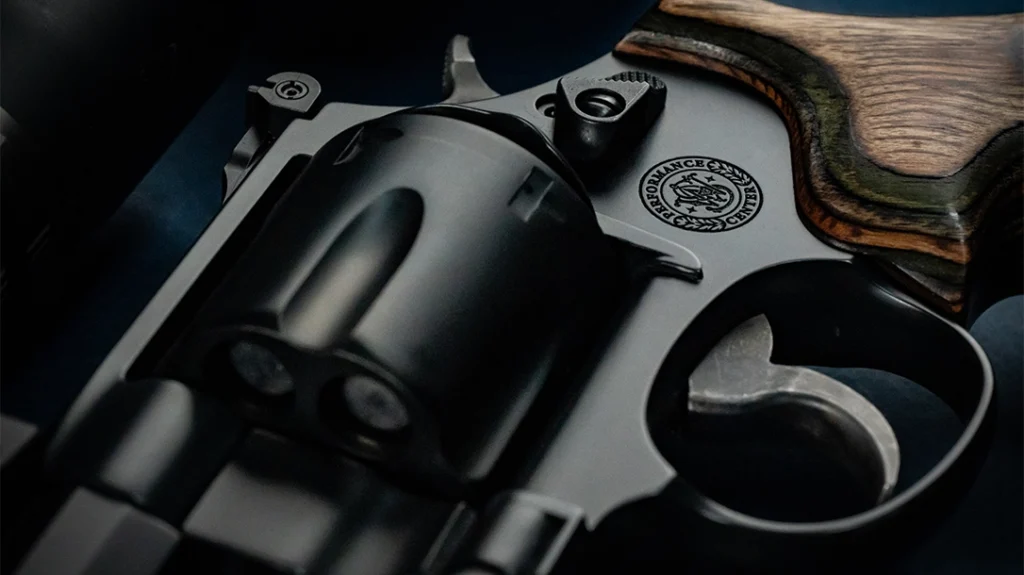
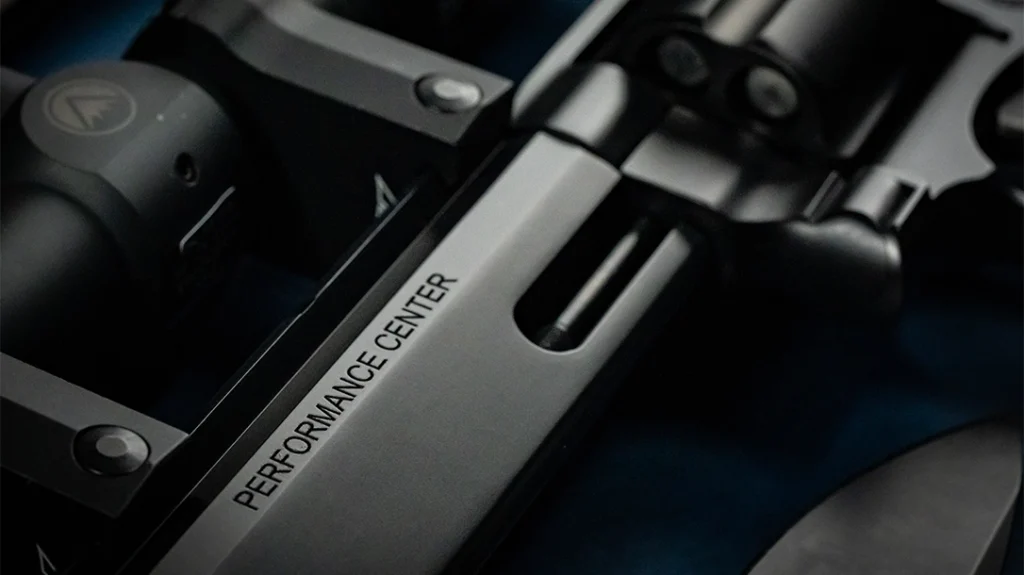
The Performance Center action is immediately noticeable. The single-action trigger breaks clean at 3 pounds, making precise shots far easier than you might expect. The full setup weighs in at 4 pounds, 2.8 ounces empty, and while that is substantial, it contributes directly to stability and recoil management.
Ammo and Performance
For ammunition, I turned to HSM, a company with a long-standing reputation for producing reliable loads.
Advertisement — Continue Reading Below
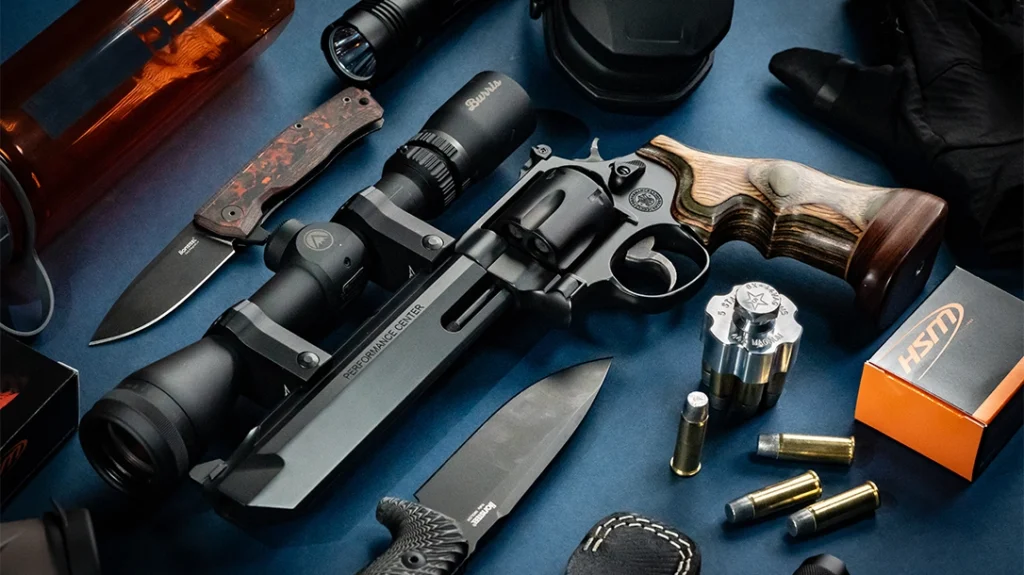
Out of the 7.5-inch barrel, the results were strong:
- 300gr XTP: 1194.4 fps
- 300gr Sierra JSP: 1229.9 fps
- 305gr Bear Load: 1247.8 fps
The 300gr Sierra JSP stood out as the most consistent performer across multiple tests. It delivered reliable accuracy and predictable performance, making it a strong choice for field use. While no load is universal across every firearm, this one has proven itself repeatedly across a lot of the revolvers I have run.
Recoil and Control
There is no such thing as a light-recoiling .44 Magnum, but the Stealth Hunter manages it exceptionally well.
The 7.5-inch barrel incorporates dual ports that vent gas upward, helping to drive the muzzle down. Combined with the weight of the 7.5 in slab-sided barrel, the result is a revolver that remains controllable and predictable shot to shot. The balance is well thought out, with weight positioned in a way that supports stability without making the gun unwieldy.
It is a system that works.
Final Shots
For anyone considering a serious hunting revolver, Smith & Wesson remains difficult to ignore. The Stealth Hunter takes that legacy and pushes it into a more modern context, blending proven design with features that support real-world performance.
It sits firmly in the premium category. For what you get, that pricing makes sense. This is a revolver with history behind it, performance to back it up, and the kind of build quality that suggests it will be around for a long time.
It earned its place at the top during Ballistics Best. It earned its place in my hands as well. If I’m being honest, I’m not sure Smith & Wesson is getting this one back anytime soon.
WHY OUR ARTICLES/REVIEWS DO NOT HAVE AFFILIATE LINKS
Affiliate links create a financial incentive for writers to promote certain products, which can lead to biased recommendations. This blurs the line between genuine advice and marketing, reducing trust in the content.