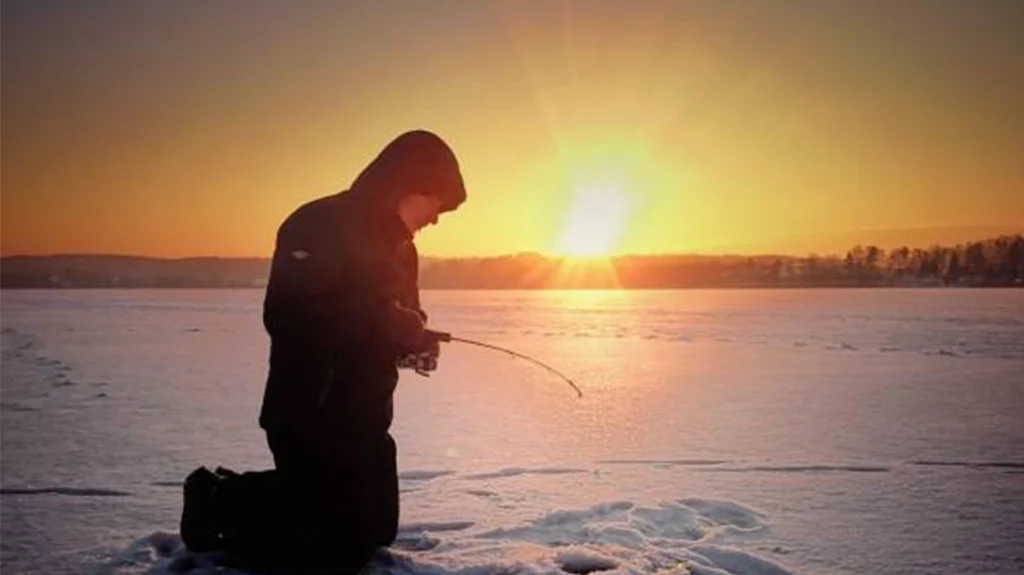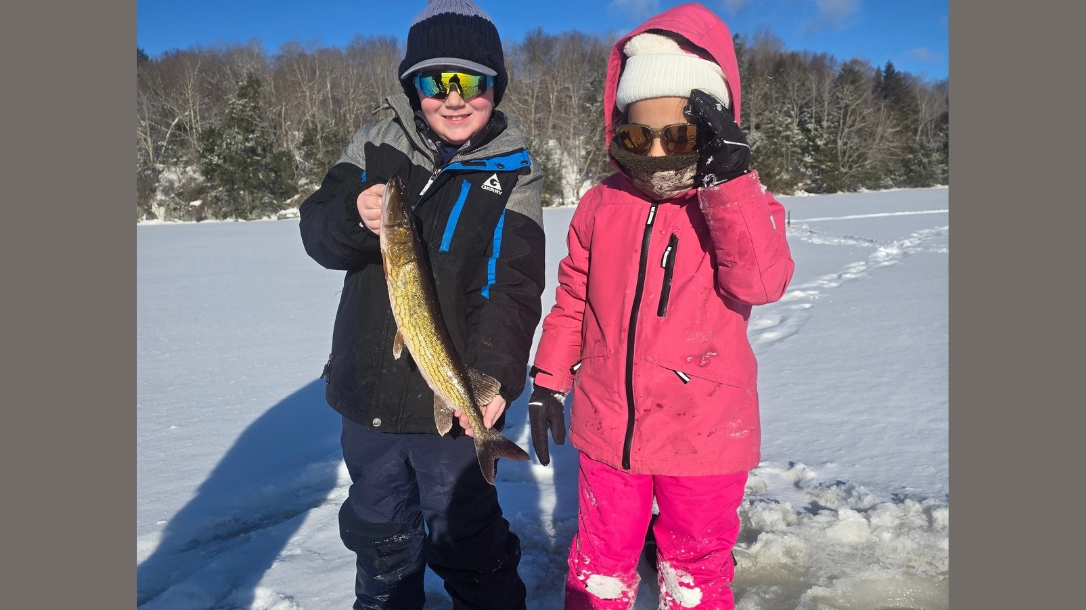
Ice fishing with kids might feel daunting, but it doesn’t need to be. Cold fingers, hungry bellies, and slow action could turn a bright day blue, but with some preparation and the right mindset, it doesn’t have to. Sure, it is easier to let them spend a cold day flopped on the couch. But who wants their kids’ core memories to be of watching other kids do fun stuff on YouTube?
Ice fishing can be a family adventure that kids look forward to if it is introduced in the right way. This is about perspective, not trophies. It is about the experience, not the grip and grin big fish pictures. It is about stripping ice fishing down to the basics.
Safety First
Every ice fishing adventure should begin with safety in mind. Explain ice safety principles to kids, such as how to tell the difference in ice texture by color, what to avoid, and what to do if the ice cracks or they fall in the water.
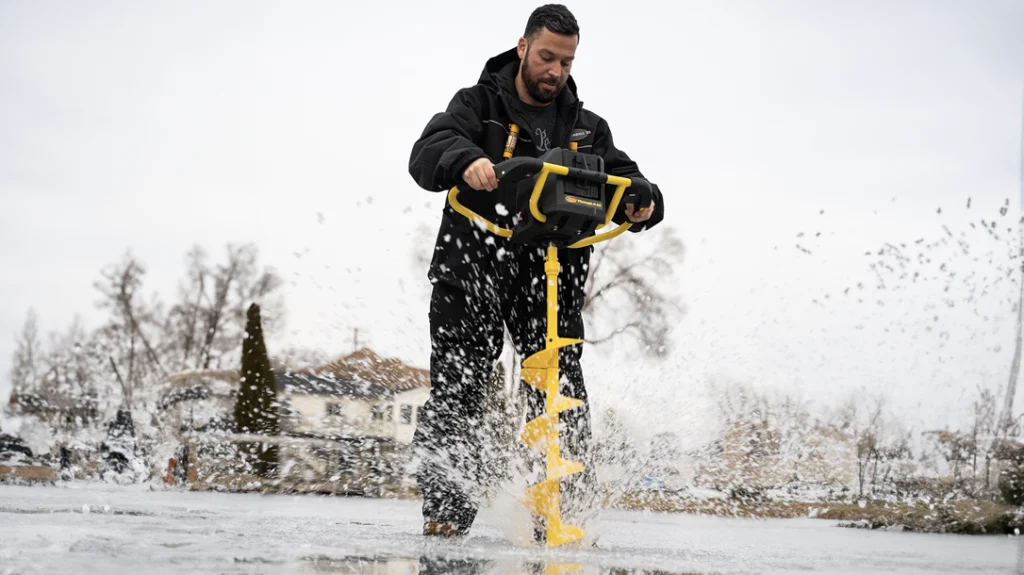
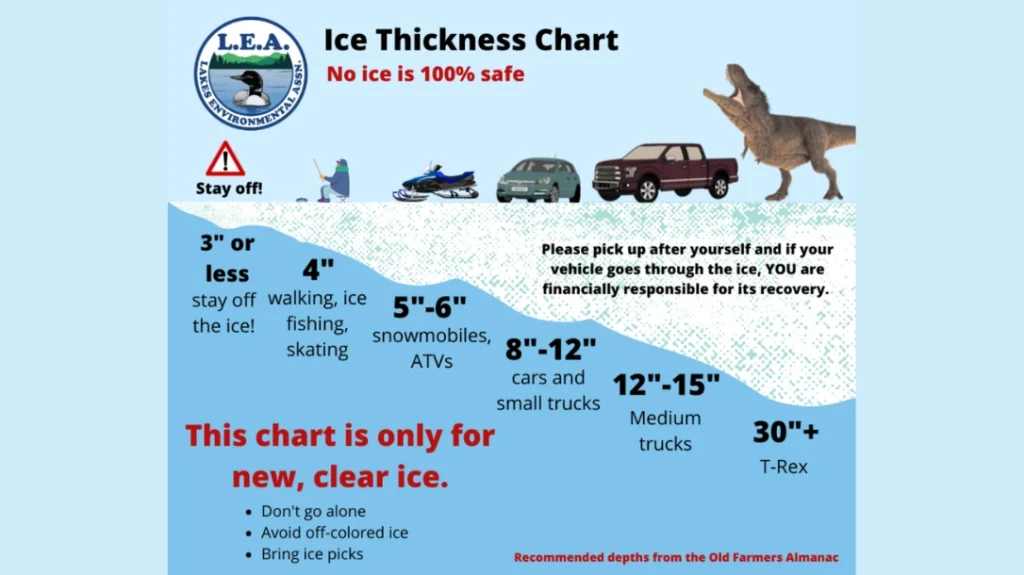
The gold standard of ice safety is the thicker the ice, the safer it is. Check the ice thickness as you go, and check it often. Use a spud bar as you walk. If it punches through in one hit, turn around. That means the ice is not safe enough. When on good, solid ice, use an auger to test thickness. Keep in mind that the thickness can change quickly, so never assume that because the ice is thick and sturdy, you can get lazy about checking it. As a general rule, ice that is four inches or thicker is safe to walk on. Avoid being on ice that is less than four inches thick. As ice gets thicker, it is progressively safer for heavier items, demonstrated in the graphic below from Maine Lakes Environmental Association.
Advertisement — Continue Reading Below
Color matters when it comes to ice. Avoid ice that looks milky, bubbly, or slushy. The safest ice usually looks dark or clear, but do not rely on eyesight. That’s what the spud bar is for. Establish clear safety rules, such as avoid stepping near drilled holes and staying within eyesight of companions.
Another important element when ice fishing with kids is an ice shelter. Have a space for them to warm and up relax.
Ice Gear
Explain safety gear to kids so they learn as they go. Show them how to use a spud bar, how to throw a safety rope, and what ice picks do. Beyond ice thickness is ice slipperyness. Equip the bottom of boots with ice cleats. Ice cleats help prevent falls, which in turn makes kids feel more comfortable on the ice.
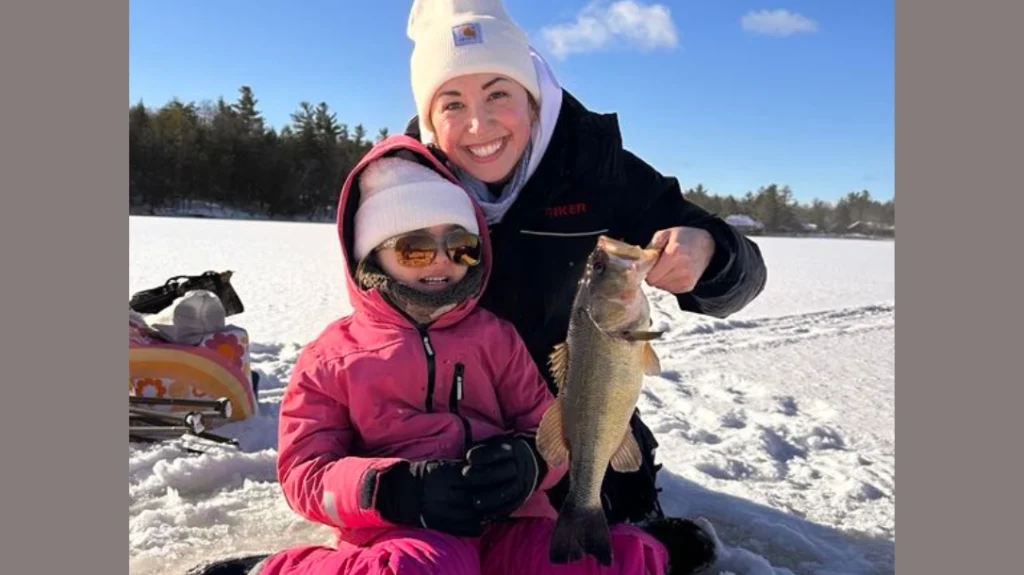
Ice fishing is a whole lot more enjoyable when you aren’t freezing. Put kids in a good set of ice fishing winter bibs. Sets made for ice fishing have extra insulation and often additional safety equipment, such as flotation mechanisms built in. Complete the outfit with gloves that are both warm and waterproof.
Advertisement — Continue Reading Below
Expectation Adjustment
Adults often measure success by how many, or the size of, the fish caught. Kids measure the experience by how much fun they had. So, make it fun. From right the start, have a mindset that focuses on comfort and playfulness.
That means shorter outings, more snack breaks, and less endurance testing. Let kids explore and move around. Your kid wants to make snow angels instead of watch tip-ups? Fine. Recognize that mistakes will happen. Lines will tangle, fish will slip off hooks, mittens will get wet. Don’t make kids feel bad when these things inevitably occur.
Anticipate needs. Kids need to go to the bathroom. Kids get hungry. Don’t focus so much on fishing that you are caught without a plan. Know what to expect and how to handle it. And pack so many more snacks than you think you’ll need for the day. There is something about being out on the ice that gets a belly rumbling.
Simplify the Setup
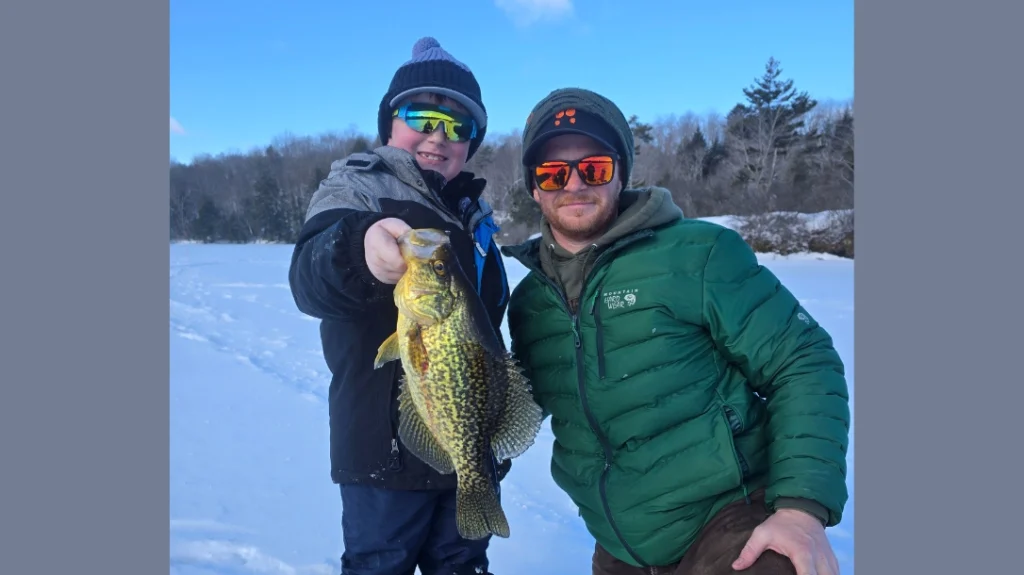
Keep it simple and let them help. Involve kids in the set up process, after all, that pre-work is all a part of the ice fishing experience. Let them scoop slush out with the skimmer. Encourage them to ask questions. Target easy-to-catch fish such as perch or panfish. A few tip ups and a jigging hole and set up is complete.
Advertisement — Continue Reading Below
Use larger hooks and lively bait to increase odds of action. Remember, kids just want to have fun. Put out the easiest, most reliable set up and pray the fish bite.
Enjoy the Moment
Kids are natural learners, but they don’t need a biology lesson on their first trip. Start small. Explain how fish live under the ice or why holes freeze over. Answer questions as they come, and let curiosity guide the conversation. Don’t force it.
When a fish is caught, slow down the moment. Show them the colors, the fins, the textures. Make it a big deal. Let them handle the fish, but don’t force them to if they are not comfortable. Keep the goal of an enjoyable experince in the forefront of your mind.
WHY OUR ARTICLES/REVIEWS DO NOT HAVE AFFILIATE LINKS
Affiliate links create a financial incentive for writers to promote certain products, which can lead to biased recommendations. This blurs the line between genuine advice and marketing, reducing trust in the content.
Advertisement — Continue Reading Below