Most dedicated fishheads take a break during the colder weather months, but diehard crappie anglers hit the water year-round. Despite the cold, many are still successful. Weather doesn’t affect them or their target fish. So, how does an angler find crappie during every season? Let’s uncover their crappie secrets.
What is a Crappie?
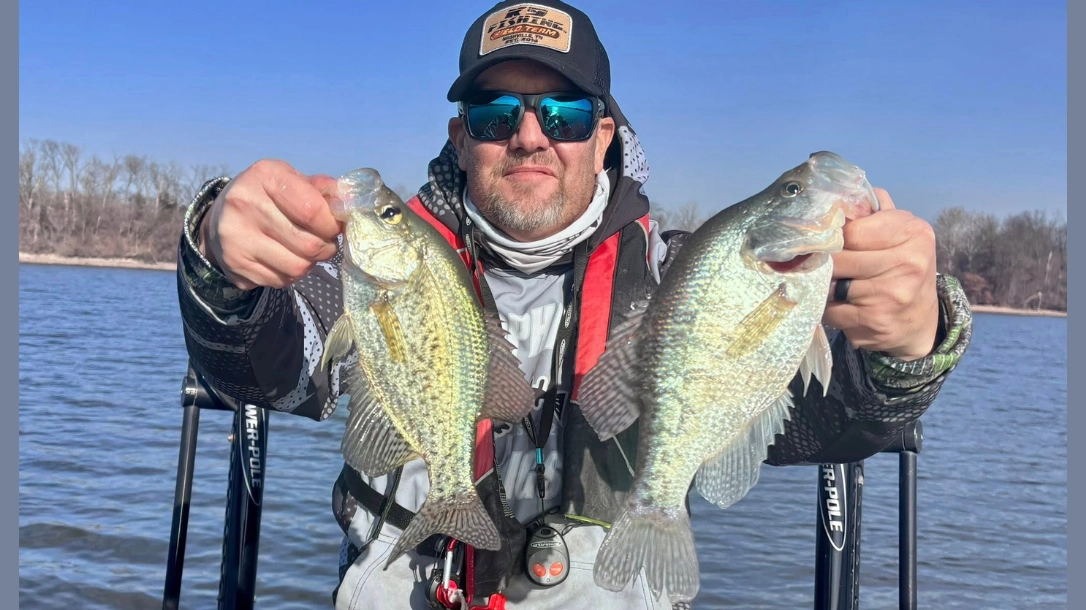
First things first, Crappie are a popular game fish among recreational anglers in North America. They feed predominantly on smaller fish species, including fry. They also eat insects, crustaceans, and zooplankton, which are those tiny floating organisms that exist in clusters suspended in water.
Crappie tend to be less active durig the middle of the day and concentrate around weed beds or submerged objects, such as logs and boulders. They feed during dawn and dusk, by moving into open water or approaching the shore.
Winter
To find crappie, anglers must consider the seasonal changes in behavior. Some fish use structure as a protective mechanism for rest, while others might be hungry.
“In the winter the first thing I’m going to do is find structure and determine if the fish on that structure are active or dormant,” Matt England, a Tophat Jig pro and guide on Lake Shelbyville and Decatur Lake in central Illinois, said. “If I come across a school of active fish on structure than I start targeting those fish. If those fish are coming into structure to recuperate, rest or feel secure and do not react to my presentation then I’m going to look away from structure. The first fish I find away from structure is where I’m going to start fishing.”
Advertisement — Continue Reading Below
England starts out in five to eight feet of water with water temps in the 30s to low 40 degrees Farenheit range.
“If I have active fish on structure, I have a possibility of having active fish in open water,” he said. “If I don’t have active fish on structure, I have a greater chance of having active, open water fish.”
Other than during spawn, England believes winter fishing will produce the biggest crappies and recommends targeting big fish.
Spring
As daylight increases and water temps are in the 45 to 55 degrees Farenheit mark there will be more active fish both on structure and in open water. The fish become more active due to bait depletion. The baitfish that had sustained these fish are now gone. Therefore, the fish are actively looking for food and motivated to hunt. Once you find the fish, the main concern is bait proximity which may be anywhere from 8 inches -12 inches above it. If you put your bait too close to the fish, it’s not going to bite. Determining the sweet spot is the angler’s job.
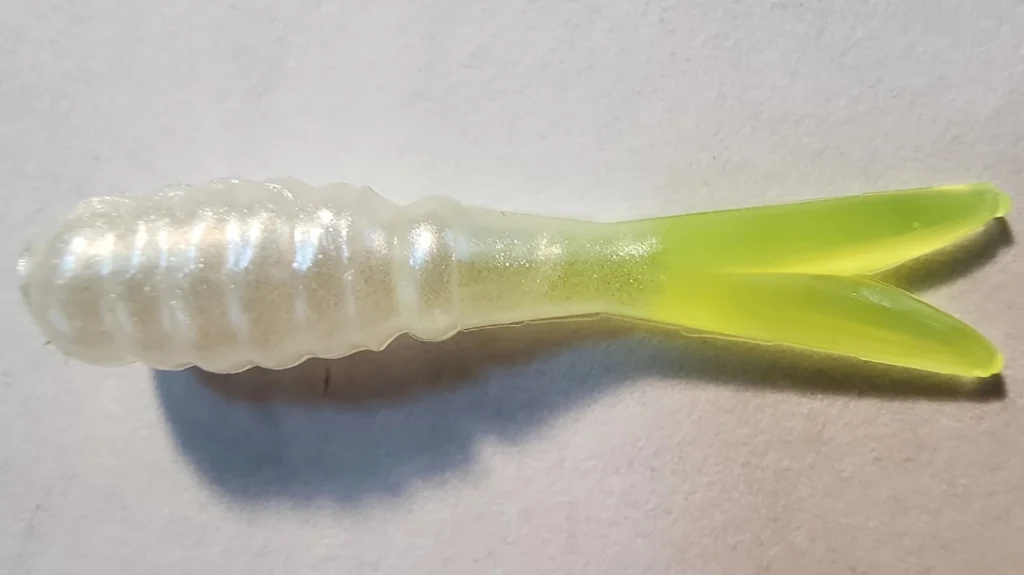
England picks apart these areas by casting a 1/32 oz. aspirin head or ball head jig rigged with a Tophat Small Fry -Teddie Bug to these fish. If he does not get a reaction he will present a different profile of bait to the fish. If England still does not get a reaction, he knows he will need to slow down his presentation and often switches to a Nuclear Dean Martin hair jig to entice fish. England casts to crappie much earlier in the season than most crappie anglers and also fishes more slowly.
Advertisement — Continue Reading Below
Once the water temps hit 58 degrees or so, crappie will start heading to shallow waters in preparation for spawning.
“More fish spawn deeper than three feet deep than not, everyone thinks they need to see their jig when their pursuing spawning crappie which can spawn down to 12 – 15 feet deep in some situations,” England said.
The crappie angler starts fishing in the 6-8 foot deep water column. He doesn’t want to start shallow due to the increase chance of getting hung up and spooking fish. Crappie prefer softer small rock clay bottom, as well as riprap and traditional areas associated with crappie like stumps and laydowns.
According to England, water temps aren’t the only factor to determine how long crappie will spawn but gestation plays a big part of the spawn as well.
Advertisement — Continue Reading Below
He starts catching spawning fish in early April and will catch them up through June because not all the fish spawn at the same time.
Post spawn presents its own challenges as the water begins to warm up. England focuses on open water recovery.
“Often these fish on structure after the spawn are not the most active,” he said. “To find post spawn fish search deeper water in close proximity to spawning areas.”
Summer
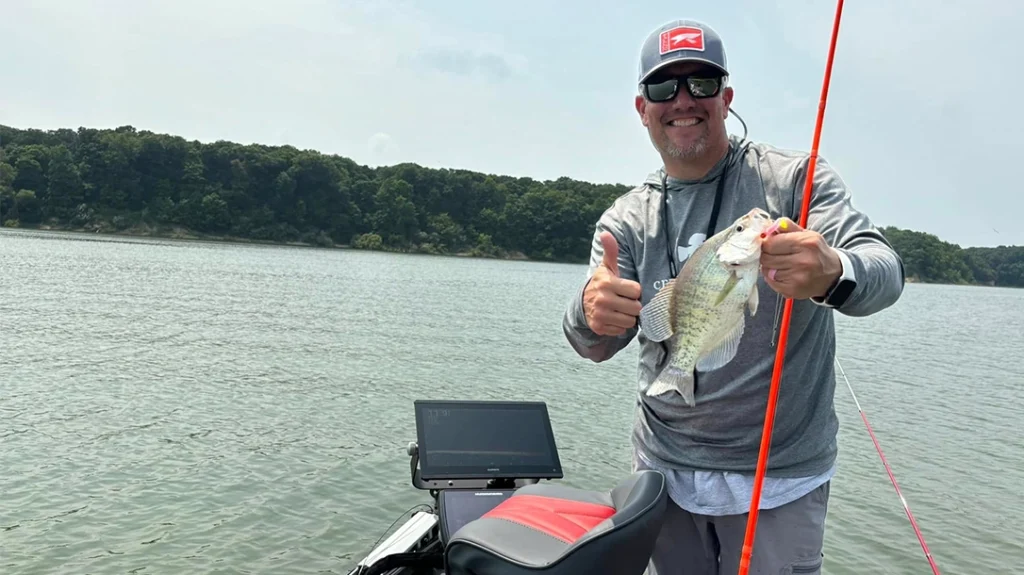
As summer rolls around, England fishes shallower water than most anglers. Spending nearly 200 days on the water, England seldom fishes water deeper than 12 foot more than a handful of times a year.
Advertisement — Continue Reading Below
Fall
When the shad hatch begins in late summer, early fall you will find crappie in the river channels in massive schools chasing baitfish. “We will be in 30 feet of water but the fish are only 12-foot-deep chasing baitfish,” says England.
Forward Facing Sonar (FFS)
Forward Facing Sonar (FFS) reduces spending time on structure with no fish. England credits FFS as a teaching tool for learning a fish’s behavior but warns “Don’t get too attached to the technology.” After you have found the fish, England recommends turning off the FFS and find some trees to jig to keep yourself sharp.
Crappie Fishing Mistakes
The biggest mistake England feels crappie anglers make is surface entry. He said that when anglers are too close to the target fish, and the lure hits the water too violently, it spooks fish.
When he isn’t fishing, he spends time practicing his skills both casting and pitching.
“I recommend practicing when the is a little wind,” he said. “Perfect conditions are one thing but more times than not you will be dealing with wind so getting acclimated to casting and pitching in the wind is important.”
Advertisement — Continue Reading Below
Final Cast
England’s top advice on cathcing crappie is to “fish your strength and fish what you have confidence in and you will catch fish.”
WHY OUR ARTICLES/REVIEWS DO NOT HAVE AFFILIATE LINKS
Affiliate links create a financial incentive for writers to promote certain products, which can lead to biased recommendations. This blurs the line between genuine advice and marketing, reducing trust in the content.