The term “game changer” gets thrown around so much that it’s hard to keep track of just how many games there really are. However, in the duck hunting world, two of these game changers are Winchester’s Last Call TSS18 and Last Call Double Shot.
Winchester’s Last Call- Advanced Bird Shot
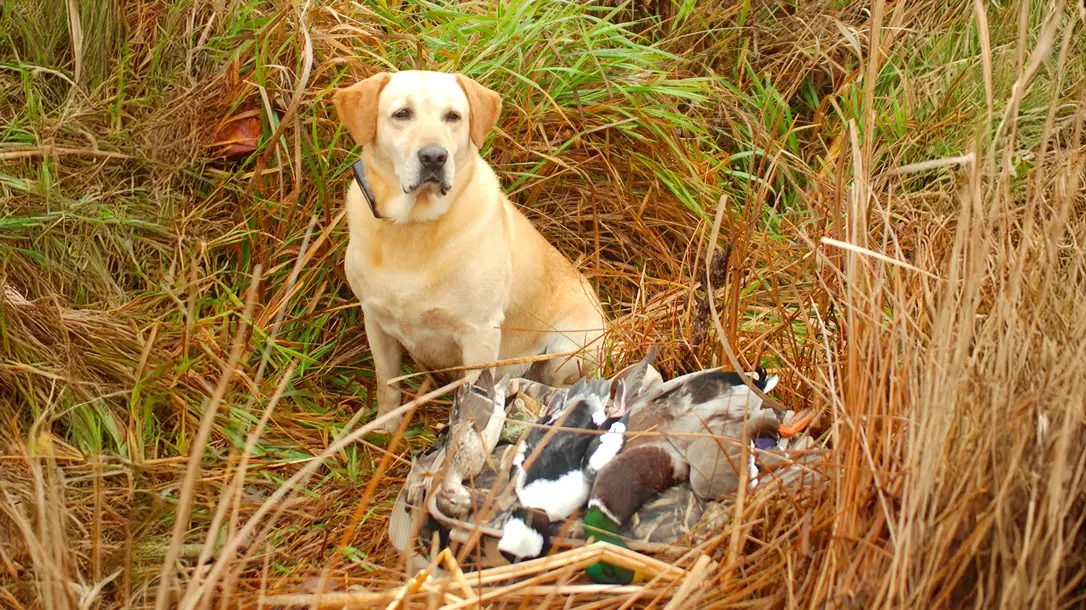
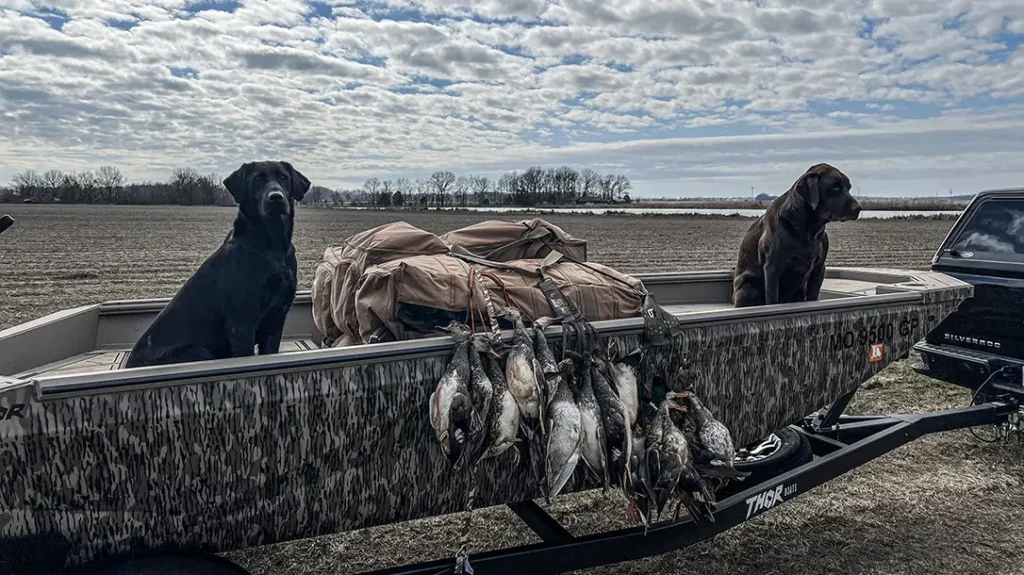
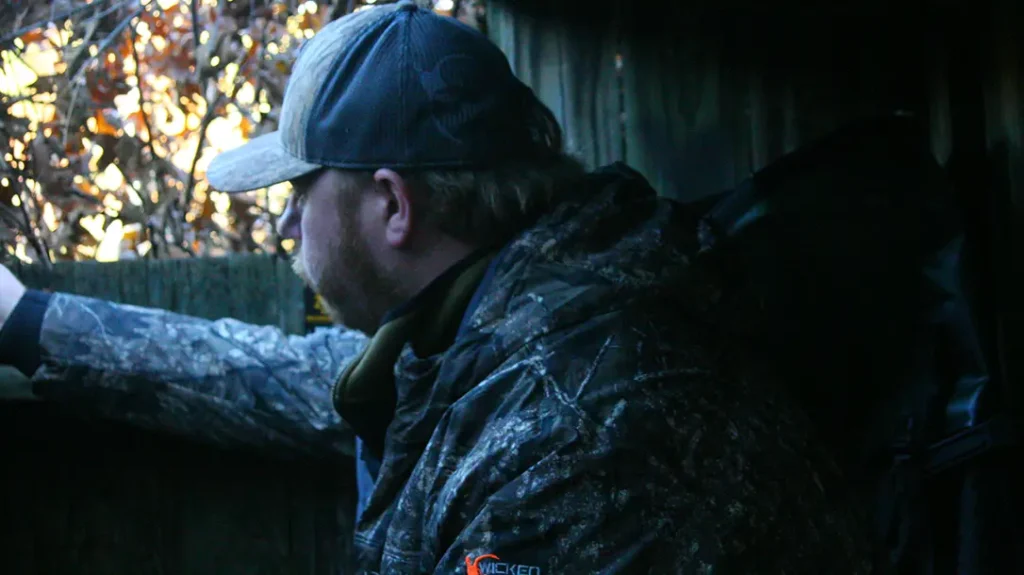
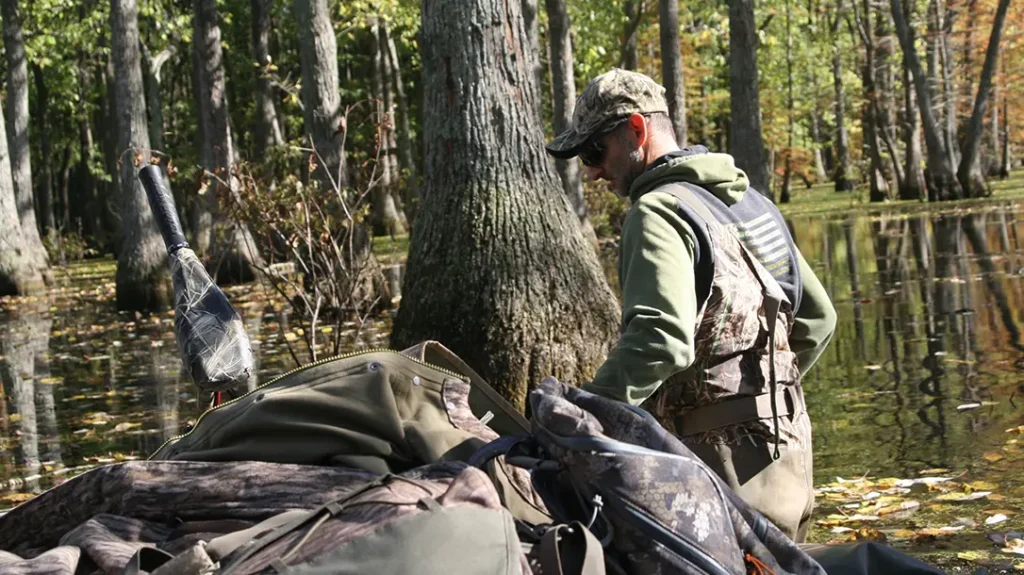
As I sat in the duck blind with a couple of coworkers, I realized only two of us were shooting sub-gauge and Tungsten Super Shot (TSS). The first batch of mallards came into the decoys, and we were given the signal to “take ‘em”. I picked out a bird and pulled the trigger. The bird immediately crumbled. A few volleys later, a pair of mallards came in. The hunter to my immediate left was a bit quicker on the trigger than I and shot the bird I was aiming at. But instead of falling, the drake shoved it into high gear. I slapped the trigger, and the bird hit the water, remaining motionless.
As I have stated in past articles, I struggle as a wing shooter, yet here I was shooting a 20-gauge on ducks, nonetheless. What gave me the confidence to shoot the 20 gauge instead of my traditional 12 gauge? In a word, TSS.

Advertisement — Continue Reading Below
TSS -How We Got Here
Since the banning of lead shot for waterfowl in 1991, alternatives have been sought. They searched for the killing properties of lead without its toxicity. Steel and Bismuth were the earlier offerings. However, in 2001, Hevi-13 received final approval as an acceptable, non-toxic shot for waterfowl from the U.S. Fish & Wildlife Service. This shot was an alloy of Tungsten, Nickel, and Iron, and waterfowl hunters loved the results it produced.
When TSS 18 hit the market, it upended the apple cart associated with the stigma of large shot sizes needed to hunt waterfowl. TSS had been handloaded for more than 10 years, with reports of great patterns and even better lethality on waterfowl and turkeys. It didn’t take long for ammo manufacturers to introduce their own version of loaded TSS ammo.
Winchester’s Last Call- A Game Changer?
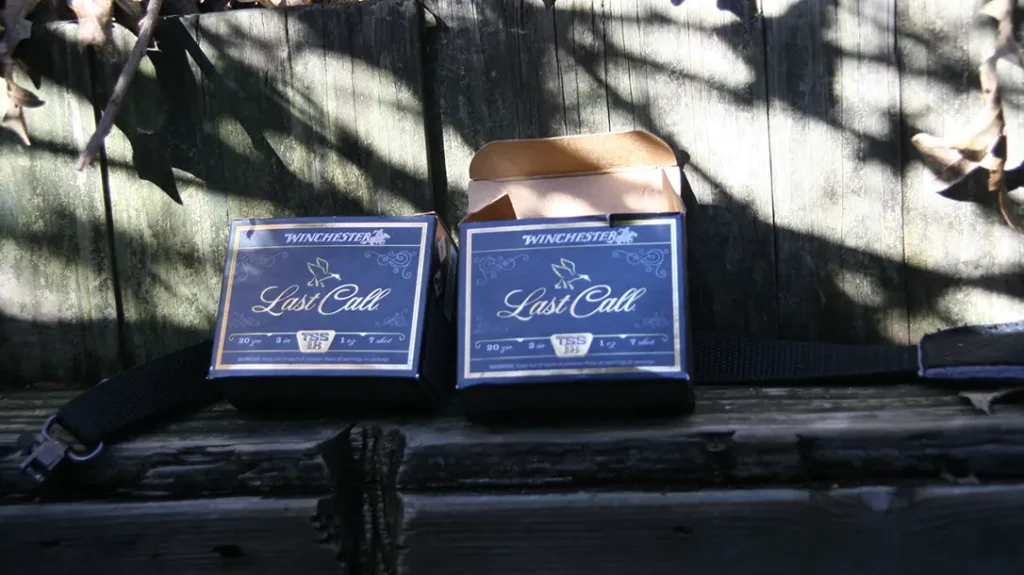
Last Call TSS18 features a buffered tungsten shot, which delivers nearly twice the energy of steel and 40% more pellets than traditional steel loads. Winchester provided me with a couple of boxes of 20-gauge 3” with 1 oz of #7s. These loads boast 184 pellets compared to a standard load of #2 steel, which only contains 125 pellets. All things being equal, speed-wise (nominal 1400 fps), the #7 TSS has nearly identical energy. However, because of the density of the TSS, penetration tests show the smaller TSS outperforms the #2 steel.

Advertisement — Continue Reading Below
Patterning Last Call
The desired effect when shooting a pattern board is to have a uniform and dense pattern with no holes in the pattern. When I patterned the ammo at 40 yards, shooting a standard full choke. I was flabbergasted. I got everything I was looking for; however, the entire pattern was in a 12” circle. This is great for turkey hunting, but not the 30” circle associated with wing shooting.
I swapped over to a modified, and the pattern opened much closer to the 30” mark. In hindsight, I should have installed the improved cylinder for the hunt. The majority of the ducks worked perfectly over the decoys at 35 yards or less. After I returned from hunting, I returned to the pattern board. I discovered the improved cylinder choke produced a near-perfect pattern with nearly 100 % of the pattern in a 30” circle.
The only detractor of Winchester’s Last Call ammo is the price. A brief search on the internet found a box of 10 shells at a price of $45.00, which is $4.50 per shell.
Last Call Double Shot
Last Call Double Shot is a blend of precision-plated steel shot with high-density TSS. Why the blend? I see it somewhat as a cost-cutting measure. The Double Shot comes in at about $1.60 per shell vs. the $4.50 for the Last Call TSS. This custom-blended payload is stacked with half-sized steel shot and TSS. It improves pellet counts and pattern density to maximise lethality.
Advertisement — Continue Reading Below
Performance in the Field
My testing showed the larger steel pellets opened up on the target while the smaller TSS pellets filled in the gaps around the steel shot. This was shooting the improved cylinder at 40 yards.
Winchester Ammunition Ambassador, Foster Bartholow, has been testing the Double Shot in the field and states, “The Double Shot shoots really well. The number one thing I noticed was that we weren’t crippling birds. Normally, when hunting with steel, you would have birds that, although they were visibly hit, would sail off out of range and would have to get out and retrieve them. But with the Double Shot, we weren’t getting this.” Bartholow attributes this to the TSS that is blended with steel pellets.
Winchester’s Last Call
So, is Winchester Last Call a game-changer? If the game is killing ducks and geese humanely at distances far beyond steel loads by itself, then the answer is a resounding “yes.”
Advertisement — Continue Reading Below
For more info, please visit Winchester.
WHY OUR ARTICLES/REVIEWS DO NOT HAVE AFFILIATE LINKS
Affiliate links create a financial incentive for writers to promote certain products, which can lead to biased recommendations. This blurs the line between genuine advice and marketing, reducing trust in the content.