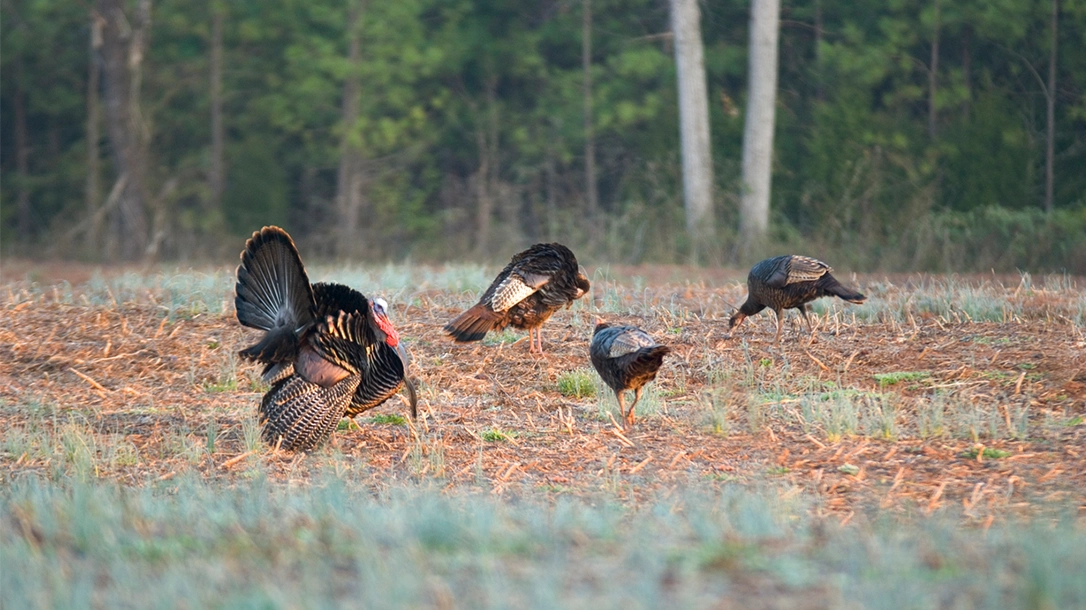
When it comes to turkey calls, every hunter has a favorite type, whether that is a diaphragm, pot and striker, box call, or tube call. Walk through any major show like the NWTF Convention and you’ll see tables stacked with options in every material, shape, and tone imaginable.
My daughter isn’t a hunter. She so eloquently asked, “Why do you need so many kinds of calls, don’t they all do the same thing?”
The short answer is yes. All turkey calls are designed to imitate turkey vocalizations.The longer answer is that each call produces different tones, pitch, volume, and vibration. And those subtle differences can determine whether a gobbler answers or walks away.
Choosing a turkey call isn’t much different than choosing a fishing lure. Many lures are made to catch the angler first. Turkey calls can be the same way. Understanding how they work, and when to use each one, is what separates collecting calls from using them effectively.
A Brief History of Turkey Calling
Turkey calling isn’t new. Native Americans used primitive calls to bring birds into range long before commercial versions existed.
Advertisement — Continue Reading Below
One of the earliest published references to turkey calling dates back to 1854, likely describing a wing bone call. By 1883, printed instructions for slate-and-peg style calls were circulating, a design that remains popular today. Charles Jordan was an early pioneer of turkey call making, following close behind by Henry Gibson in 1897.
in 1940, archaeologists uncovered wing bone calls at the Eva archaic site in Benton County, Tennessee that were carbon-dated to 6,500 BC.
Despite modern materials like acrylic, carbon, and precision-machined components, the basic principle hasn’t changed: imitate a hen well enough to convince a gobbler to commit.
Two Main Categories of Turkey Calls
While there are many variations, all turkey calls fall into two broad categories: friction calls and air calls, although, there are many different variants of those two base categories. Understanding this distinction makes it easier to choose the right tool for your skill level and hunting conditions.
Friction Calls (Best for Beginners)
Friction calls rely on rubbing two surfaces together to create turkey sounds. These calls include box calls, push button calls, and pot calls, just to name a few. Friction calls are good for hunters who want versatility and tone options without mastering mouth calls. They are also the easiest for beginners to master. A bit of practice and even the novice caller will sound like a hen turkey.
Advertisement — Continue Reading Below
Pot and Striker Calls
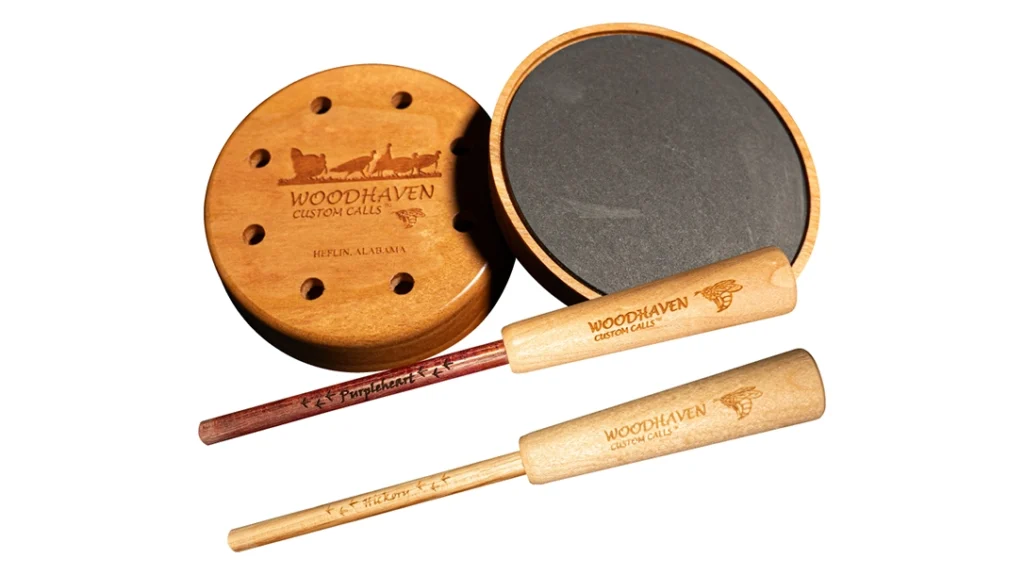
Pot calls are round and shallow with a hard surface (slate, ceramic, glass, metal, or acrylic) inside. A striker is drawn across the surface to produce sound. Strikers are usually wood but sometimes carbon or acrylic.
Push-Button Calls
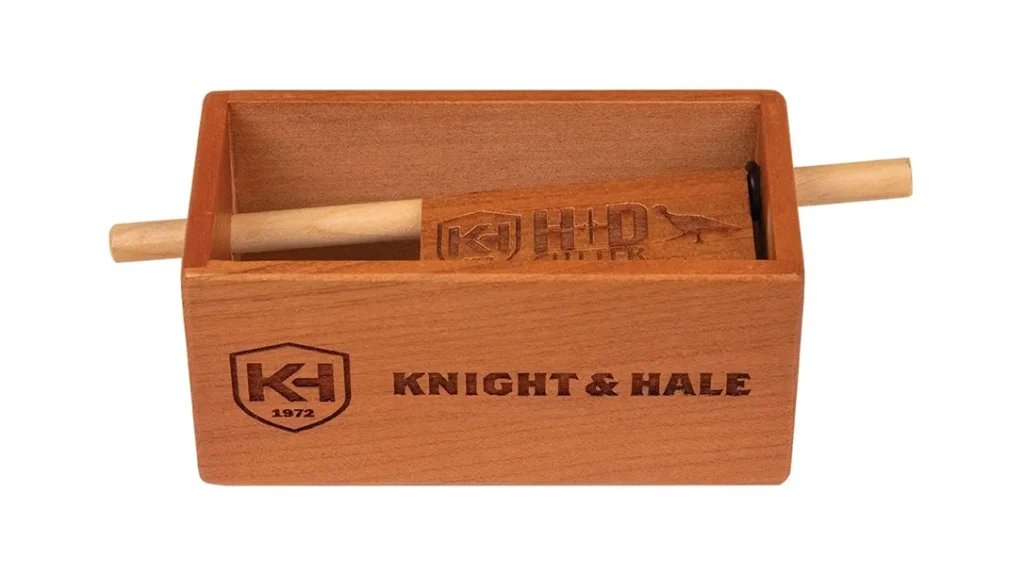
Push button calls are arguably the easiest calls to master. You simply push a button to produce yelps and clucks. They are good for absolute beginners, youth hunters, or hunters who struggle with cadence
Box Calls
Advertisement — Continue Reading Below
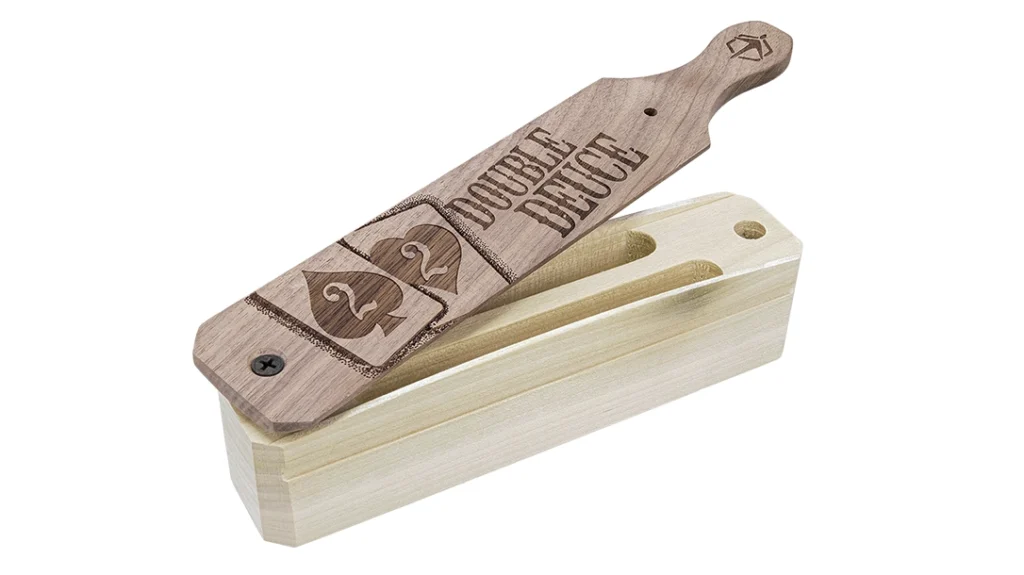
The box call features a hollow wooden box with a pivoting lid that creates sound when dragged across the box edge. This call has either a solid piece of wood mortised out or one that has been glued up to create the cavity. It has a convex lid and is attached to the box with a single screw on one end which sits loose on top of the box. They are good for windy days or locating gobblers at distance
Nearly every turkey vest has a dedicated box call pocket, and for good reason. When you need to reach out and touch a bird with sound, it’s hard to beat.
Air Calls (More Advanced, More Versatile)
Air calls require controlled airflow and practice but allow hands-free operation and greater nuance.
Diaphragm (Mouth) Calls
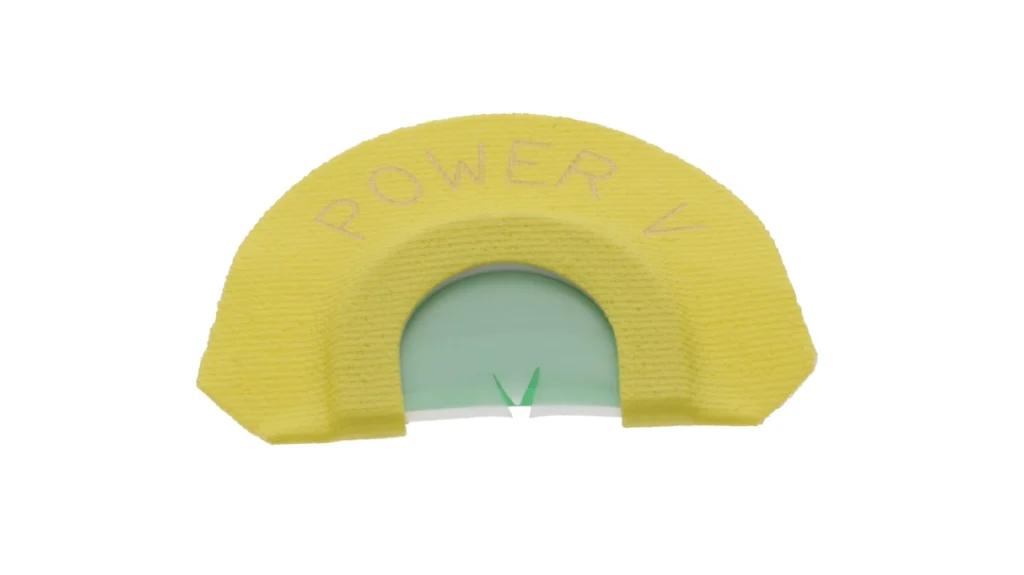
Perhaps the most popular call among serious turkey hunters is the mouth call. Its construction is quite simple. It consists of a U-shaped metal frame that holds a piece or several pieces of latex taut, and tape is then wrapped around the frame to help seal off the call. When placed in the roof of the mouth, air is blown over the call with the tip of the tongue contacting the call. Once the caller gets noise from the call then all that is required is practice, practice, practice. It has taken me 25 years to produce a noise that resembles a turkey sound using this call.
Advertisement — Continue Reading Below
There are some big advatanges to mouth calls. They are hands-free, which is critical when birds are close, and extremely versatile. The challenge to this type of call is that is is difficult to master and can take years of learning.
Yelper (Trumpet Call)
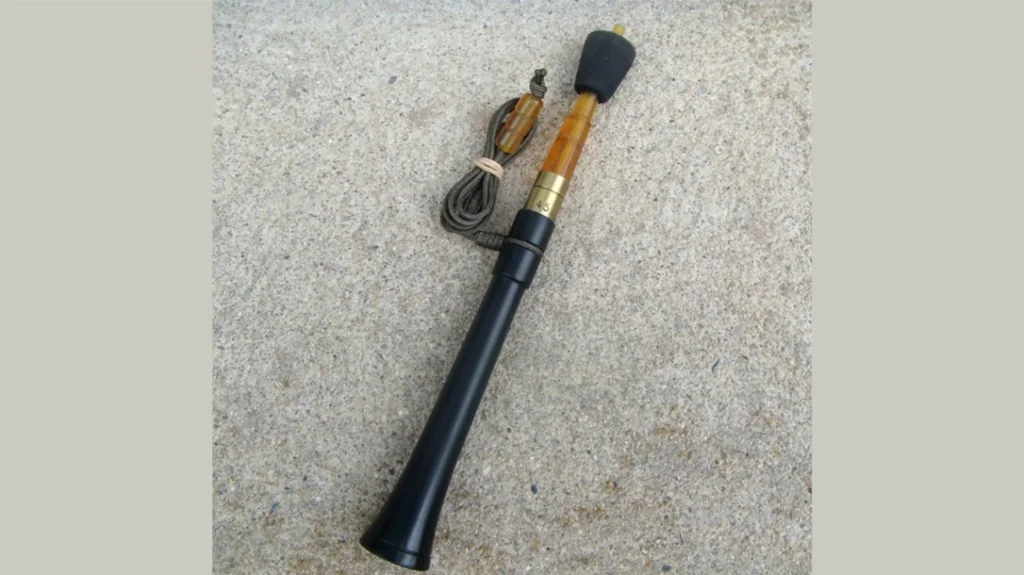
The Yelper is perhaps one of the most intriguing calls. Instead of blowing on this call, air is sucked in to produce realistic turkey sounds. The Yelpers roots can be traced back to famed turkey hunter and call maker Charles Jordan which used the Native Americans’ wing bone and cane to create this suction call. Taking the calls effectiveness into account, the yelper also known as the trumpet yelper, has become an outlet for artists to make working pieces of art. The yelper is not for beginners and takes practice to create life- like turkey sounds.
Tube Calls
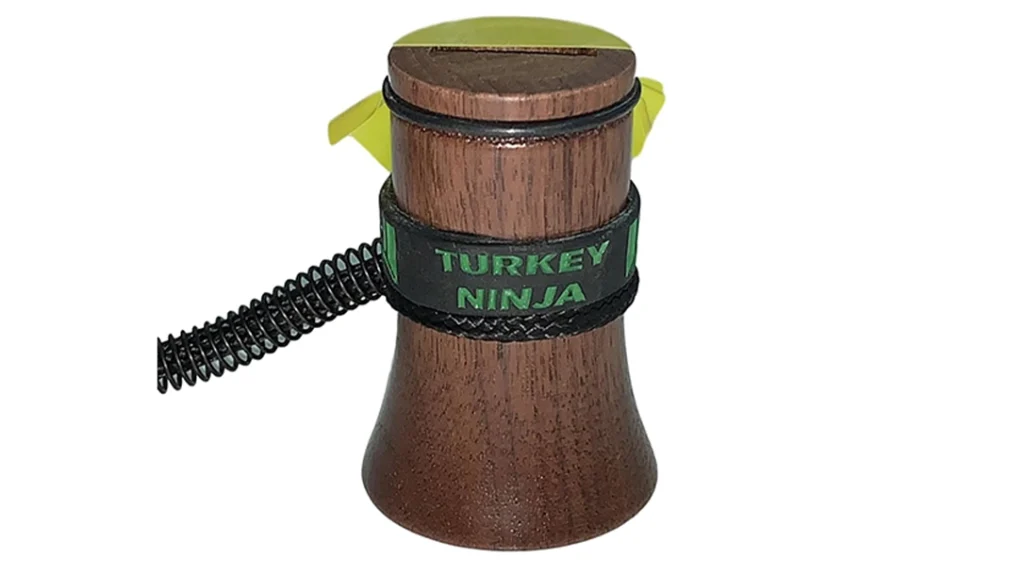
Tube calls are gaining in popularity. It consists of a short tube shaped like a horn and a piece of latex placed taut over the small end of the tube. This call also requires a lot of practice to become proficient. Proponents of the tube call claim it is the most versatile call of all the turkey calls. Tube calls can create a wide range of turkey vocalizations.
Advertisement — Continue Reading Below
So Which Call Is Best?
There is no single “best” turkey call. Most experienced hunters carry multiple types because different conditions require different sounds. I have hunted with turkey hunting legend Ray Eye in several different places and watched as he implemented different calls in different scenarios. He often uses a box call in windy set ups or if he wants to get some volume to get a gobbler to give away its position. He will then switch over to a diaphragm call to get the bird close and personal.
On one hunt in Nebraska, birds ignored everything until a ceramic pot call produced a tone one gobbler liked. That unique pitch revealed his location. Once fired up, he responded to other calls.
The lesson? Turkeys respond to tone and nuance.
Solution: Carry Multiple Calls
Different calls have different jobs and/or work in different instances. Plus it comes down to personal preference. Some hunters might prefer the versatility of a mouth call. Another hunter might gag at the feeling of it on the roof of their mouth. Get a good turkey hunting vest with multipe pockets and carry more than one call. Make sure to practice with them before going afield.
The nuance of birds, their preferences, mood, and reaction to specific sounds, is what makes turkey hunting both maddening and rewarding. Just be warned: collecting turkey calls can become almost as addictive as chasing longbeards themselves.
Advertisement — Continue Reading Below
WHY OUR ARTICLES/REVIEWS DO NOT HAVE AFFILIATE LINKS
Affiliate links create a financial incentive for writers to promote certain products, which can lead to biased recommendations. This blurs the line between genuine advice and marketing, reducing trust in the content.