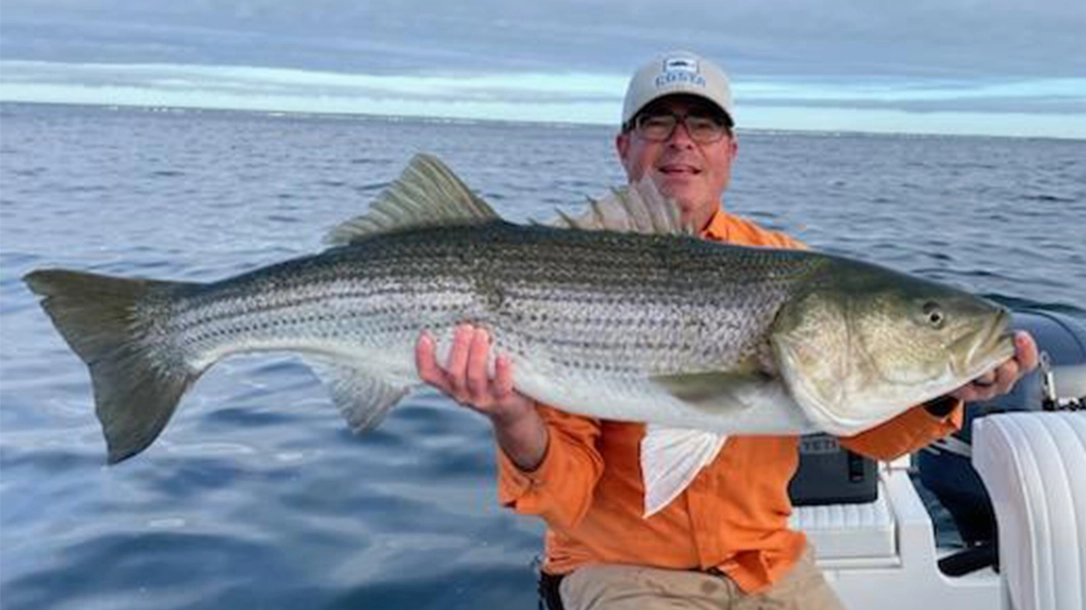
I’ve heard people talk about naming their spirit animal, something that reflects their personality or style. I don’t know if I truly relate to a spirit animal, but if you asked me to name my spirit fish, it would be the Striped Bass.
That connection started when I was eight years old. My father brought me to Nantucket and, after dark, planted me at the water’s edge to surf cast into an onshore breeze with an electrical storm looming on the horizon.
Earlier that day, while the sun was still up, we practiced casting at Codfish Park. He taught me the basics — how the reel worked, how fast to retrieve, how to cast straight out instead of sideways into someone else’s line, and how to feel when a lipped lure was digging into the retreating surf so I wouldn’t reel it into the rod tip (or my face).
Those lessons helped a little. But when you’re eight years old on a pitch-black beach and can’t see twelve inches in front of you, most of that instruction disappears. Still, I stayed committed. I cast with confidence. I checked for weed every other cast. I believed in my lure choice, which was a chrome silver Redfin with a blue back. My dad wasn’t sold on it, but I loved it and insisted that’s what I wanted tied on.
The First Thump
It wasn’t a perfect night. When I tangled or ran into trouble, I’d yell “DAD!” into the darkness and he would appear, fix the issue, and slip back into the unseen. Not long into the night, I felt my first big thump. Then it happened again about an hour later.
Advertisement — Continue Reading Below
The only two fish landed that night were mine, a 25-pound and a 35-pound striper. Dad at my side. Friends cheering. Line, knots, and lure holding true.
You want to ask me about a spirit animal? Mine is the Striped Bass.
Over the 46 years since that night on Nantucket, I’ve spent thousands of days chasing stripers from Virginia to Maine. If you asked me to pack a shoulder bag with my top lures, here’s what would go in it.
My Everyday Striper Setup
Before talking lures, let’s talk gear. If I’m casting the rocks of the Cape Cod Canal, the beach at Montauk, or the south shore of Martha’s Vineyard where distance is critical, I might use a 10-foot rod with 50-pound braid, 40-pound leader, and 3–6 ounce lures.
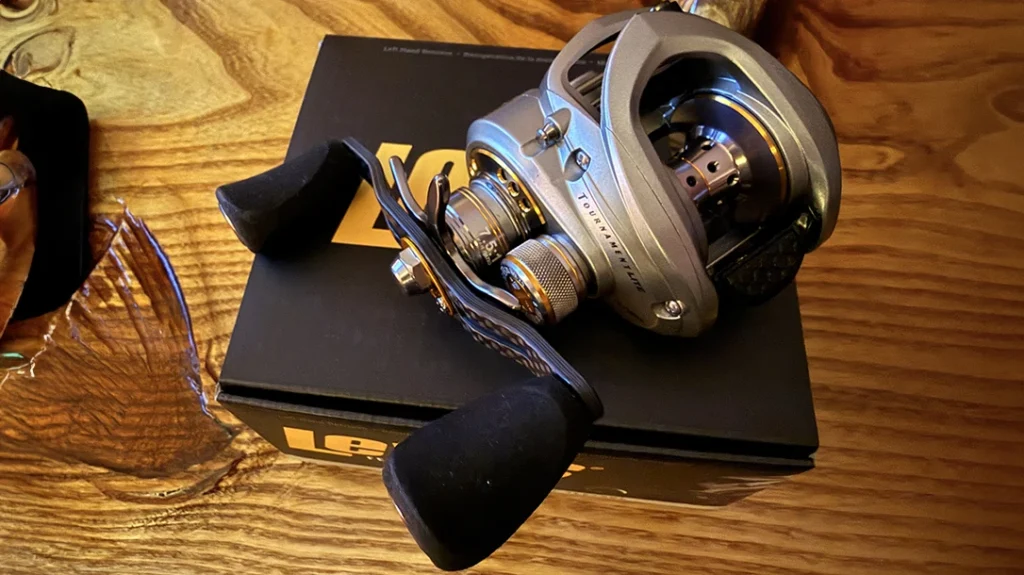
For this article, though, I’m thinking about a more versatile inshore setup that works from a boat, beach, or jetty: a 7’6” medium-fast action rod, 4000–5000 series reel, and 30-pound braided line paired with a 25-pound fluorocarbon leader.
Advertisement — Continue Reading Below
This is my everyday setup. Years ago, it was all about big gear. Today, more anglers are embracing light tackle and it makes the fight that much better.
Rebel Jumping Minnow
The first lure in my bag is always a Rebel Jumping Minnow. My uncle introduced me to it about 30 years ago on Martha’s Vineyard while targeting big bass in shallow water. He worked it with a “Sweep and Sit” technique, essentially sweeping the rod to make the lure dive, then letting it bob nose-up on the pause. It’s effective, but I prefer to “walk the dog,” and I’ve found that more productive.
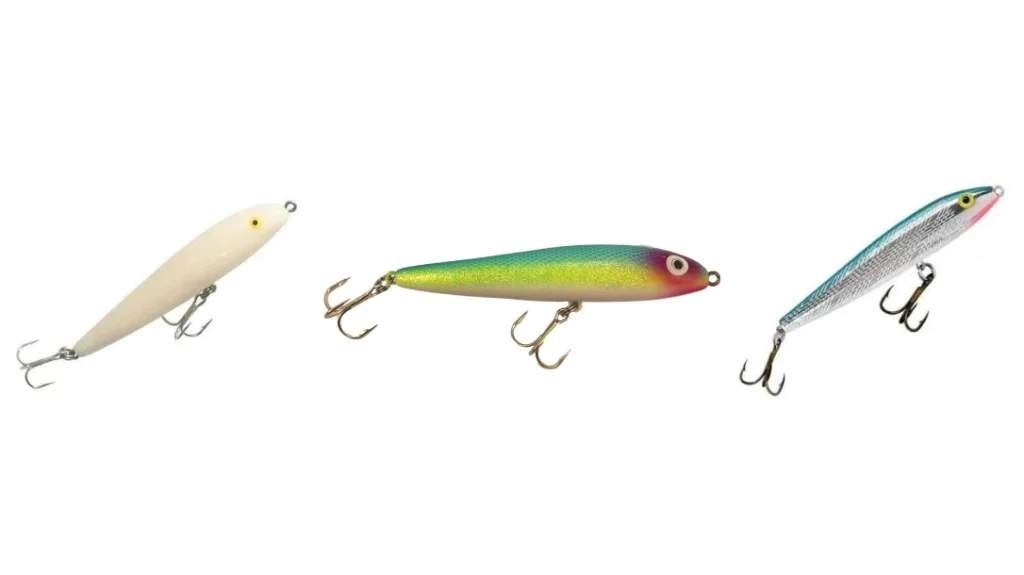
My top colors selections are blue over silver, black over silver, bone, and “parrot” (Rebel calls it Half Beak. One important note: this lure is made for freshwater. Upgrade the hooks immediately. I swap in VMC O’Shaughnessy 4X strong trebles (#9626 PS) and 60-lb Owner Hyper Wire split rings (#5).
Stripers love to dig into rocks and structure, and if you fish heavy drag like I do, the stock hooks can bend out. Upgrade them first thing.
Advertisement — Continue Reading Below
Yo-Zuri Hydro Pencil
The Hydro Pencil is a slightly larger “walk the dog” lure with more casting distance than the Jumping Minnow.
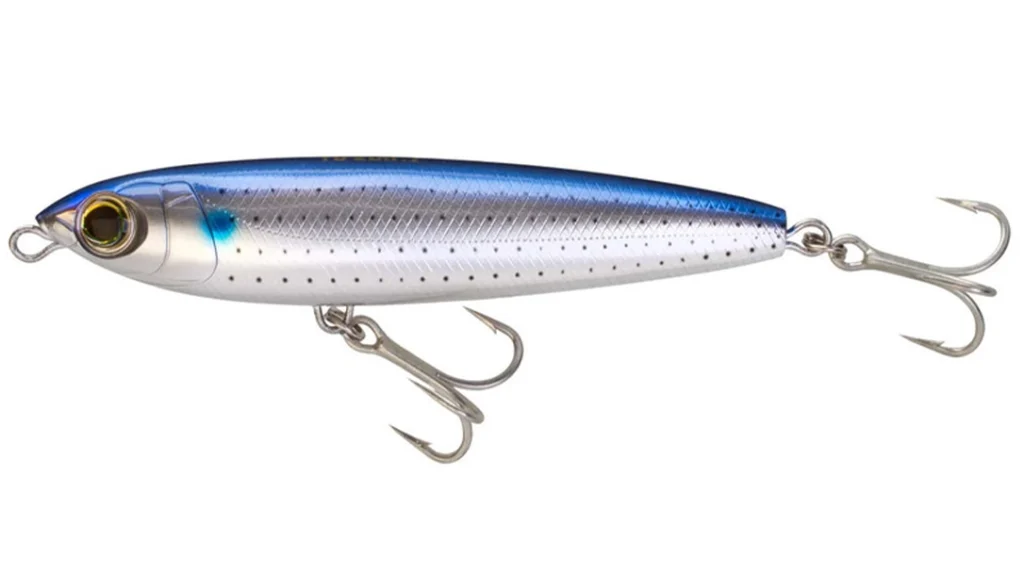
It shines when fish are feeding on larger bait like herring or adult menhaden. My go-to colors are bone, mullet, and blue mackerel. Yo-Zuri hardware is solid but rinse them thoroughly after each trip. Saltwater eats everything.
Savage Gear Sandeel
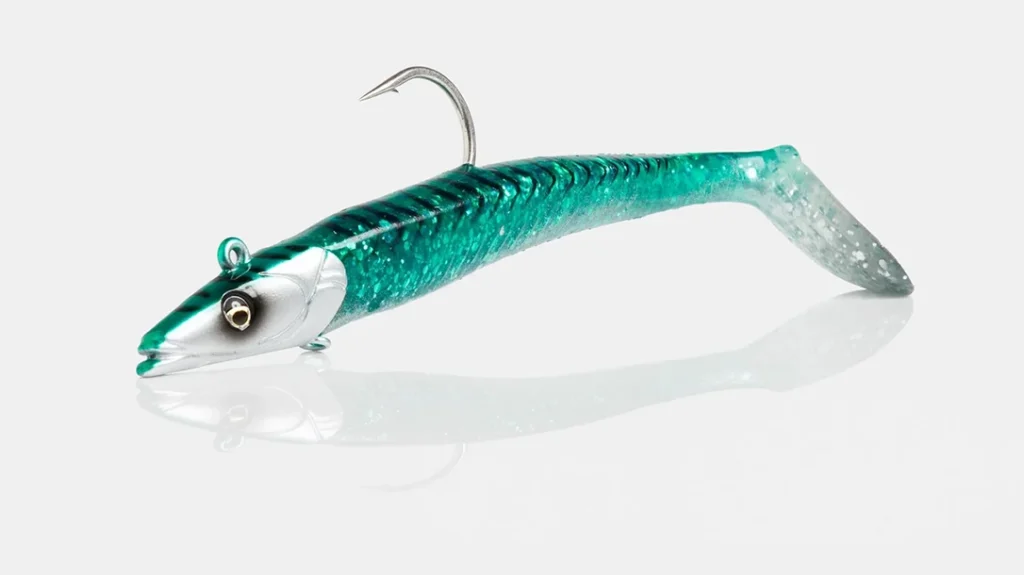
For finicky fish or when bass aren’t showing on the surface, the Savage Gear Sandeel is deadly. Last year while fishing the rips south of Monomoy, I saw bird activity but no visible fish. I switched to a 5-inch Green Back Sandeel and hooked up almost immediately.
Advertisement — Continue Reading Below
While retrieving, slowly lift the rod while reeling steadily. Let it rise and fall naturally. If mackerel are around, the 6-inch Green Mackerel version is an absolute killer. When fishing it slowly, many strikes happen on the drop, so stay ready.
Slug-Go
The Slug-Go is classic soft plastic that still produces. I fish the 7-inch and 9-inch versions unweighted. A slow retrieve works best. The top color picks are all white or Arkansas shiner, which is green over silver.
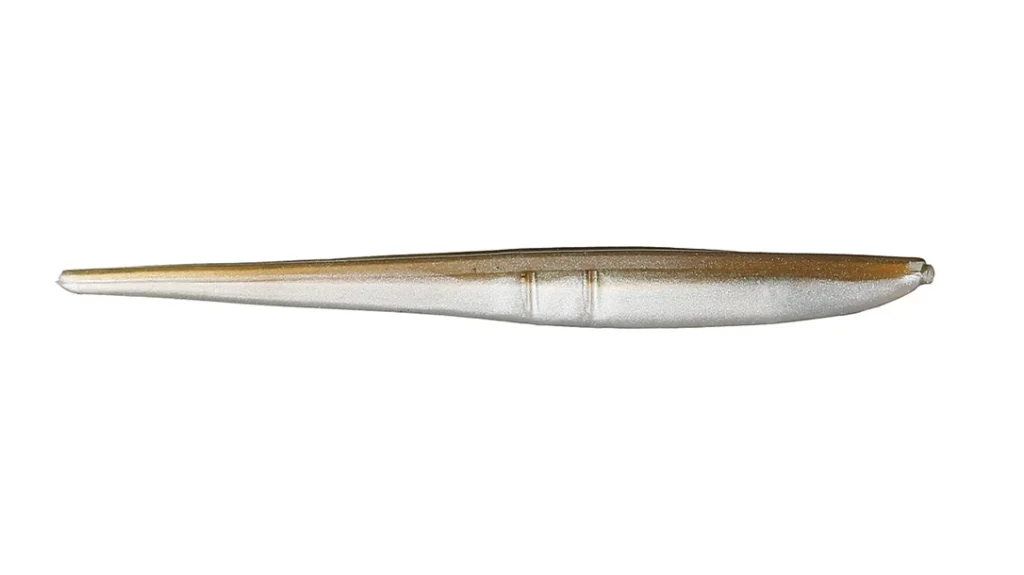
It doesn’t cast far, but you often don’t need distance. Stripers frequently run the trough right off the beach. Look for waves breaking into deeper water close to shore. For hooks, I use Owner TwistLock 3X or weighted Best TwistLock hooks. Make sure the lure is rigged perfectly straight, otherwise your action suffers.
Daiwa SP Minnow
The Daiwa SP Minnow is a modern upgrade to the Redfin I used as a kid. Today’s versions feature magnetic weight transfer systems for longer casts. While action is more important than distance, extra range never hurts.
Advertisement — Continue Reading Below
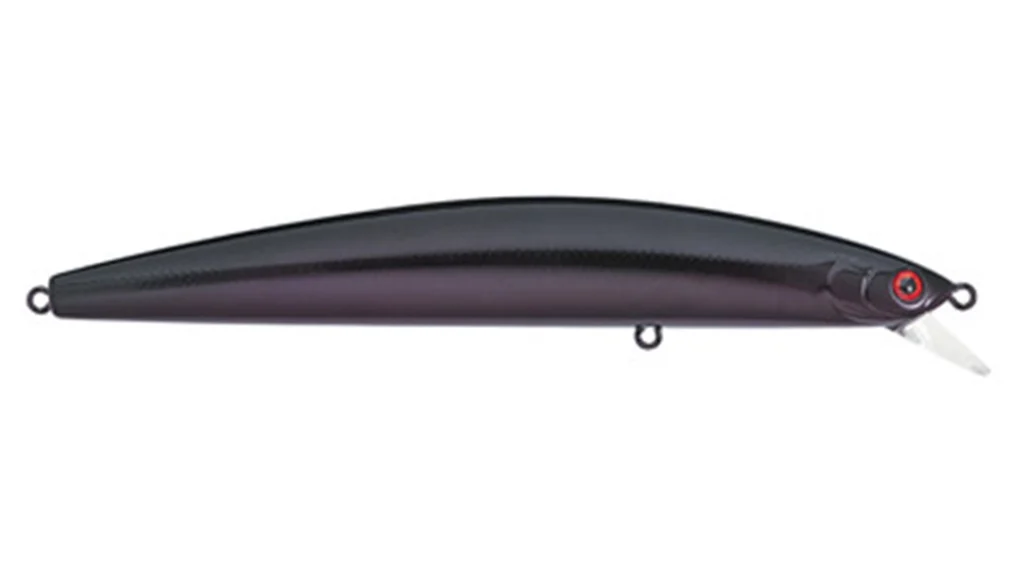
Top colors chocies are bone, green mackerel, sand eel, and black or “blurple,” whicj is black over purple. I typically fish it with a slow, steady retrieve, but a rip-and-stop can be very effective.
RM Smith Jigsmith
My personal favorite wooden plug is the RM Smith Jigsmith. Unlike plastic lures, it has no internal rattle. On calm, flat days, I believe that quieter, more natural sound can outproduce noisy plugs. I usually keep one tied on through June and July in green mackerel, blue mackerel, and menhaden.
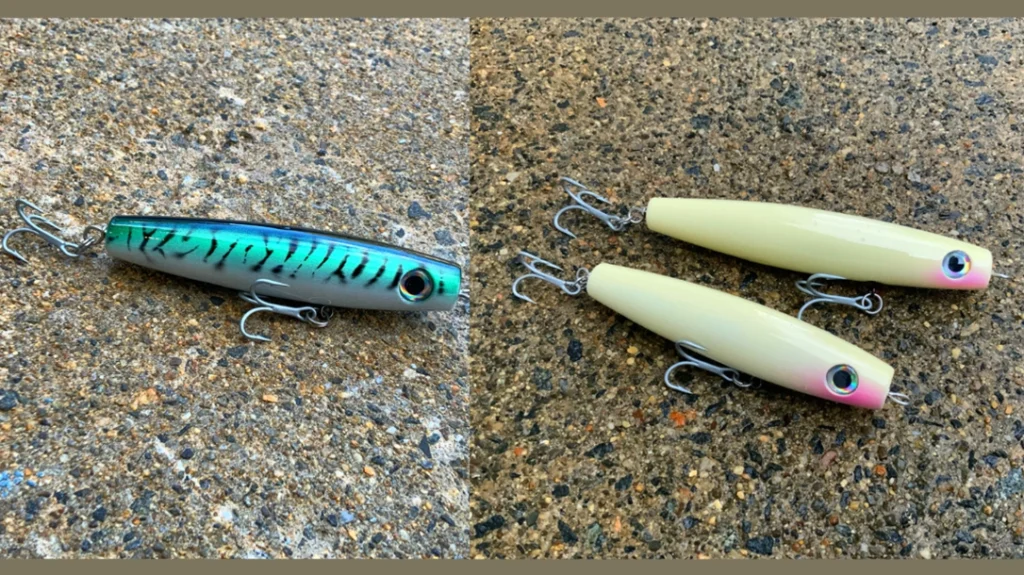
I replace the rear treble with a single hook dressed with bucktail. Many big bass over 40 inches have nipped that trailing hook and sealed the deal. These plugs aren’t cheap so rinse and care for them after every use.
Advertisement — Continue Reading Below
Proper Catch and Release
There are plenty of other great lures I didn’t mention, including bucktails, vertical jigs, slow-pitch jigs, Hopkins, even the Doc (my son’s favorite because it tends to weed out bass under 30 inches). If I’m fishing anywhere along the East Coast for striped bass, any of the lures listed above will get me tight on good fish.
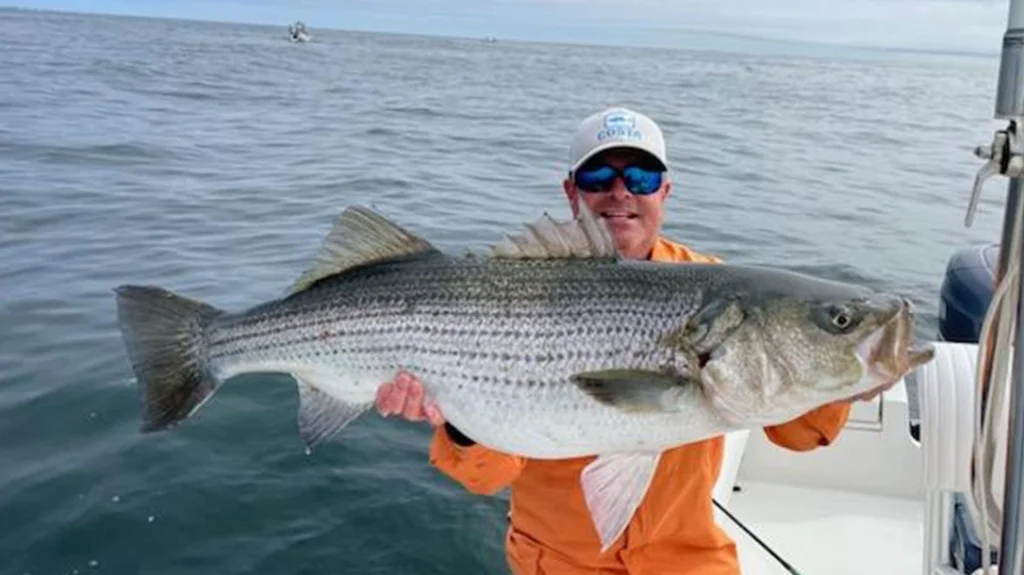
It is important to mention that stripers must be handled with care. These fish tend to be damaged easily. Handling them properly ensures they will be there to catch and release again and again. Keep fight times short, return them promptly to th water, turn up your drag, support big fish horizontally, and don’t hoist them vertically by the jaw. Fish over 35 inches are likely spawning females, so treat them accordingly. And always take a kid fishing and let them feel that first thump in the dark. You never know, they might just find their spirit fish.
WHY OUR ARTICLES/REVIEWS DO NOT HAVE AFFILIATE LINKS
Affiliate links create a financial incentive for writers to promote certain products, which can lead to biased recommendations. This blurs the line between genuine advice and marketing, reducing trust in the content.
Advertisement — Continue Reading Below