Hunters and state agencies have much to be proud of concerning their conservation efforts. Take the plight of the whitetail deer. My father’s hunting partner, Beemer, recalled that back in the 1940’s the population of deer in his area were nearly non-existent.
“You might as well have told someone you saw hippopotamus as you did a whitetail back then,” the old timer once confided in my father.
Due to overhunting, loss of habitat and little to no conservation plan, the whitetail deer population wasn’t in good shape. Fast forward to today with the efforts of conservation agencies and hunters alike, the whitetail has rebounded and is the most widely distributed mainland ungulate herbivore in North America.
To keep this population in check, most state agencies recommend harvesting antlerless deer. However, there’s only so much freezer space, so what is a hunter to do?
Share the Harvest
In 1992, Missouri hunters established the Share the Harvest program in which surplus bounty was donated to those less fortunate.
Advertisement — Continue Reading Below
“Share the Harvest is a feel-good story. Hunters are willing to help out their neighbors in need. The hunters have compassion and are willing to give and step up and show what true conservation stewardship looks like,” Tyler Schwartze, Executive Director of the Conservation Federation of Missouri, said.
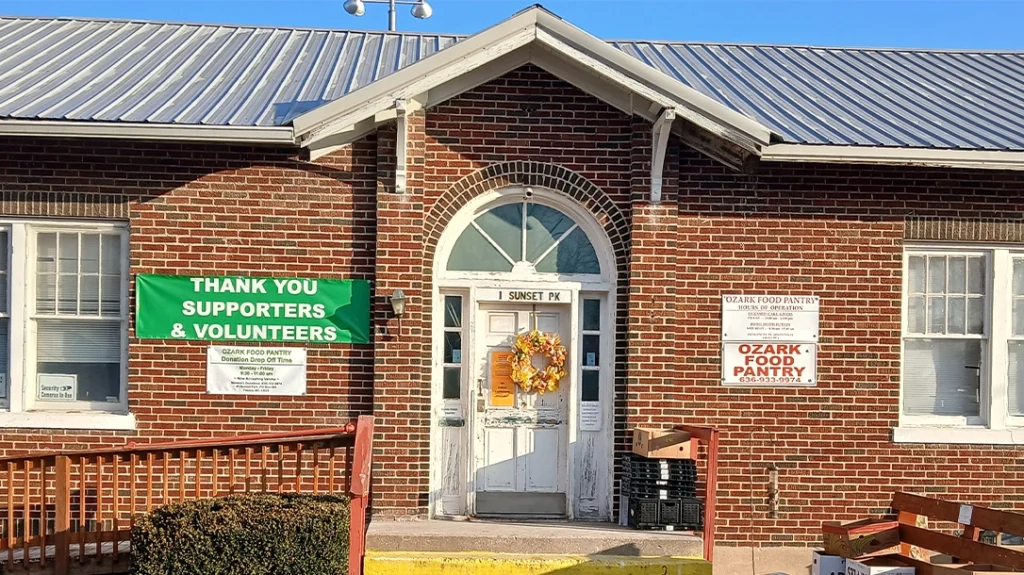
Conservation of Missouri is about caring for their people and their wildlife, “It’s a Win- Win -Win. Hunters win by being able to harvest a deer and donating it to their neighbors in need, the proccessors win by getting positive feedback for their involvement and donations of locker space, and participating organizations like the food banks win by having a ready-made service project for a good cause not to mention the Department of Conservation has another management tool for Missouri’s whitetail deer management resource,” explains Schwartze.
The Winners
Why is donating important? Fellow writer and colleague, Bill Cooper of Cuba, Missouri donated a deer to the Share the Harvest last season. He explains, “There is such a need for protein. I’ll eat red meat whether I put a deer in the freezer or not. It only cost me $7 for that extra antlerless tag I used. It feels good to know that a family received the venison for such a small price on my part.”
In the 2024-2025 season throughout Missouri, 4,116 deer were donated to the Share the Harvest program which equates to 243,650 lbs. of venison for Missourians in need.
Advertisement — Continue Reading Below
There are approximately 85 processors who participate in the Share the Harvest program throughout the state of Missouri. The program is open to all who want to participate. Local game wardens in each county contacts local processors to find out if the processor is willing to participate. While being in the program is voluntary, the processor is compensated $95 per whole deer which is paid by the CFM through donations from corporate and individual contributions such as Feeding Missouri, Bass Pro Shops and Shelter Insurance. The CFM also solicits donations from individuals. Therefore, even if you didn’t harvest a deer and donate it, you can contribute by providing funding for processing.
There typically is no cost to the hunter to donate their deer.
I donated my deer. Now what?
When a successful hunter decides to donate their harvest, they drop off the deer to a participating processor. The processor then removes the Retropharyngeal Lymph Nodes from the head area of the deer, and these are sent off to be tested for CWD. This testing is handled by the Missouri Department of Conservation.
The carcasses are hung and kept in cold storage until the results come back negative in which case the processor proceeds with the butchering of the animal.
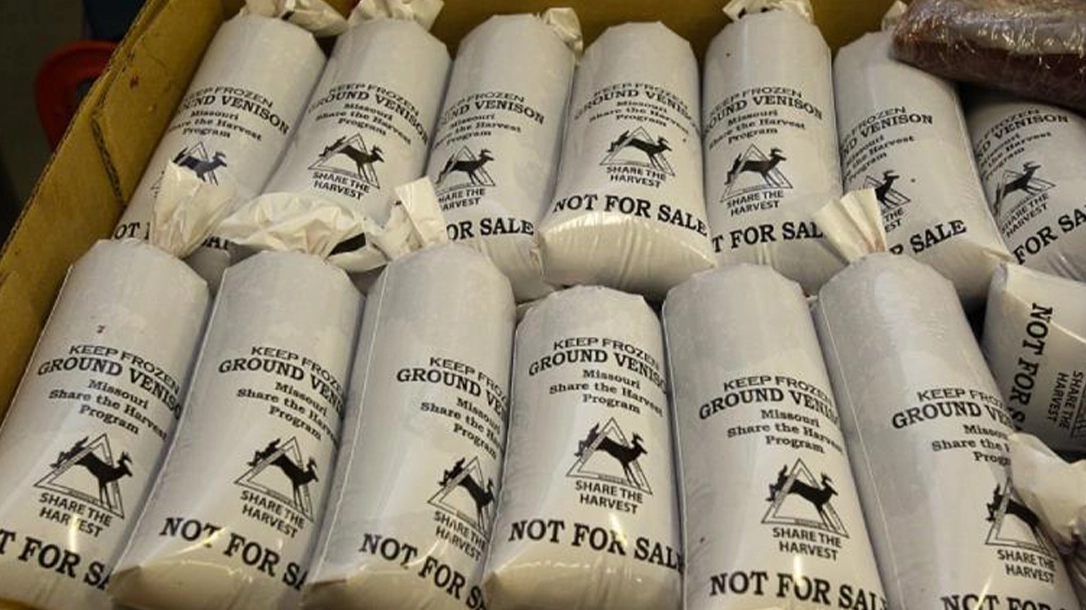
Once the meat has been processed into ground venison, it is frozen and the local food banks are notified the venison is ready to be picked up and taken to their facility to be distributed.
Advertisement — Continue Reading Below
In my hometown, a local processor, John’s Butcher Shoppee in Festus, Missouri processed 600 deer throughout the Missouri deer season. “We had 46 deer donated to the Share the Harvest program of those, six came back with a positive test,” owner Tom Kolisch said.
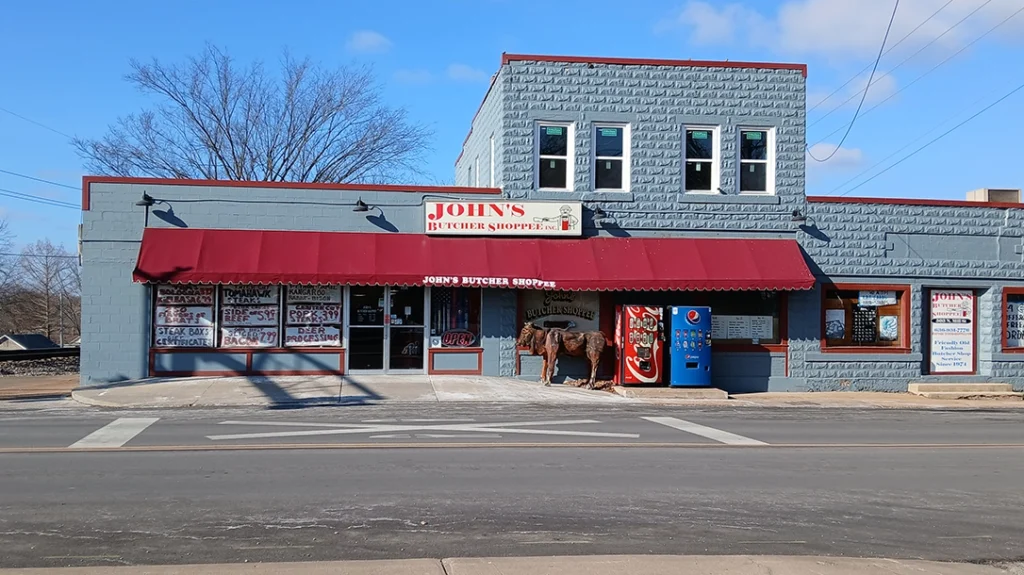
In the rare occasion a test comes back positive for CWD, the carcass cannot be used in the program and must be destroyed.
Different Name, Same Cause
Currently, more than 40 states throughout the US have adopted a program to help donate high protein, nutritious venison to local food pantries.
Perhaps, the most widespread is Hunters for the Hungry, an initiative supported by the National Rifle Association, but other names like Hunters Helping the Hungry, Wisconsin Deer Donation and Farmer and Hunters Feeding the Hungry are just a few of the names of some of the different state initiatives.
Advertisement — Continue Reading Below
An average sized deer will render about 50 lbs. of low-fat, high protein venison or roughly 200 meals.
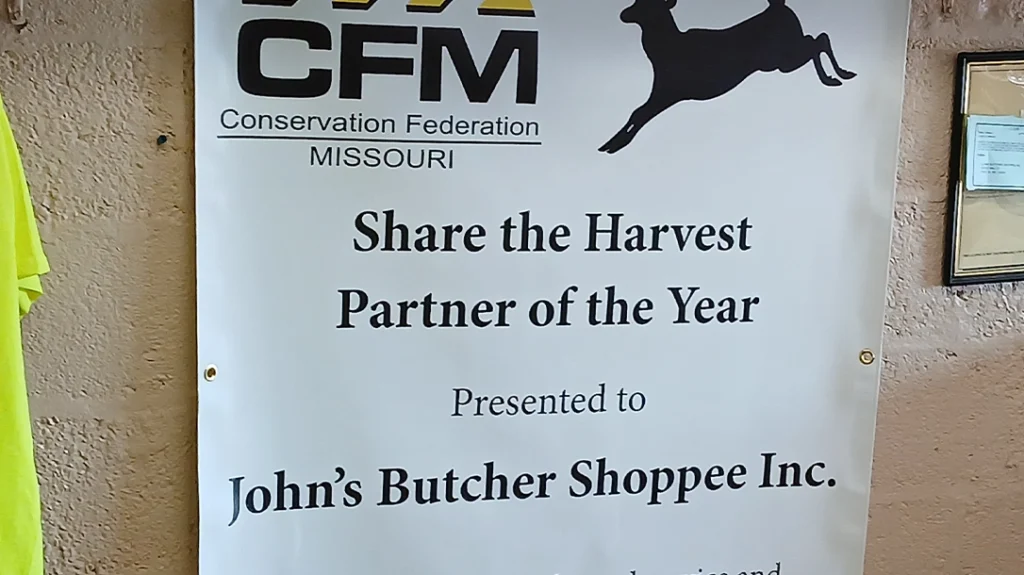
According to Hunters for the Hungry, more than 8.1 million meals are provided by donations from hunters annually. This translates to 2.1 million pounds of donated venison. The top donating states are Pennsylvania, Missouri, Ohio, Virginia and Iowa.
No matter if you are a hunter with a full freezer of venison or you weren’t successful this season, you can still contribute to the cause by making a monetary donation to offset the processing costs.