
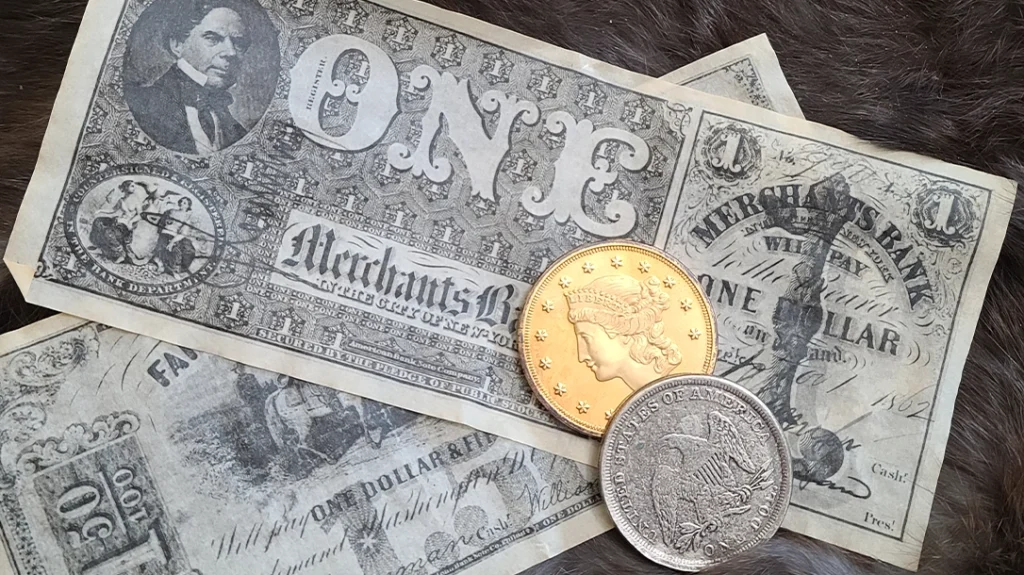
Have you heard the old saying, “two bits, four bits, six bits, a dollar?” Cutting a coin up into eight bits was often the only way to make change on the frontier. Each bit would have had a value of 12.5 cents, and eight bits would have made a dollar.
How did jobs on the frontier stack up compared to the economy of the rest of the country? Most people in the West were there to better themselves socially and economically, so did it pay off?
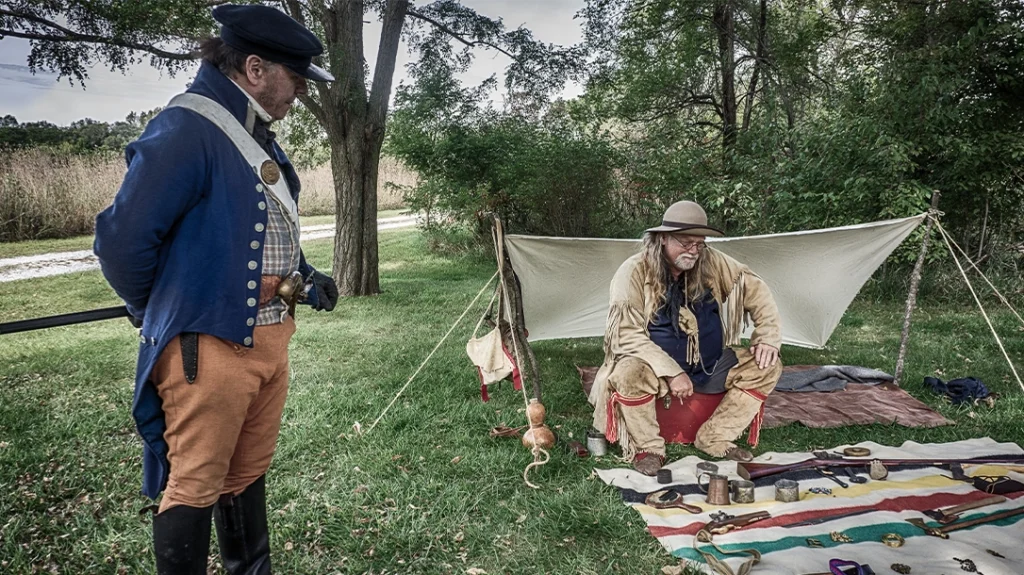
Early on, there were basically two broad categories in which men and sometimes women could earn a living on the frontier: the military and the fur trade. Fort Atkinson, near present-day Omaha, Nebraska, was a large Army post from 1819 through 1827, and it can provide a framework for how well a person might make a living in the military. By contrast, Fort Union, near present-day Williston, North Dakota, was a large, private fort built solely for the fur trade, and it employed many people. A comparison of these two forts will demonstrate the basics of the frontier economy and the pathways to earnings presented by each.
Uniformed Salaries
First, let’s look at the military. The largest single group of consumers at Fort Atkinson was made up of private soldiers. There were many of them, around 1,000 or more, and they all had money to spend. Soldiers were paid in hard money (coin) or “specie” in a time when there was very little standardization in the currency of the country. Individual banks, states and business interests all issued their own currency. However, specie was available to the economy through the string of national banks and military payrolls. This explains why towns often sprang up around military forts: They were places where real money existed, and cash was available.
Advertisement — Continue Reading Below
Privates were paid $5 per month at the time, and most of this income was discretionary. Privates were provided with food, clothing, shelter and whiskey free from the government as part of their package. This was a critical part of the inducement to serve. They were paid in real cash; the money the paymaster brought came from the national bank in Franklin, Missouri (near present-day Columbia); and they were paid on a regular basis. Not a bad deal for an unskilled laborer.
Other Paid Roles
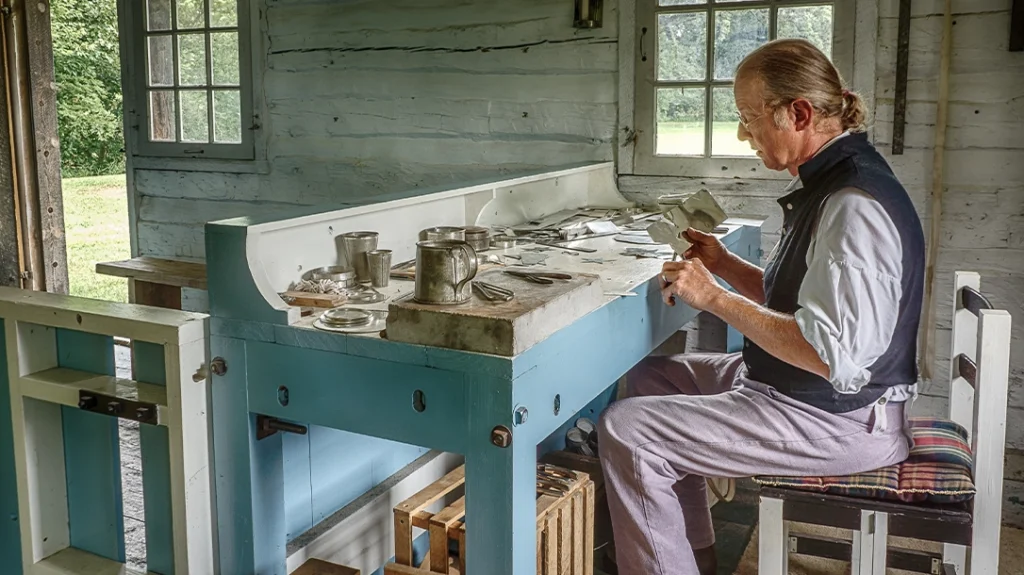
The Bureau for Economic Research shows that the average wage for unskilled farm labor in the States in 1820 was about $10 per month. Room and board were usually provided, but one had to account for clothing, transportation and the various other expenses of day-to-day life, so the total income was not discretionary. Skilled laborers, like carpenters, made about a dollar a day for a 12-hour day and worked six days a week. The average working year of the carpenter was about 10 months, which nets out to about $240 per year or about $20 per month. Of course, the carpenter had to handle all of his own expenses, including tools of the trade. This explains why he was able to charge the rate he did.
At Fort Atkinson, musicians made $6, corporals made $7 and sergeants made $8 a month. Officers’ pay ranged from about $30 a month for surgeons, $40 to $50 per month for line officers, and General Atkinson himself made about $108 a month in 1821. Officers were allowed unlimited credit at the sutler’s store, but stoppages were made in their pay just like the enlisted men to pay their debts.
Typical Government Payroll
Other people at Fort Atkinson also made a living on the government payroll—laundresses, for example. A laundress was appointed to clean for every 17 men, for which she charged a fee of 50 cents per month. A laundress had a guaranteed income, as she was allowed to collect her pay straight from the soldier on payday parade. If she only had the minimum allowable baseline collection of 50 cents per month per man, she made $8.50 per month.
Advertisement — Continue Reading Below
Laundresses charged officers 75 cents a month for every 12 articles of clothing. They could also charge for mending. So, they had the potential to make more than the minimum. Laundresses drew some rations and supplies from the government, but not all. So, her total income was not quite all discretionary. However, this was one area where a woman could make a living on her own on the frontier, and laundress positions were highly sought after at Fort Atkinson.
The Private Sector
Fort Union was a private fur company fort built by John Jacob Astor’s American Fur Company in 1827. By 1830, a complete list of employees, as well as their wages, was available. These figures are close enough to the time period of Fort Atkinson to be relevant to show what a job in the fur business could net a person on the frontier. Of the personnel employed at Fort Union in 1830, the following job descriptions and yearly average pay rates were provided:
- Interpreter: $380 per year, 7 employed
- Clerk/Trader: $371.94 per year, 27 employed
- Trader/Voyageur: $360 per year, 1 employed
- Clerk/Interpreter: $333.33 per year, 9 employed
- Patroon: $284.50 per year, 6 employed
- Hunter: $250 per year, 3 employed
- Carpenter: $165.74 per year, 2 employed
- Blacksmith: $156.66 per year, 3 employed
- Voyageur: $132.85 per year, 233 employed
Breaking Down That Information
As you can see, by far the greatest number of employees were voyageurs. These men were largely illiterate, unskilled and worked almost all the jobs that could be thought of at a frontier post. The American Fur Company kept the old French classification of voyageur, but these men were not all boatmen. They planted gardens, packed furs, manned keel boats and did general labor around the outpost.
Fur-trade jobs, like the military, provided room and board for the incumbents during their enlistment. Like soldiers, voyageurs could purchase goods from the fur company on credit and settle their debts at year’s end. Some clothing was also provided by the company; as a signing bonus, each voyageur received from American Fur what was called the “usual outfit.” This consisted of one three-point blanket, one and a half yards of blue woolen Stroud cloth (for making leggings and breechcloth), one kerchief, one checked shirt, one scalping knife and 3 pounds of tobacco. This cost the fur company $7.50 per man.
Advertisement — Continue Reading Below
Compared to a soldier, the voyageur got one set of clothing and approximately $11 per month. While not all of this income was discretionary, it was still more than the private soldier made on the frontier. In addition, the voyageur was not expected to fight for his country and did not have to put up with military discipline during his career.
Skilled Positions
However, if a man could read, write and keep accounts, employment as a clerk often provided a stepping stone to other, more lucrative careers. Fur companies were a hierarchy by nature, and clerks were a part of management. American Fur Company clerks were given new broadcloth suits, sat at the head table and ate and lived much better than the voyageurs did. The outpost employed 27 men in this position in 1830. Their pay of $371.94 a year is equal to about $31 a month. With room and board provided, this would give a man quite a tidy little sum if he was wise with his money.
This was equivalent to a surgeon at Fort Atkinson, who of course had to pay for a college education to get his position. Clerks were often able to trade on their own or invest in the company as a partner and reap the rewards of a percentage of the harvest. Being a fur company clerk was a surefire way to achieve economic success in the fur trade.
Ending Debt-Free
A clerk was responsible for keeping the ledgers recording all the transactions concerning his men. He kept track of purchases and amounts owed to the fur company. At the end of their enlistments, a large number of the men found themselves still indebted to the company, so they reengaged for another year. About a third of the men in the article found themselves with debts of around $20 to $30 at the end of their terms with no way to pay them off other than to sign up for another year.

Advertisement — Continue Reading Below
Fur company officials stated that they did not want the men to acquire very large debts, as this destroyed morale and the men would be tempted to desert and escape their debts. However, a small amount of debt was tolerated and was an inducement to reenlist. In all, about two-thirds of the voyageurs managed to end their terms debt-free, which means they made money on the deal.
How Things Shook Out
So, most soldiers were not as well off as men engaged in the fur trade. At least a soldier was provided a pension at the end of his career, although not much. Of course, positions like clerkships could provide a much more comfortable existence, but if one could read or write and had ambition, one could also be a sergeant in the Army. Room and board was provided for in both institutions, but the soldier had all his basic needs provided for, and the larger part of his income was discretionary. The day-to-day grind and boredom of both jobs probably wore on a person, and both had their good and bad aspects. Just like today, being a soldier appeals to a certain type of person, and they probably would not want to be anything else.
All in all, soldiers were about as well-off in the economy as anyone else with no real skill set. Osborne Russell, in his book Journal of a Trapper, ends his narrative of almost 10 years as a mountain man in the Rocky Mountains with the observation that he left the fur trade financially about as well off as he was when he entered, but the memories of those years in the mountains would last a lifetime.
WHY OUR ARTICLES/REVIEWS DO NOT HAVE AFFILIATE LINKS
Affiliate links create a financial incentive for writers to promote certain products, which can lead to biased recommendations. This blurs the line between genuine advice and marketing, reducing trust in the content.
Advertisement — Continue Reading Below