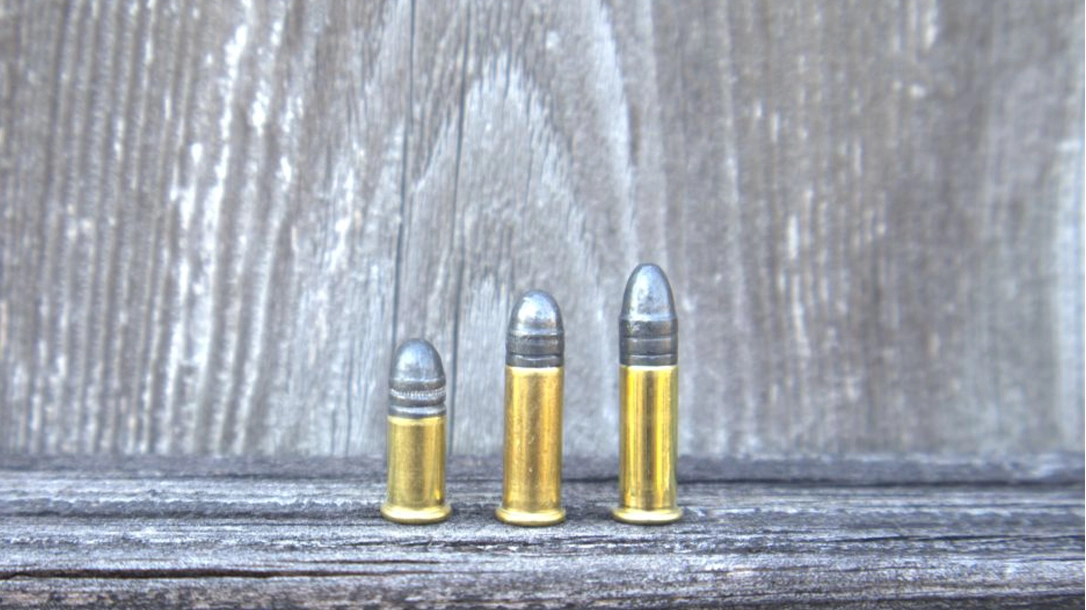
When most people refer to .22 rimfire, they are talking about a rifle or handgun chambered in .22 Long Rifle. Although .22 LR is the most popular, it is not the only .22 rimfire cartridge. There are also the .22 Short and .22 Long. All have their worthwhile uses. This is the story of the development of .22 rimfire cartridges and how each stack up in their role as hunting cartridges.
.22 Short: Where It All Started
In the 1840s, enterprising makers began elongating percussion caps and seating balls on top for use in pistols intended for indoor target shooting. Smith & Wesson expanded on this European concept in 1857 when they launched the .22 Short with its Smith & Wesson No. 1 revolver.
The .22 Short had a drawn case and a rim packed with the priming compound used in percussion caps. This stronger case was given four grains of black powder and a 29-grain lead bullet. Initially marketed as a defensive round, the .22 Short found its way into rifles. These included rifles like Steven’s Favorite and the Winchester Model 1890 pump action. The accuracy of the .22 Short allowed the cartridge to endure as an Olympic shooting cartridge decades after its obsolescence.
The .22 Short survived the jump to smokeless powder and is still available in variety. Modern high velocity loadings like those from CCI and Remington consist of a 29-grain copper-plated bullet at about 1,100 feet per second. Interestingly, CCI still produces a load similar to the original with their .22 Short CB, which clocks in at 700 feet per second.
The .22 Long: Product Improved?
The .22 Short has a stubby case that measured just .42 “ long and holds just four grains of powder. While it was a marvel at its inception, by the early 1870s, larger .30 and .32 caliber rimfire revolvers were more popular. In a bid to increase the power of the .22, the case was lengthened to .61”. Powder capacity increased to five grains and the 29 grain heeled conical bullet remained the same.
Advertisement — Continue Reading Below
The .22 Long made its debut in 1871. It boasted more velocity than the .22 Short, the cartridge was less noted for its accuracy. The .22 Long would find limited success in rifles and survive into the smokeless age. But it is best remembered as the next logical step to the most successful rimfire cartridge of all: the .22 Long Rifle.
The .22 Long Rifle
In 1887, Stevens developed the .22 Long Rifle cartridge for what would become rifles like the Stevens Favorite and Cadet. Instead of increasing powder capacity, Stevens went for a heavier bullet to increase power. The .22 Long’s case was topped with the 40 grain bullet from the ill-fated .22 Extra Long. The end result is the .22 Long Rifle.
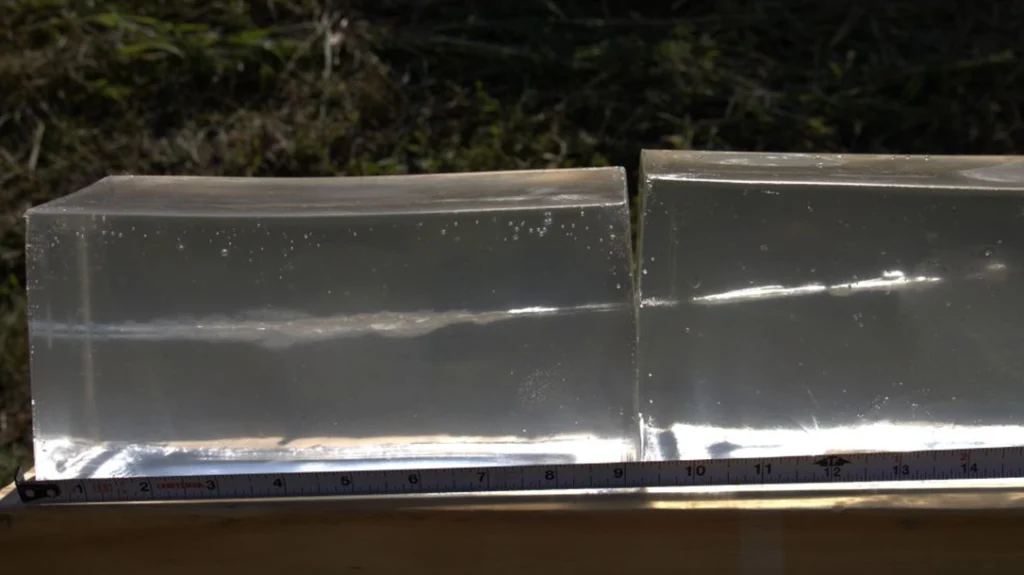
The .22 LR held the same five grains of black powder. It yielded similar velocity to the .22 Long, at about 1,080 feet per second, but it had more power and better accuracy with its 40 grain bullet.
In the 1910s, the .22 LR jumped to smokeless powder and made inroads against the .22 Short. The .22 LR was the most popular rimfire cartridge by the Great Depression. That popularity was aided in 1933 with the development of the first high velocity .22 LR cartridge, the Remington Hi-Speed.
Advertisement — Continue Reading Below
Today, .22 LR ammunition ranges from 21 grains to 60 grains, but the 40 grain bullet is most popular. No matter the bullet profile, .22 LR ammo falls into three broad categories.
Subsonic ammunition, like those used in target shooting and discreet pest control at less than 1,080 feet per second. Standard velocity loads range at or slightly more than 1,080 feet per second. High velocity cartridges hover at about 1,280 feet per second. The latest type of .22 rimfire ammunitions are hypervelocity loads. These cartridges generally using lighter bullets to achieve blistering velocities of 1,400 feet per second or more.
Applications for .22 Rimfire: The Long and Short of It
The .22 rimfire family have been used since their inception for anything under the sun. To the extreme, this includes taking down game like bear, hog, and deer. But these light bullet low velocity cartridges are best suited for target shooting, marksmanship training, and small game hunting. From a distance, all three cartridges look similar and appear to do similar things, but each have their own unique attributes and demerits.
The State of .22 Long and Short
The .22 Long is the least popular of the three and is kept alive chiefly thanks to CCI, who produces both a 29 grain high velocity and CB subsonic load. This rimfire is best used in the elderly rifles chambered for it, but modern high velocity .22 Short can be substituted instead. The .22 Long will chamber and fire in .22 Long Rifle firearms. However the light 29 grain can cause failures to cycle the bolt of a semi-auto rifle or handgun.
The .22 Short has been in declining use for decades, but compared to the .22 Long, ammunition selection is more various. New firearms chambered in .22 Short are largely nonexistent. The round carries on in elderly rifles and pistols and can be used in .22 Long and .22 LR firearms.
Advertisement — Continue Reading Below
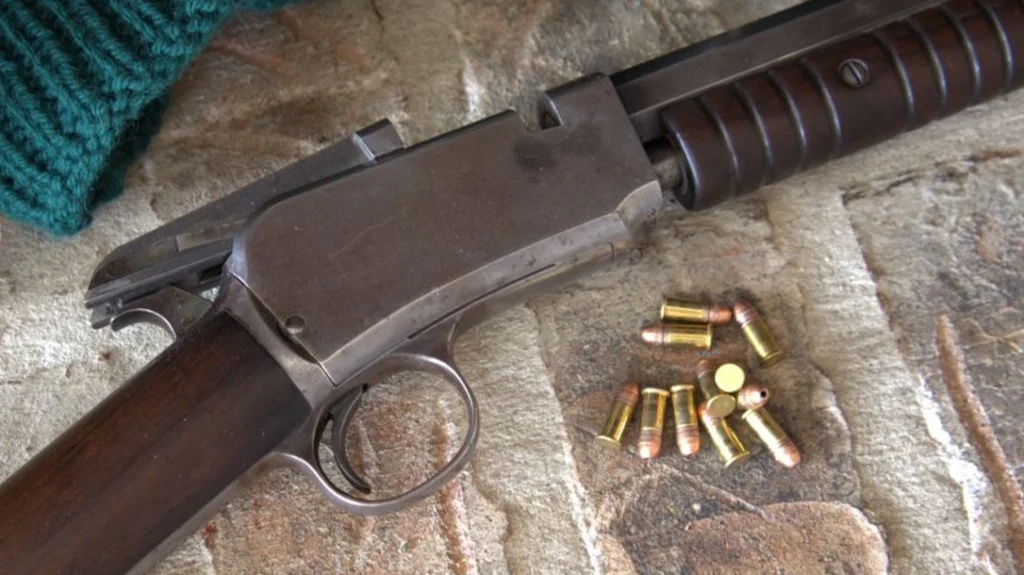
The .22 Short can have an edge over .22 LR for pest control and small game hunting. Although less prevalent overall, quiet loads for the .22 Short are more available than those in .22 LR. The CCI .22 Short CB load is one such load. It produces the sound of a pellet gun and no muzzle flash. Out of a 16-inch barrel, it clocks in at 735 feet per second and yields enough penetration for pest control.
The use of a lighter 29 grain bullet in either a CB or high velocity load can also limit meat damage relative to .22 LR. High velocity .22 LR cartridges can produce surprising amounts of damage on meat if a headshot is missed. Another small advantage of the Short is that its shorter overall length allows for greater capacity in rifles with tubular magazines.
Why .22 LR Shines
The .22 LR’s advantages are more numerous. Sheer availability of rifles and ammunition is a decisive factor. That availability translates to lower prices overall.
The .22 LR’s heavier bullet also translates to more power. CCI’s .22 Short High Velocity loading with a 27 grain hollow point clocks in at an average of 1, 131 feet per second from a 16-inch barrel. Comparable .22 LR CCI Mini Mag 40 grain solid rounds travel at 1,198 feet per second and do it with a bullet over ¼ heavier.
Advertisement — Continue Reading Below
The lighter bullet of the .22 Short also limits downrange capabilities. With a fifty yard zero, my CZ prints the same Mini Mag load 4 inches low at 100 yards. The .22 Short HV dropped to 6 ½ inches at the same distance.
.22 Rimfire: All in the Family
The .22 Short, .22 Long, and .22 Long Rifle cartridges have punched above their weight in the woods for well over one hundred years. Out of the three, the .22 LR stands as the most popular cartridge in the US and that is reflected in the sheer number of options out there. The .22 LR can be had in too many loadings and firearms to count. It is a natural for small game hunting, pest control, and training. But depending on the kind of shooting you intend to do and what is available to you, there is a case to be made for the old .22 Short and .22 Long. All are not going away anytime soon.
WHY OUR ARTICLES/REVIEWS DO NOT HAVE AFFILIATE LINKS
Affiliate links create a financial incentive for writers to promote certain products, which can lead to biased recommendations. This blurs the line between genuine advice and marketing, reducing trust in the content.