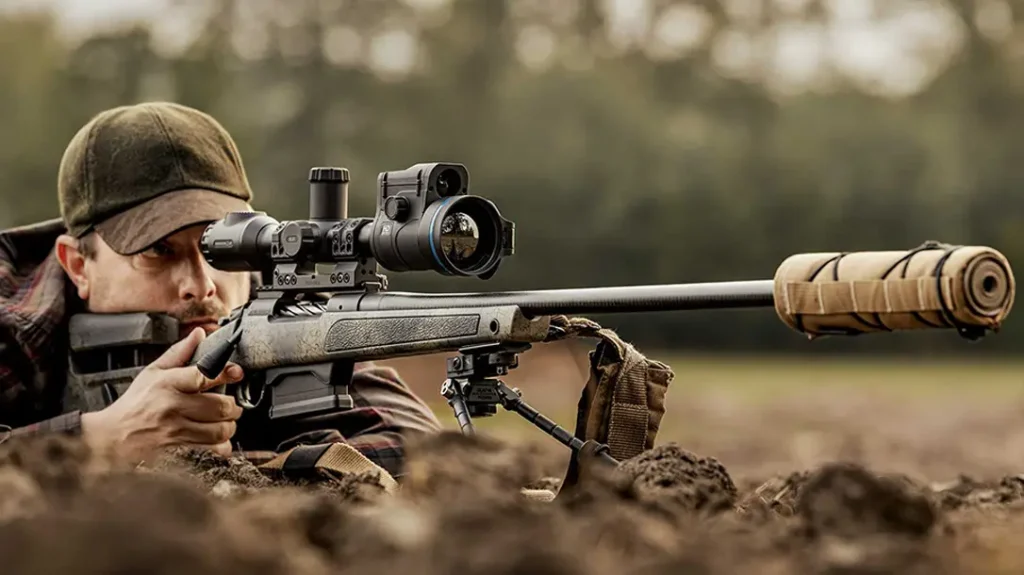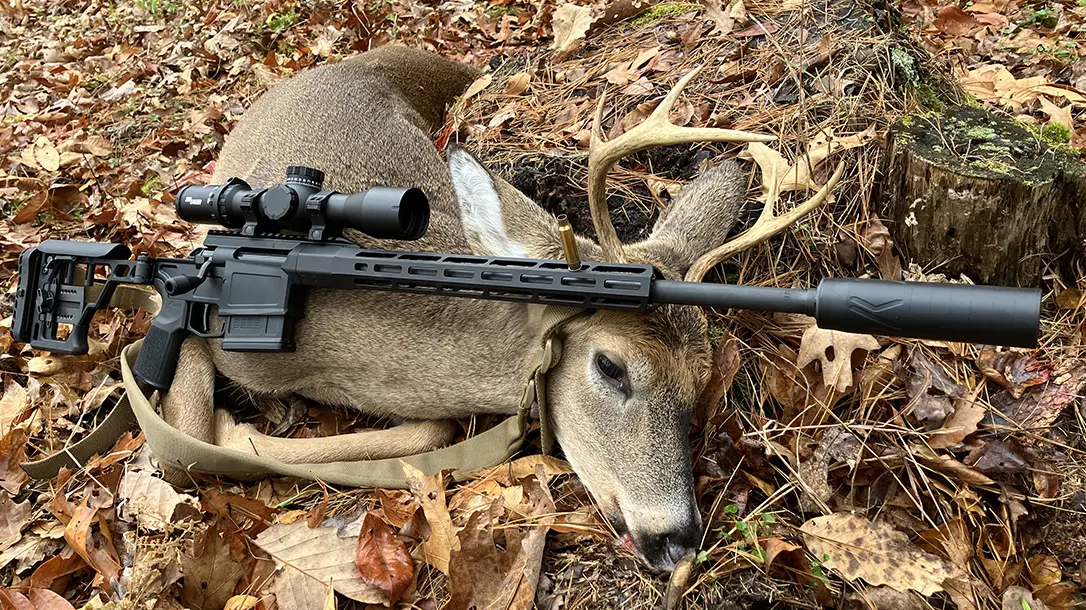
A consistently growing segment of the firearms market is suppressors. The hunting category, in particular, has contributed to this trend. Today, it’s common for hunting rifles to have threaded barrels—a feature designed specifically for attaching suppressors. With the Trump Administration’s legislation eliminating the $200 tax starting 1/1/26, many anticipate a further rise in suppressor popularity. Suppressor manufacturers are striving to meet growing demand. After all, threaded rifle muzzles are now considered a standard feature and not just on AR/MSRs. This makes using suppressors for hunting much easier.
Suppressors for Hunting – The Benefits are Many
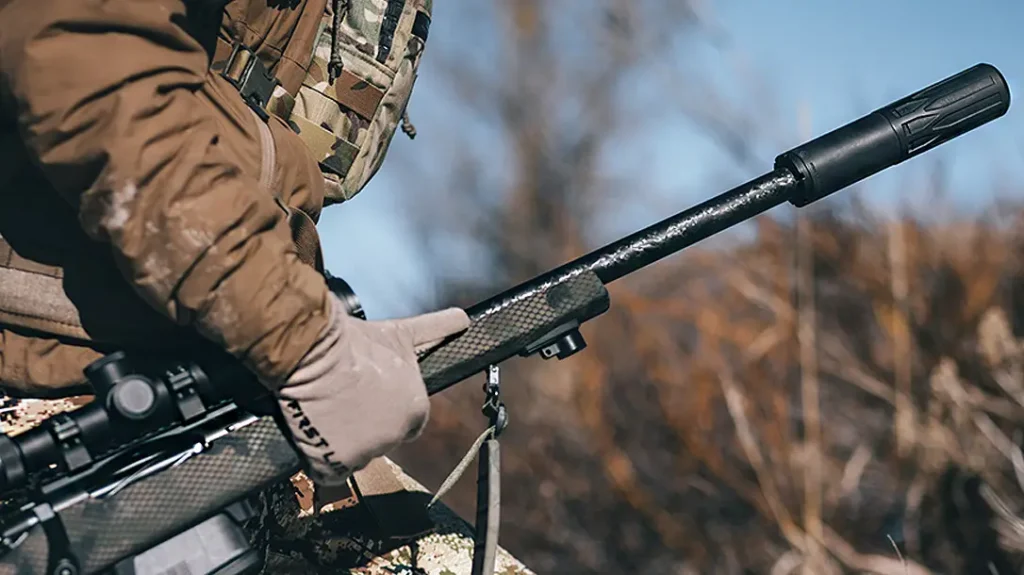
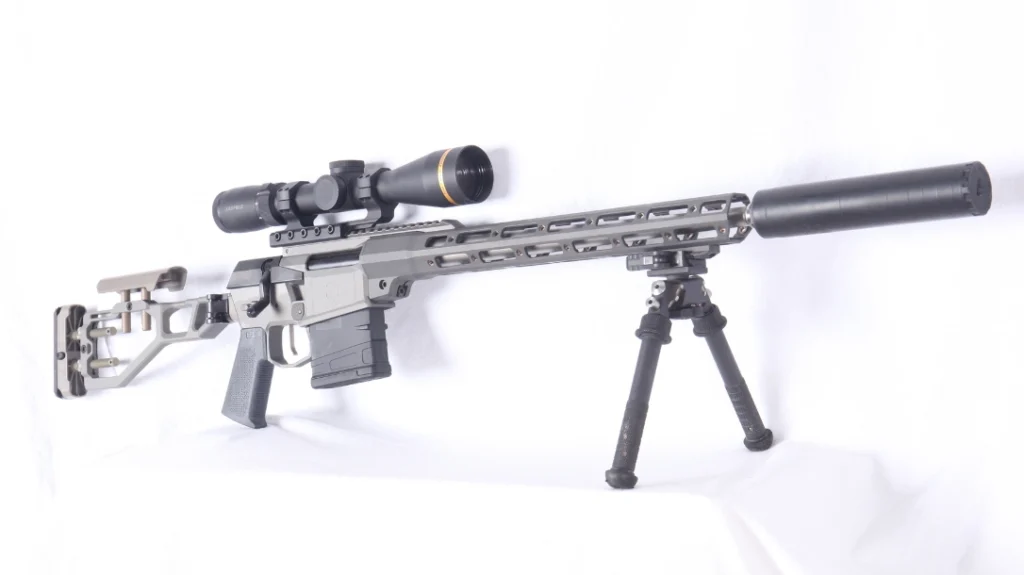
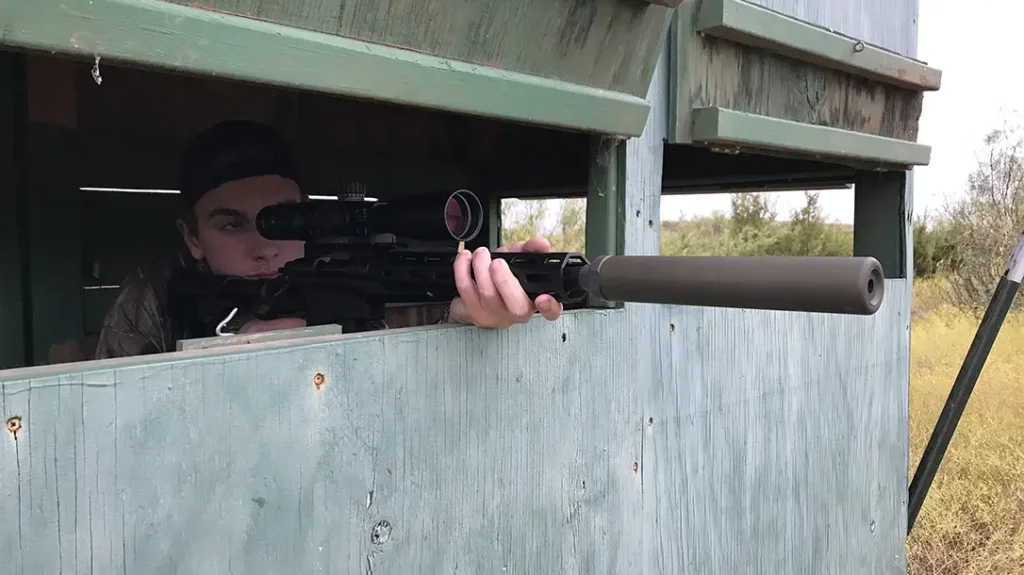
The widely recognized benefits of suppressors include noise reduction (duh huh), improved recoil management, and flash mitigation. Requirements and specifications for a hunting suppressor are different from those of a military suppressor. Hunting suppressors do not have to withstand full auto fire, thus making it possible to use different materials, lessening weight, length, and cost. Hunting suppressors usually direct thread on the barrel, further saving weight by not requiring the attachment components between the rifle and suppressor. Controlling toxic fume blowback when mounted on automatic rifles is not a concern with a hunting suppressor, further simplifying matters.
Background
Suppressors have been around since the early 1900s. Unfortunately, for civilians, suppressors were included in the 1934 National Firearms Acts, lumped in with automatic and short-barreled weapons, requiring an ATF application and $200 tax stamp once government blessing was received. This stunted suppressor access for civilians here in the US.
Advertisement — Continue Reading Below
Fast forward to the early 2000s, $200 was no longer such a significant burden when compared to the 1930s. Suppressor use started burgeoning with entities like Silencer Central and Silencer Shop, helping to streamline/simplify the process for obtaining suppressors. The BATF’s efforts to reduce the ridiculous wait times—previously measured in months, then shrunk to weeks—only encouraged further interest. Trump’s “Big, Beautiful Bill” mentioned above eliminates the $200 tax, pushing suppressors over the top for hunters.
Why
Suppressor use for hunting has pros and cons, mostly pros. The con is the extra length and weight added to your rifle. With that said, suppressor manufacturers have stepped up their game with designs and materials that mitigate this. Rifle manufacturers have also reacted to the growing popularity by not only offering threaded barrels from the factory, but also shortening barrels, balancing ballistics with accommodating the installation of a suppressor.
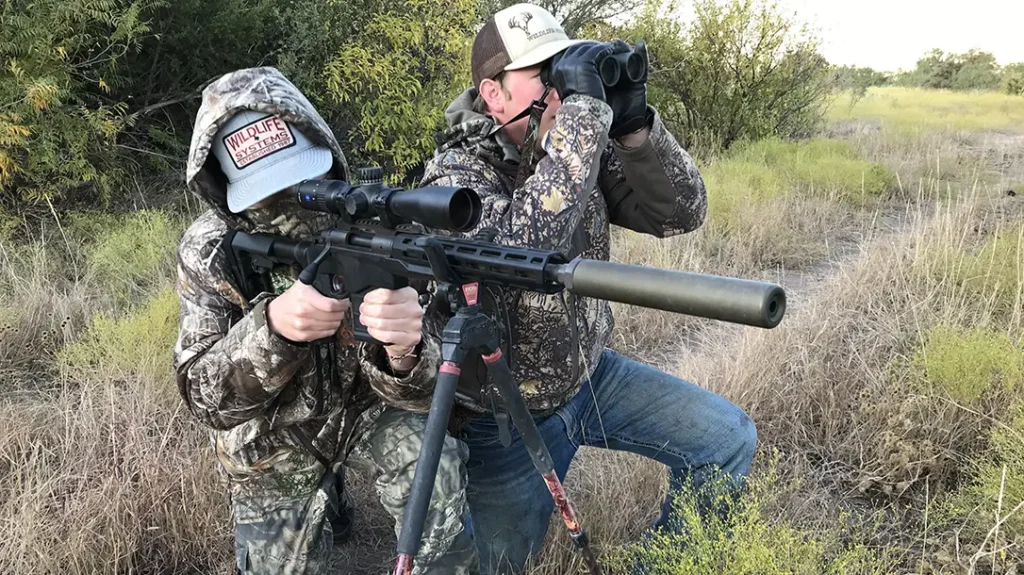
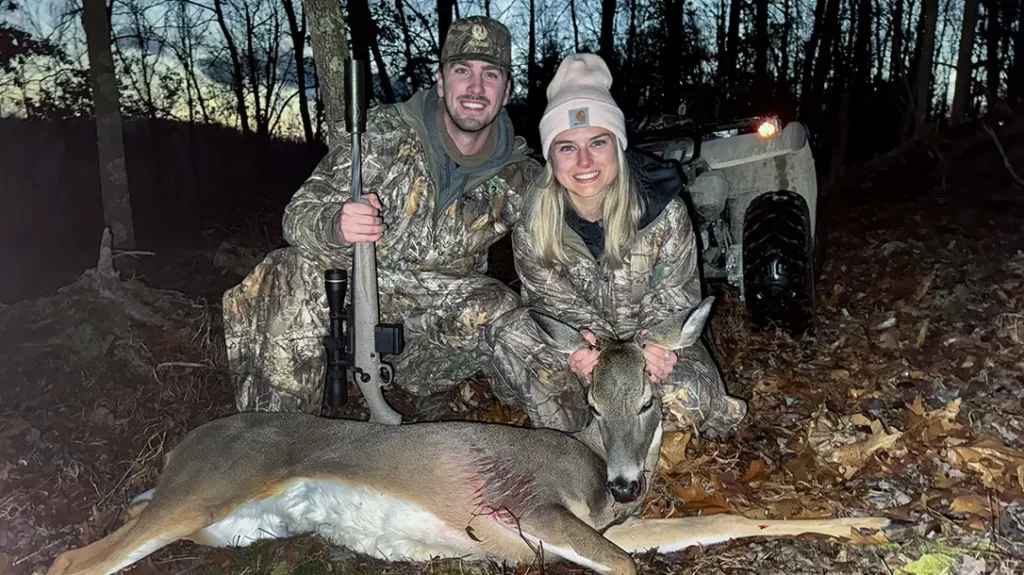
The suppressor pros are obvious with hearing protection. However, more subtle is the increased situational awareness by avoiding that awful ringing in your ears after a shot is fired unsuppressed, which often does long-term damage. A suppressor is a very effective muzzle brake that promotes better accuracy by removing the “flinch” factor. This promotes more accurate shot placement, especially with first-time or younger hunters.
Added Benefit
Here comes a suppressor advantage that is often not discussed. With a suppressor, prey often cannot discern where the shot is coming from. Not a big deal if you hit your mark, but in the off chance you miss, with a suppressor, it is no longer a guarantee that the large buck you just put a round over or under is bolting for the next county. Thus, offering you a shot (pun intended) at redemption, thus saving your shirttail.
Advertisement — Continue Reading Below
Other scenarios where suppressors could prove advantageous involve sitting over a prairie dog field without wanting every critter to go to ground when the first shot is made, or predator hunting with multiple coyotes coming to your call. Lastly, it is just plain polite, especially in areas that are crowded with hunting pressure. The person three ridges over does not need to be startled awake and/or out of their tree stand perch when you take your shot. The ancillary value of this also includes not having other hunters coming around after you take your shot, especially if on public land, where hunting density can increase.

How
Hopefully, you are either contemplating using a suppressor for hunting or you already do. Why else would you be reading this? This is good. With that said, you just do not thread a suppressor on a rifle and set off after game. You will need to confirm zero with the rifle you are using. A direct thread suppressor mounts to your barrel without an intermediate connection; thus, it not only saves weight, but direct thread suppressors also provide a more consistent return to zero.
With the quick detach (QD) mounting method, a muzzle device of some sort is required to be installed on your barrel as a mounting interface for the suppressor. There is nothing wrong with this style, with many favoring the convenience of moving a suppressor between multiple weapons and/or if a flash hider/muzzle brake is needed on a weapon when the suppressor is not installed. However, the mount contributes to several additional ounces of weight on the end of your barrel as well as more overall length, impacting the balance of your rifle.
Zero Shift
I have seen some combinations have no shift in zero when switching over to a suppressor with a rifle already sighted in. Frankly, this is rare. This is to be expected whenever hanging something off the end of a rifle barrel. It changes the barrel’s harmonics. Typical zero shift is a few inches at 100 yards, though I have witnessed six inches or more change from where originally sighted in. The good news is that accuracy is usually maintained or even enhanced. So, just confirm that zero before hunting. Once a rifle/suppressor zero is adjusted, it generally stays consistent even if you remove and then thread the suppressor back on for some reason.
Advertisement — Continue Reading Below
Spend some time on the range getting acquainted with your suppressor. While ear protection is still strongly suggested due to the supersonic crack of the round going downrange, the suppressor lessens fatigue associated with continual recoil and muzzle blast. There is no better muzzle brake than a suppressor. For example, while .308Win recoil is certainly not retina-detaching, it gets your attention in a 6-pound rifle with a slim buttstock pressing into your shoulder. Yes, you carry more than you shoot. It’s still nice to be comfortable. This only improves performance.
Story Time
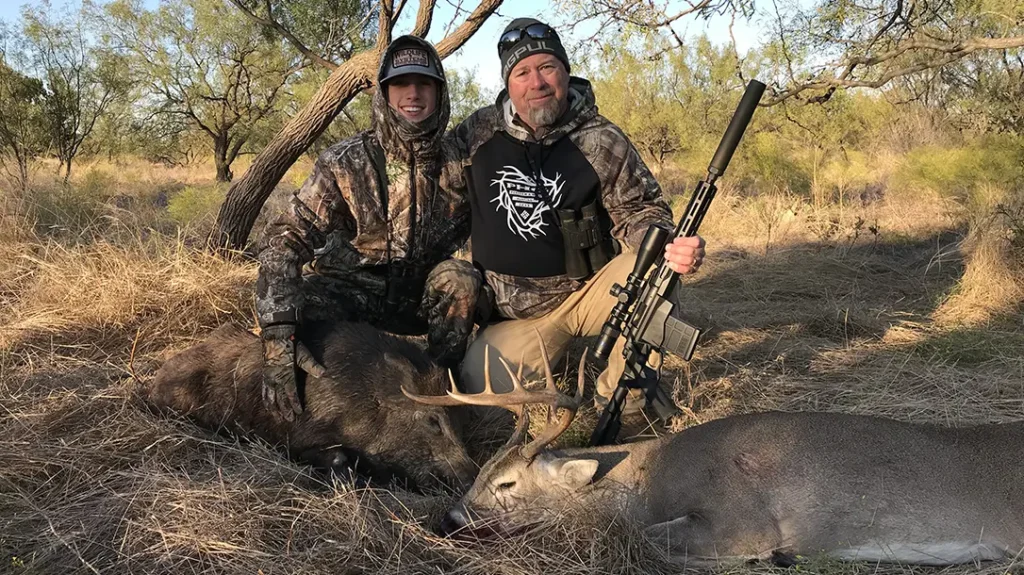
A few years back, I was down in Texas, around the San Angelo area, deer and hog hunting. After much razzing about my pickiness, the decision was finally made to take a nice 11-point that featured a unique drop tine off its main beam that had appeared about 120 yards away from our “beer can” stand. Everything got complicated when five wild hogs made a sudden appearance. The 11-point buck was about to take off when a shot presented itself. The 6.5 Creedmoor Barnes 120-grain HTP bullet slipped right behind his shoulder with a double lung shot.
After racking the bolt, my son whispered to me that a hog had remained out in the open, probably wondering what had just caused that deer to nosedive into the turf 30 yards to his left. The suppressor had mitigated the normal muzzle signature, keeping the hog in place versus running off at the noise of the rifle’s blast. I quickly obliged. Both deer and hog ended up about 10 yards from each other, giving me a nice story to tell. The guide made several comments about how nice it was to hunt with a suppressor-equipped rifle, especially during stalks or stand hunting, where fired shots occur with the hunter and guide in close proximity to each other.
Suppressors for Hunting
The ability to suppress a centerfire rifle is an increasingly important aspect of hunting. While the sonic crack of a standard supersonic bullet is noticeable, the use of a suppressor will mask the firing point, keeping animals disoriented as to where the hunter is located. Subsonic rounds are downright spooky in their arrival if the situation allows for use. Once you invest the time and money into hunting with a suppressor, most likely you are hooked.
Advertisement — Continue Reading Below