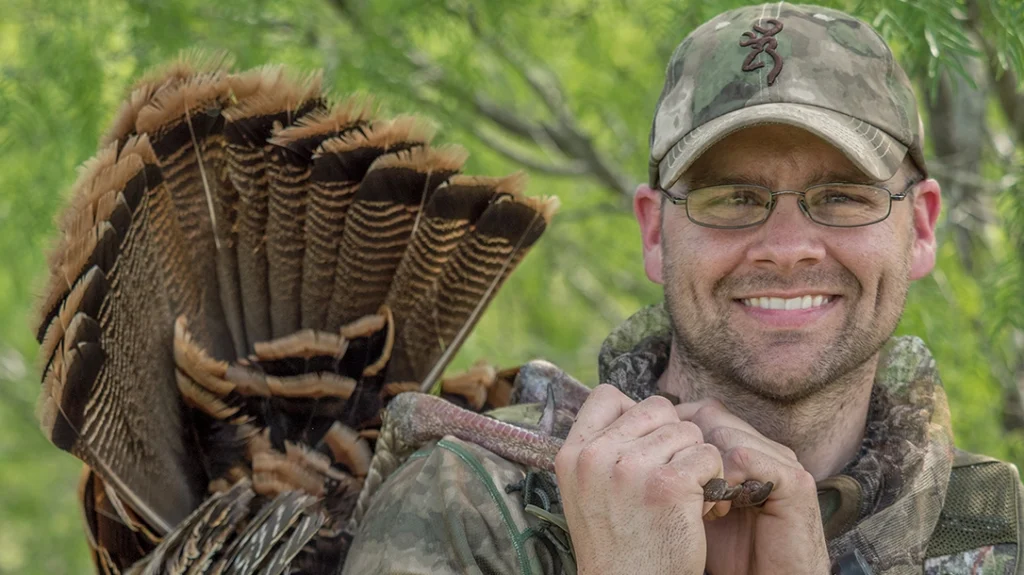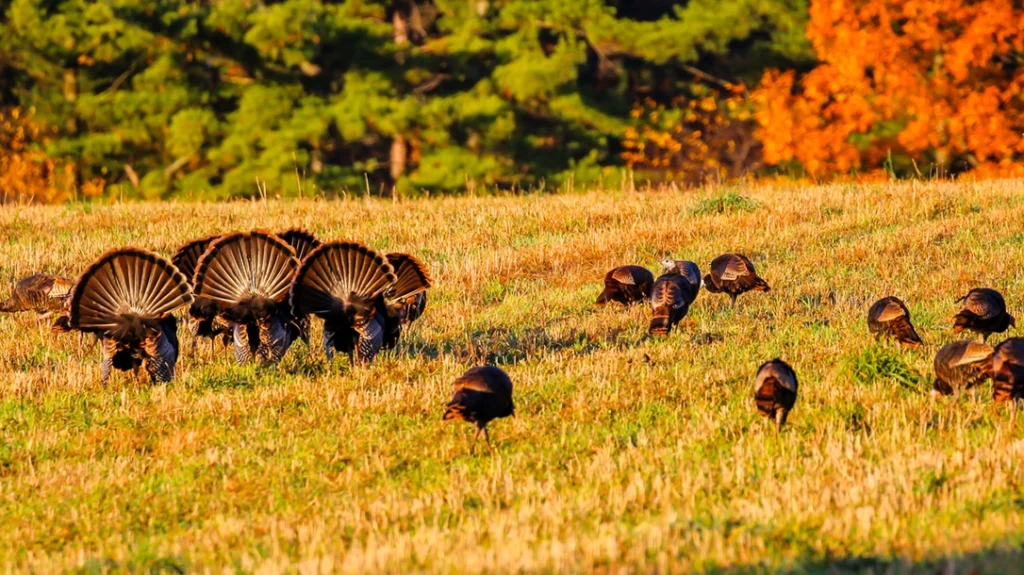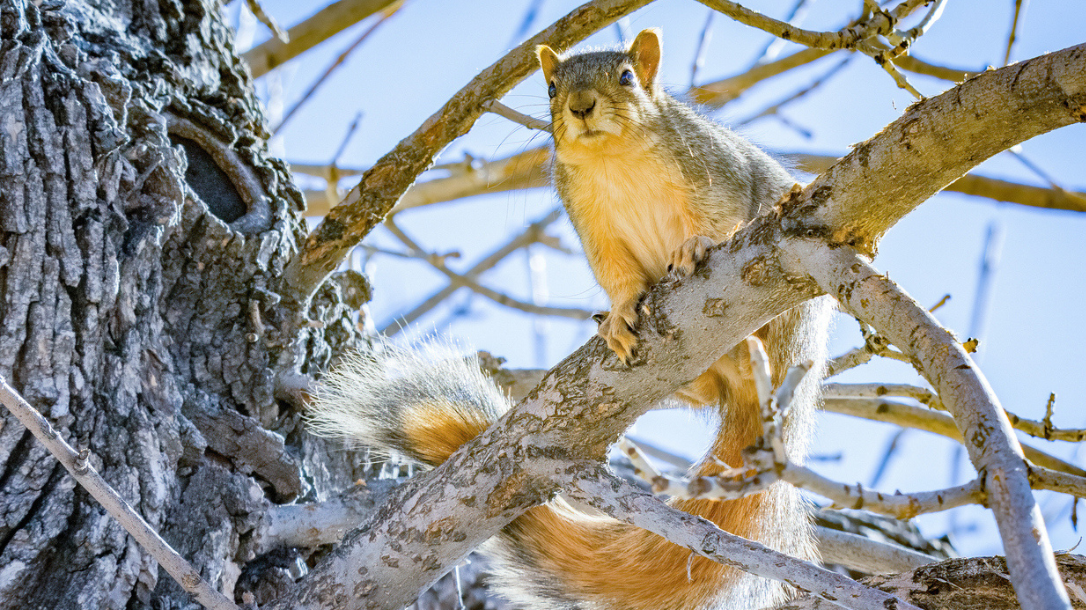
Small game hunting is an underrated pursuit. It may lack the allure of chasing whitetail deer, pronghorn, elk, moose, or bear, but it offers plenty of benefits. First, small game hunting is infinitely approachable, requiring minimal gear, and only a basic hunting license. Second, it provides more opportunities to put food in the pot and keep skills sharp. Plus, small game hunting is fun. We’re allowed to have fun, right?
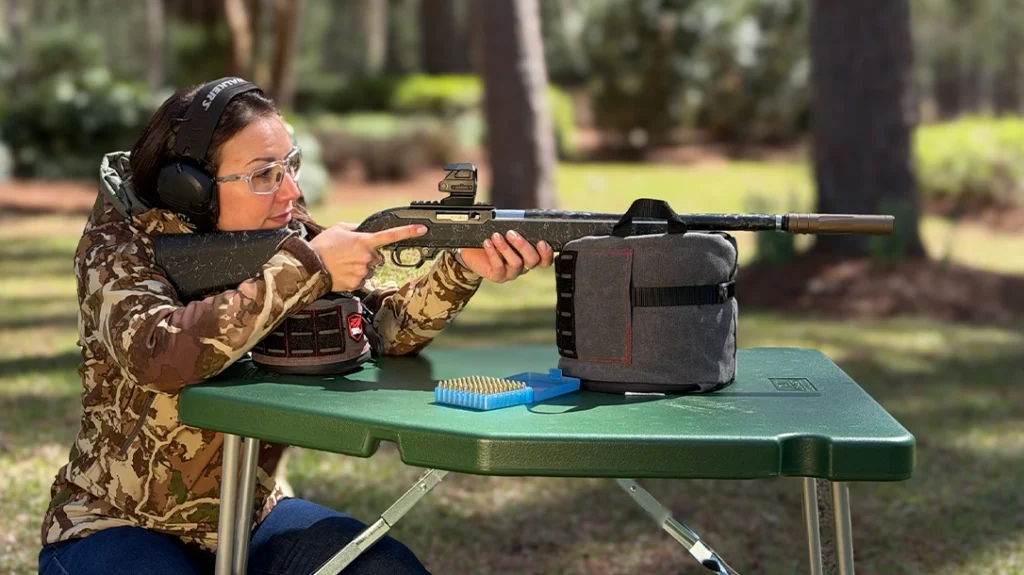
Most small game hunters head into the woods with a rimfire rifle or shotgun, but a muzzleloader is a viable and useful alternative. As a longtime hunter who often carries a muzzleloader, even during rifle season, I’ve found it to be a rewarding option.
Muzzleloading For Small Game
What firearm you carry comes down to several factors: usability, availability, pride of ownership, and state or local regulations. Most states allow air guns, .22 rimfire rifles, or shotguns loaded with birdshot. These lower-powered options reduce meat damage, are humane, and limit how far a projectile can travel beyond the target.
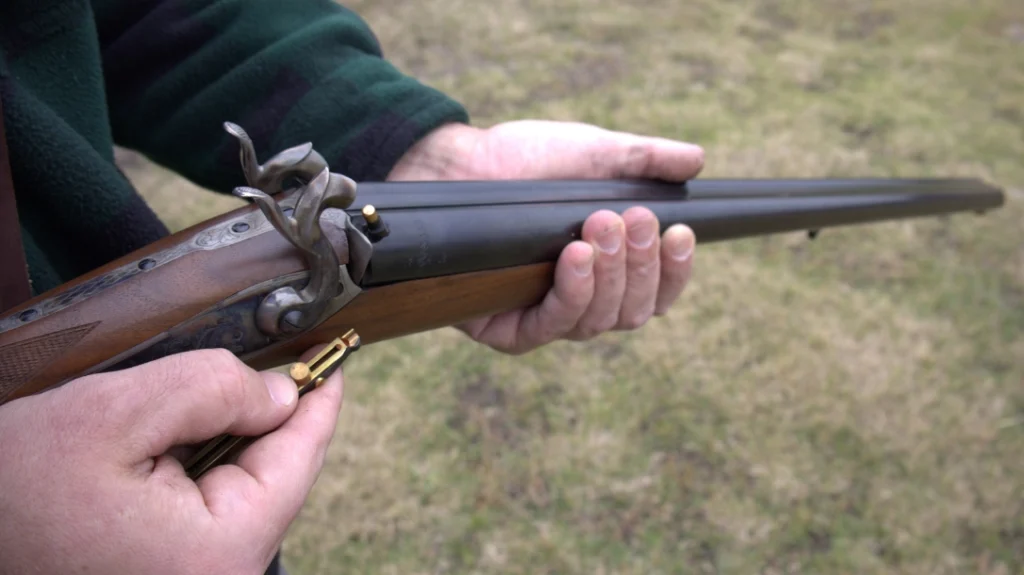
Another option is a muzzleloader, whether in shotgun form or small-caliber rifle. While muzzleloaders are limited to one, or at most a few, shots and require a slower reload, they offer distinct advantages. First is the fun factor. Second, some areas or lottery hunts require muzzleloaders. Third, the risk of errant rounds traveling long distances is even lower, which is reassuring when hunting near suburban areas. Finally, loads can be adjusted to match both your comfort level and the game pursued.
Advertisement — Continue Reading Below
If you choose a muzzleloader, the next question is whether to carry a rifle or a shotgun.
Squirrel Rifles
Small-caliber muzzleloading rifles are commonly called squirrel rifles. Regulations vary by state, with some specifying minimum or maximum calibers. In my home state of Louisiana, .32- and .36-caliber muzzleloaders are legal, while some states allow calibers up to .40. Custom rifles can be found in calibers as small as .25, though .40-caliber rifles may be more gun than necessary. Arkansas even allows .40-caliber rifles for both small game and deer seasons.
Generally, .32 and .36 calibers are the most accessible, whether purchased off the shelf, built from a kit, or commissioned from a custom maker.
Caliber Considerations
In a figurative and literal sense, the .32 is the black powder equivalent of what we might use a .22 LR for. Although it is nominally larger in diameter, these rifle shoot predominately round ball ammunition that is the same weight. The .32 caliber rifle nominally uses a .310 inch 45 grain lead ball wrapped in a thin cloth patch for a tight, but loadable fit.
The .32’s small ball causes minimal meat damage on thin-skinned game like squirrel or rabbit if a head shot is not possible. The .32 can also reach .22 LR velocities with very light powder charges, making it economical to shoot.
Advertisement — Continue Reading Below
Through a Traditions Crocket Rifle with a 32 inch barrel, just fifteen grains of FFFg black powder is enough to crank that 45 grain ball at over 1,100 feet per second. A thirty grain charge ups the power to about 2,000 feet per second, putting it beyond a modern .22 Magnum, at least at close range.
The small .32 caliber round ball loses its energy faster and is susceptible for wind drift. A brisk 15 mph crosswind can blow the ball a foot from the point of aim at 100 yards. But at distances of 75 yards and in, the .32 offers plenty of accuracy and power to get the job done on small game.
Larger Calibers for Small Game
.36 caliber rifles are the next size up and use a 65 grain .350 inch ball. Unlike .36 caliber black powder revolvers, .36 caliber rifles and pistols are true .36 caliber guns. This caliber still constitutes a squirrel rifle caliber, but is larger and gives the user more range and power for larger small game. The .36 is slightly less cheap to feed than the .32, but a twenty grain charge gets you into .22 LR territory.
Although there is potential for slightly more meat damage, the larger ball holds onto its energy better and suffers from less wind drift. Through my McGirr Ohio half-stock rifle with a 38 inch barrel, that same 15 mph crosswind blows the ball only eight inches. I ultimately went with the .36 because it is easier for me to load and I wanted more flexibility, as the area I hunt is frequented by wild hog.
Muzzleloading Shotguns
Historically, small-caliber squirrel rifles became common in the 19th century as large game declined and frontier conflict waned. These rifles were often used by subsistence hunters and recreational shooters. For a more versatile option, the muzzleloading shotgun stands out.
Advertisement — Continue Reading Below
Any smoothbore muzzleloader, meaning one without rifling, can function as a shotgun. Fowlers, trade muskets, and later double barrels could fire round ball for large game or shot for birds and small game.
Muzzleloading shotguns offer greater variety than rifles. While rifles are typically limited to flintlock or percussion ignition with traditional styling, shotguns range from matchlock, flintlock, and percussion single-shots to double barrels like the Pedersoli Plains shotgun and even discontinued modern designs such as the Knight SK 2000.
Chokes and Gauges for Small Game Muzzleloader Hunting
The gauge of choice also varies and each have their merits. Unlike shotgun shells, however, we do not have to read too much into how much shot each is capable of, since you can control how little or how much shot or powder goes down the barrel. Barrel length also comes into play when it comes to range. Unlike modern shotguns, muzzleloading smoothbores more more sensitive to changes in barrel length both in terms of velocity and the density of the pattern at distances. Historically, barrel lengths as long as five-feet were used, but lengths ranging from 30-44 inches were most common. Some modern reproductions come with even shorter barrel lengths, which enhance portability but can limit your range.
Common gauges range from 10 to 28 gauge. Ten-gauge guns, like the Pedersoli Magnum, excel at waterfowl and long-range bird work due to their heavy shot capacity. Twelve gauge remains popular thanks to readily available components. Historically, civilian smoothbores tended to fall between 20 and 28 gauge, while military arms skewed larger.
Powder and Wads
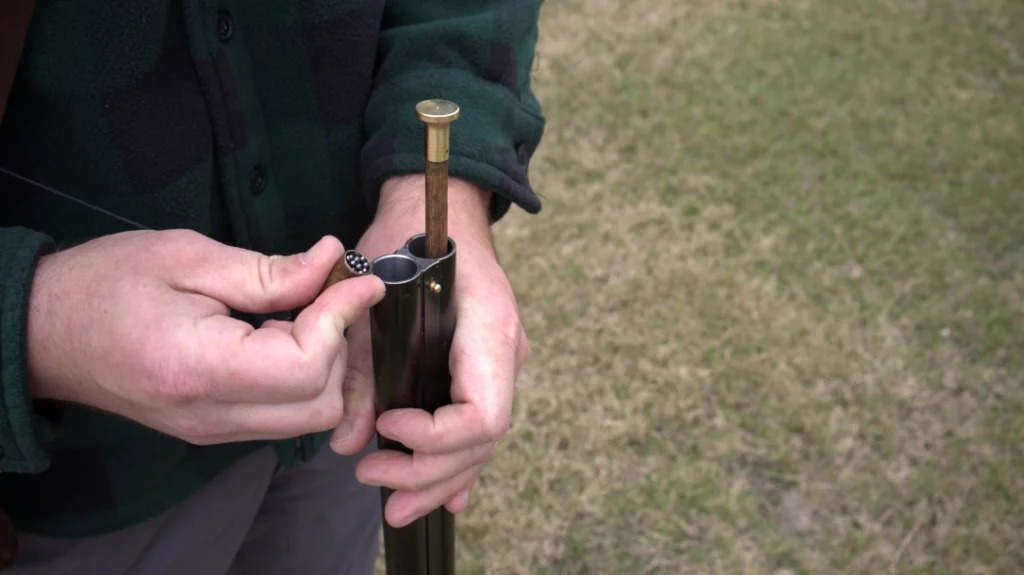
Load development in muzzleloading shotguns is as much art as science. Larger bores burn coarser powders more efficiently, making FFg or even Fg preferable over FFFg. Wad choices range from commercial fiber wads to natural materials like paper, moss, or flax. Shot-to-powder ratios can also be adjusted to fine-tune performance.
Advertisement — Continue Reading Below
My Preference for Small game Muzzleloader Hunting
For this small game season, I chose a Pedersoli Plains 12-gauge shotgun with 27½-inch barrels and a nominal .72-caliber bore. This walnut-stocked caplock features a fixed modified choke in the right barrel and a cylinder bore in the left.
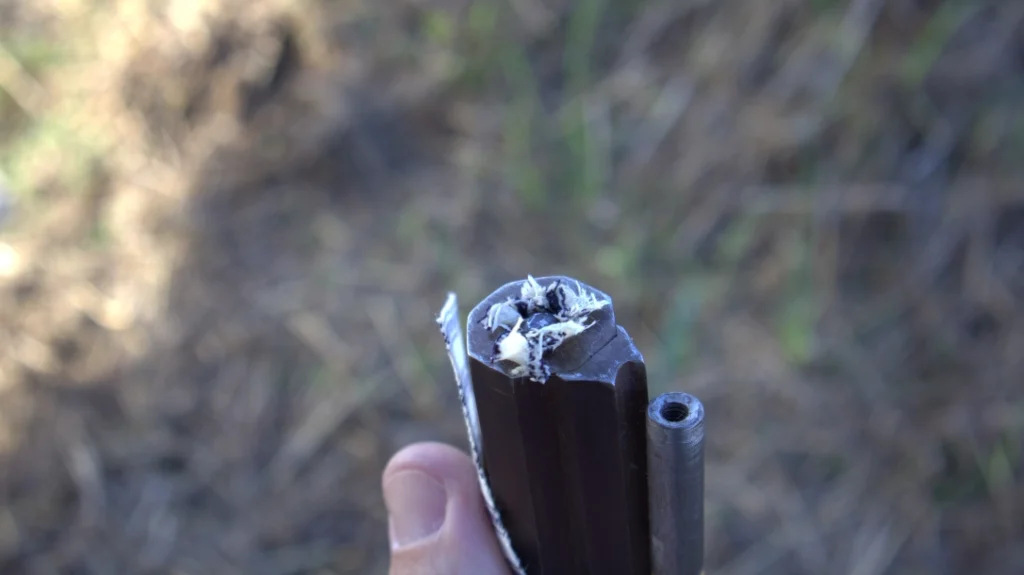
In previous seasons, I favored a longer-barreled single-shot flintlock with a square load and Spanish moss wadding. Using that same load in the Pedersoli produced donut-shaped patterns at just 25 yards. My usual 80 grains of FFg powder and ¾ ounce of #6 shot proved too light, and the wadding likely disrupted shot placement.
My final load consisted of 80 grains of Fg powder and 1½ ounces of shot, with a conventional fiber wad over the powder and a halved fiber wad over the shot. This produced a dense, effective pattern out to 40 yards from the right barrel.
WHY OUR ARTICLES/REVIEWS DO NOT HAVE AFFILIATE LINKS
Affiliate links create a financial incentive for writers to promote certain products, which can lead to biased recommendations. This blurs the line between genuine advice and marketing, reducing trust in the content.
Advertisement — Continue Reading Below