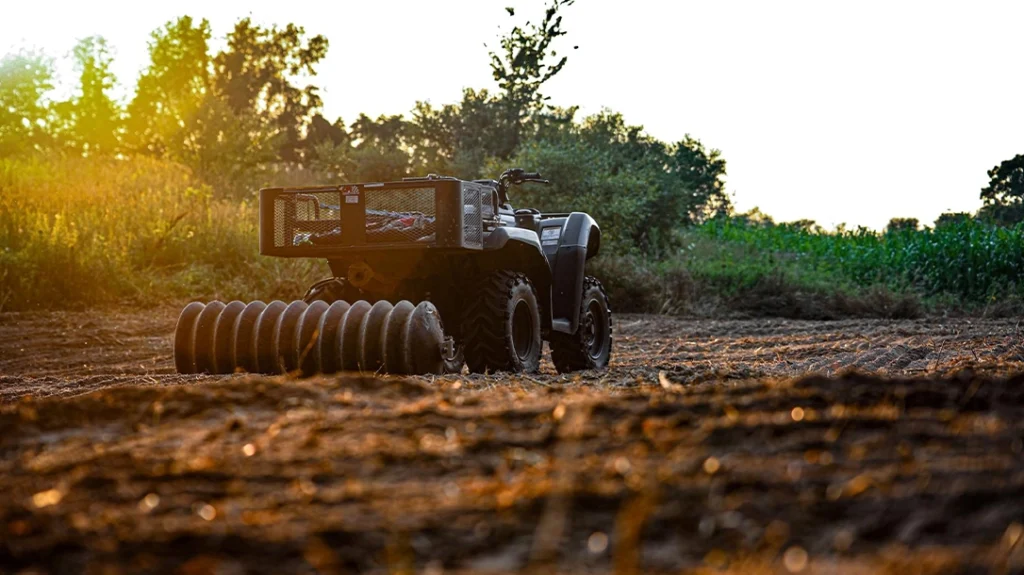
I work year-round on wildlife habitat, checking trail cameras, plant and improve wildlife openings in rocky Tennessee soil, trying to make my farm a little better than it was the year before. Somewhere in between I shoot rifles, write about them, and make sure my equipment is squared away before the leaves start to drop.
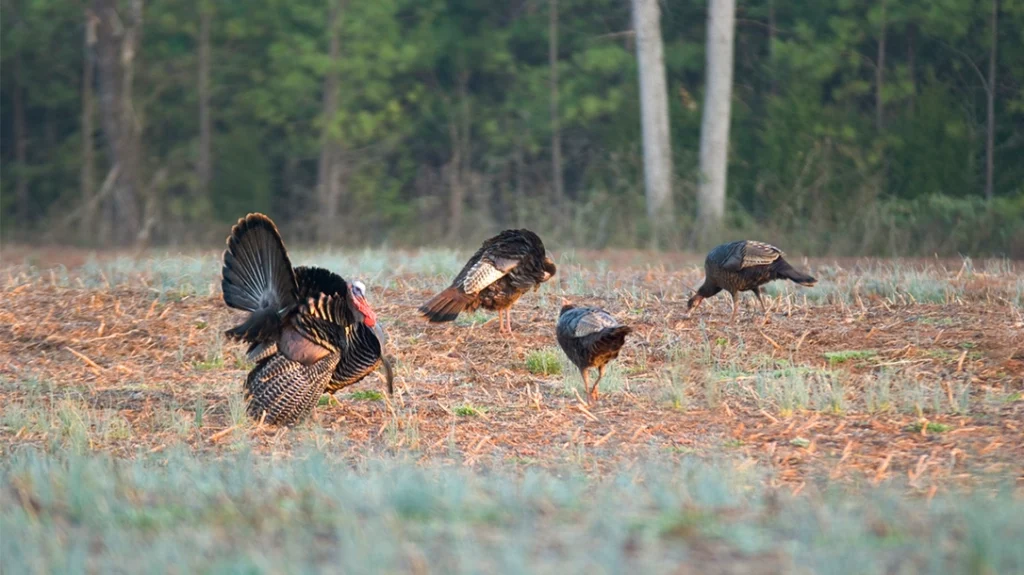
By late summer, the velvet bucks start drifting into my food plots like clockwork. Come September, the first cool front triggers that subtle shift. They start scent-checking the edges, curious, cautious, and ready for the rut to whisper its first message.
Through October, the does are relaxed, feeding in matriarchal groups and never straying far from the groceries. They’re the magnets that draw the antlers. By the first true pre-rut week, bucks I’ve never seen all year start cruising the outer edges of the property, probing for early-cycling females. I’ve learned to leave the deeper timber undisturbed until the mature deer start making mistakes.
Rifle Ranges
Included in my food plot inventory are my ranges.
The 1000-yard range features 750 yards of barely adequate soil, extending through former agricultural fields where the residual contours of historic furrows remain discernible. Once cleared more than a century ago and enough rocks were removed to plant a crop it didn’t take too many seasons to learn that profitability was more wish than reality. Now overgrown with 60-year-old red cedar, it will raise a good crop of blackberries and whitetails.
Advertisement — Continue Reading Below
The first order of business when we bought this farm a dozen years ago was to hire some heavy equipment and build the previously mentioned range. Once the Dozier was back on its trailer I set about building a shooting tower from cedar logs. Left to the weather, they’ll last about a decade. So, last summer it was time to rebuild the tower with treated lumber.
Opening day of modern firearms season came and went. A few days into the season temperatures finally began to fall to levels favorable for hanging a deer overnight from a skinning pole. Forty minutes into my sit at the new tower a deer stepped into the clear 222 yards down range. Its head was down feeding and obscured by a slight rise in the topography.
The Q Fix 6.5 Creedmoor
Raising binoculars to my eyes with my left hand, my right drifted to the evening’s chosen rifle, a Q Fix chambered in 6.5 Creedmoor, and I eased rifle around 180 degrees and into position. Confirming it was an familiar 8-pointer, I settled the crosshairs.
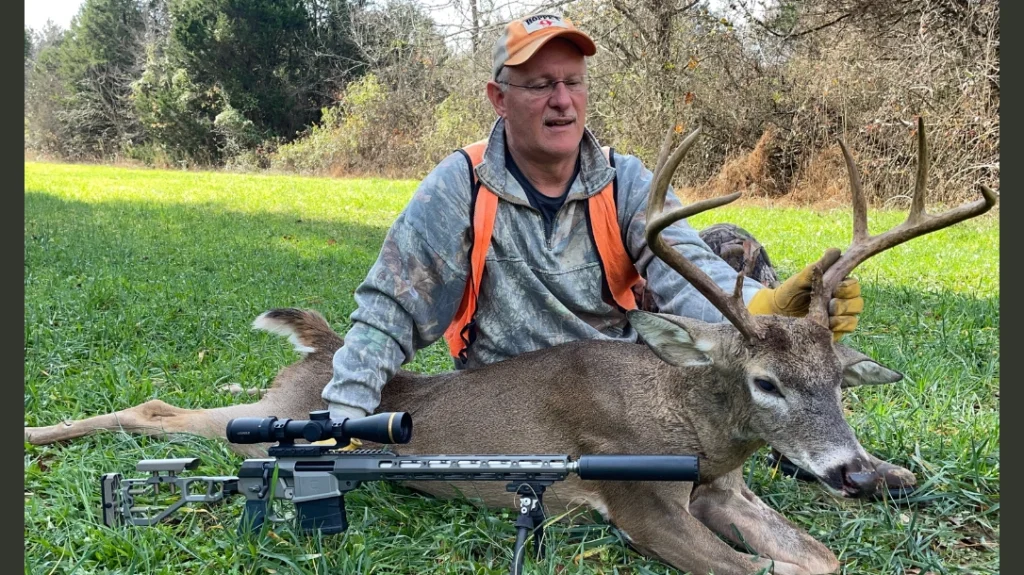
Just a few days earlier, I’d picked up the Q Fix from my local gun shop for testing. I felt the usual rush to mount a scope, set zero, gather a little DOPE and get it ready for deer season. The Fix is a very different kind of rifle—lighter, shorter, and more modular than almost anything else in its category. With the season already underway, I knew I didn’t have the luxury of months of tinkering. This rifle needed to be ready to hunt now.
Advertisement — Continue Reading Below
Gun Details
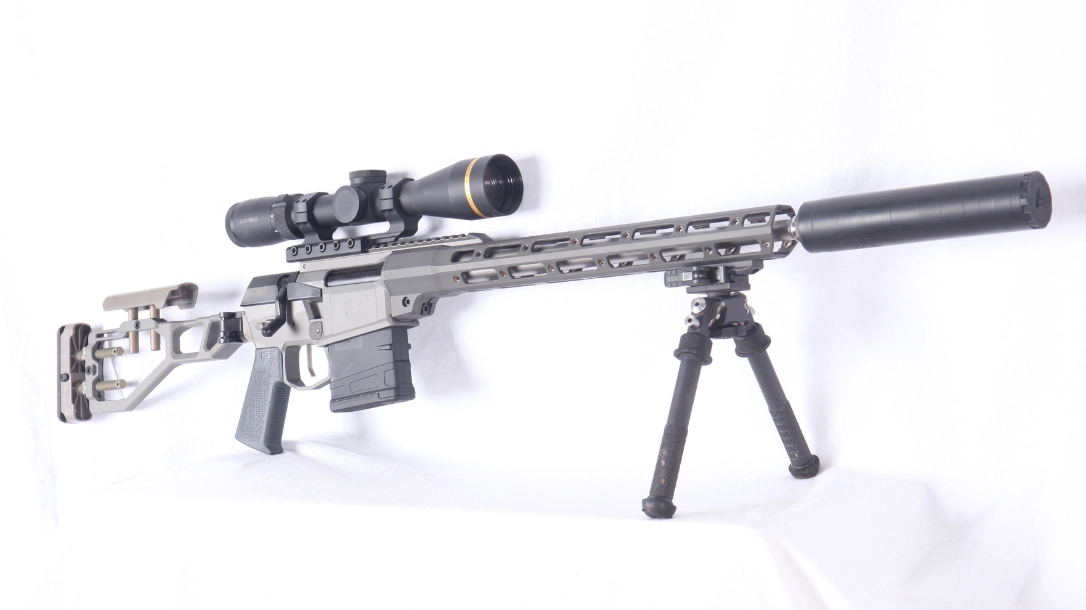
The Q Fix isn’t your father’s bolt-action. It’s not even your grandfather’s lightweight mountain rifle. It’s a modernized, minimalist bolt gun engineered to handle, and carry, more like an AR-15 than a conventional turn-bolt. With its skeletonized folding stock, monolithic receiver, and AR-style ergonomics, the Fix is the most radical shift in bolt-gun design the market has seen in decades.
At the heart of the rifle is a one-piece receiver/chassis system paired to a 16-inch, lightweight stainless 6.5 Creedmoor barrel. Q’s barrels are fast-twist, 1:7 in this case, to stabilize the long-for-caliber bullets that give the Creedmoor its downrange decency. The barrel is quick-change capable for swapping calibers or lengths, but more importantly, it’s threaded for Q’s Cherry Bomb muzzle device. That means the Fix is suppressor-ready the moment it leaves the box.
Q Fix Form and Function
The stock is a skeletal, folding, fully adjustable unit that shortens overall length drastically. Folded, the rifle practically disappears into a daypack. Extended, the stock offers enough rigidity and cheek support for meaningful precision work. It’s not cushy, ultralight rifles never are, but it’s completely functional.
Controls mimic an AR’s layout. The safety, magazine release, grip angle, and even the charging-handle-like bolt manipulation feel familiar if you spend most of your time with carbines. The bolt throw is short and fast, different from a Remington 700 or Model 70, but designed to keep your firing hand close to the trigger. The rifle feeds from SR-25/PMAG-pattern magazines, giving the shooter fast reloads and reliable feeding.
My sample rifle weighed in just over 6.4 pounds bare. Light enough to qualify as a mountain rifle, but still rigid enough that it doesn’t feel whippy when you settle behind it. Fit and finish were clean. The only thing missing was the weathered feel of a rifle that’s seen a season of hard hunting. I was eager to change that.
Advertisement — Continue Reading Below
Range Time
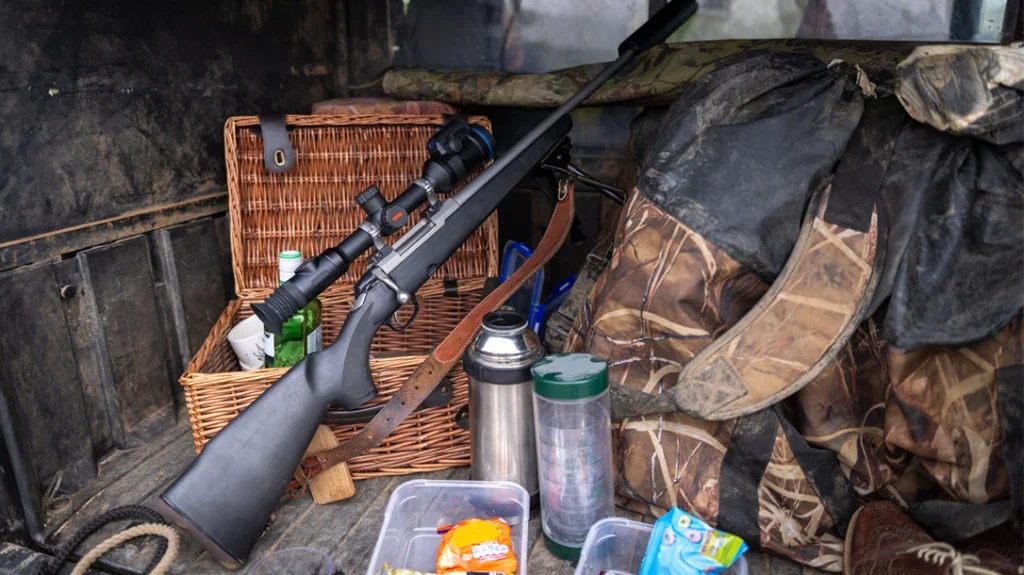
Once the rifle arrived, I mounted a Leupold VX-5HD 2-10x optic, torqued everything to spec, and fired the first confirming rounds. With deer season underway, thorough range testing waited until after I’d taken the buck that appeared that November morning. Once the buck was on ice, I headed to my home range with a Garmin chronograph and a variety of 6.5 Creedmoor factory ammunition.
The Fix may be lightweight, but its barrel and action interface are rigid enough in all the right places. I settled into my bags and fired a series of 5-shot groups at 100 yards, letting the barrel cool between strings. Lightweight guns heat fast, and I wanted legitimate data.
Load By Load
The first loads tested were Hornady 140-grain ELD-Match cartridges. Average velocity from the short 16-inch barrel was lower than a full-length rifle, but the Fix still posted tight clusters, the best measuring just over 1 MOA. That’s respectable performance from a rifle designed for portability more than benchrest bragging rights.
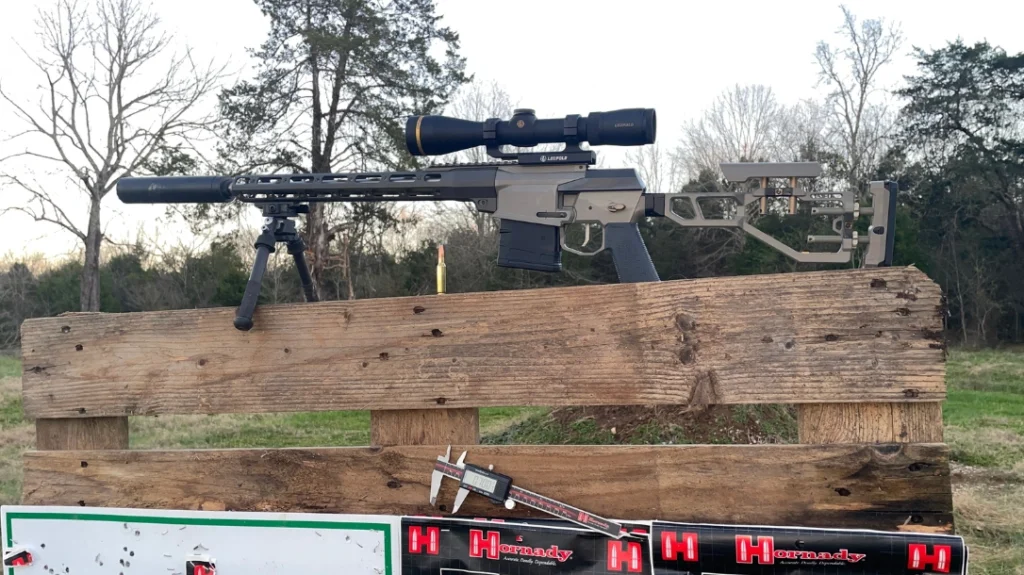
Next up were Hornady 143-grain ELD-X Precision Hunter loads. This is a bullet averaged 2,487 fps, and the short barrel sacrificed about 250 fps compared to a 24-inch tube. Even so, accuracy hovered around the 1.2- to 1.4-inch mark for the best groups, very usable for real hunting distances.
Advertisement — Continue Reading Below
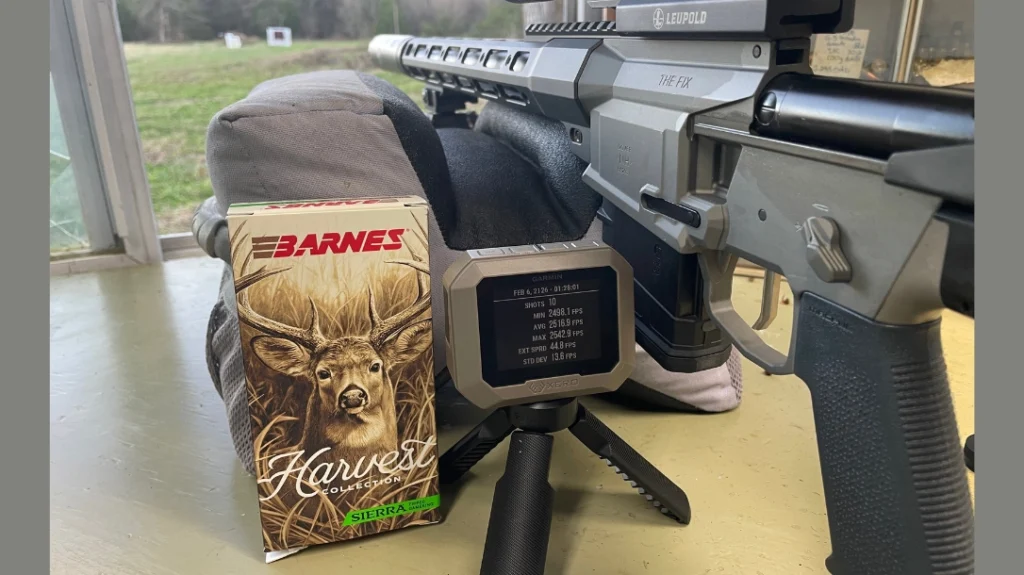
The lightest bullet tested—Sako’s 120-grain monolithic, the Powerhead Blade, ran about 2,647 fps and averaged around 1.3 inches. The best load was Barnes Harvest 140-grain loads, which averaged 2,516 fps. The standard deviation for 10 shots measured 13.6 fps. The smallest 5-shot group measured 0.700, which also wound up being the smallest group this rifle printed. This would be my hunting load.
I like 140-grain bullets in the 6.5 Creedmoor for deer hunting, and the Barnes Harvest got the nod. I sighted this load a half inch high at 100 yards, but one might want to add another inch of elevation to the 100-yard sight-in to increase the point-blank range for a whitetail-sized target. I plugged in the data for this bullet into Strelock and learned that the lower velocity dramatically impacted the drop at longer ranges. At 300 yards, it indicated that the impact would be 15.5 inches below point of aim, and by the time it crossed the 350-yard mark it was 24.3 inches below the point of aim. If you compare this to a similar rifle with a 24-inch barrel it would probably only drop 18 inches at 350 yards. That’s not in insurmountable difference, but a difference, nonetheless.
Impressions
Light rifles recoil more, and the Fix is no exception. It’s not unpleasant, but from prone and braced positions, you know when you touch it off. Add a suppressor and it settles into a much more forgiving rhythm. Silencer Central’s Buck-30 can mated well to the threaded muzzle.
For a 6.4-pound folding rifle with a 16-inch barrel, that’s performance I’ll take any day of the week.
Advertisement — Continue Reading Below
Over the course of roughly 240 rounds, the rifle functioned without a hiccup. Bolt lift remained consistent, feeding stayed smooth, and magazines locked in place firmly. For a rifle this unconventional, reliability was as traditional as it gets.
In the Field
Back to that early-season buck.
The whitetail angled a half step toward me, so I settled the crosshairs on the point of his shoulder and squeezed off the round. Recovering from recoil I regained the sight picture and found the range empty. I didn’t wait to track. As I closed the gap to 50 yards to where the buck was standing, I topped the rise to find him firmly planted. He never took another step.
The 140-grain Barnes Harvest punched through his shoulder, transversed the body cavity and exited the offside through the last rib. He was a 3½-year-old deer with good tine length and average width. Taking him with a radically modern rifle like the Q Fix was just icing on the cake.
Conclusion
The Q Fix in 6.5 Creedmoor is a unique creature. It’s not a classic walnut-and-blue whitetail rifle, nor is it a 15-pound PRS competition tank. It lives somewhere in between. Lightweight enough to carry anywhere, accurate enough to hit what matters, and modern enough to feel familiar to shooters who cut their teeth on AR-style carbines.
Advertisement — Continue Reading Below
If you want the lightest, most compact, suppressor-ready bolt rifle that still shoots honest groups, the Fix deserves a long look. Its ergonomics are unconventional, and its barrel length sacrifices some velocity, but in the real world of treelines, mountain ridges, and deer slipping out of tight cover, the Fix is exactly what it claims to be: a fast-handling, accurate, packable hunting rifle built for the modern woodsman.
Performance
Average Velocity — 100-yard Group
(5-shot groups; velocity measured with Garmin chronograph)
| Manufacturer & Bullet | Average Velocity | 100-yd Group |
| Hornady 140 ELD-Match | 2,445fps | 1.051″ |
| Hornady 143 ELD-X | 2,478fps | 1.483″ |
| Sako Powerhead Blade | 2,647fps | 1.309″ |
| Barnes Harvest 130 | 2,516fps | 0.700″ |
Specifications:
- Manufacturer: Q
- Model: The Fix
- Caliber: 6.5 Creedmoor
- Action: Bolt-action, short-throw, modular
- Barrel: 16 inches, stainless, 1:7 twist
- Overall Length: 35.1 inches (stock extended); 26 inches (folded)
- Weight: 6.4 pounds (bare)
- Magazine: SR-25 / PMAG pattern
- MSRP: $3,299–$3,475
WHY OUR ARTICLES/REVIEWS DO NOT HAVE AFFILIATE LINKS
Affiliate links create a financial incentive for writers to promote certain products, which can lead to biased recommendations. This blurs the line between genuine advice and marketing, reducing trust in the content.
Advertisement — Continue Reading Below