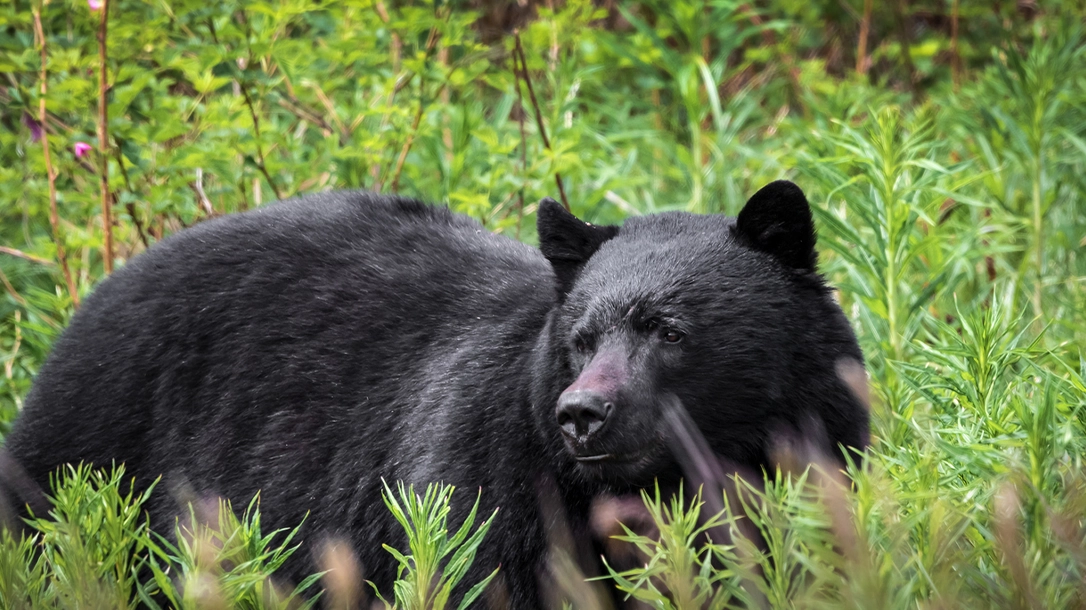
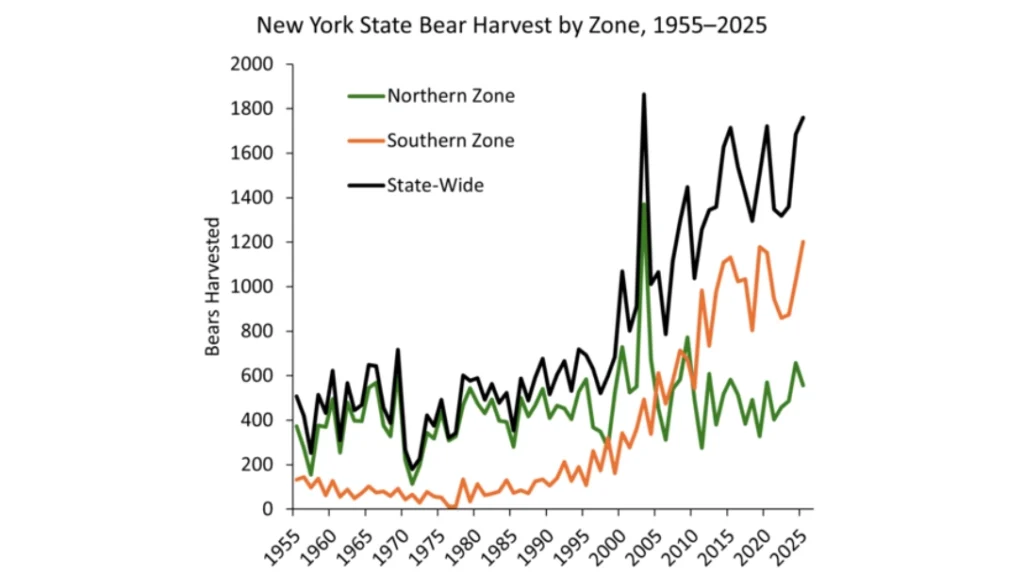
In New York state, black bear harvest numbers were healthy in all regions, with the Southern Zone harvest being the highest recorded since DEC began monitoring it in 1955. Overall, hunters in the Empire state harvested an estimated 1,759 black bears during the 2025 hunting seasons. That is an estimated four percent more filled tags than the 2024 season and substantial 18 percent above the 10-year average.
The Southern Zone saw 1,202 bears taken,which was a huge percentage of the overall tags filled. The recovery and growth of New York’s bear population is testament to DEC’s careful management, which helps maintain populations at levels that provide sustainable hunting opportunity and that are acceptable for local communities.
Habitat, Food Sources, and Bear Growth
One of the driving forces behind the Southern Zone’s success is habitat diversity. Agricultural crops, hardwood forests, and edge habitat provide high-calorie food sources like apples, acorns, and planted corn. This allows bears in the Southern Zone to grow faster and reach harvestable size more quickly than their Northern Zone counterparts.
That abundance can come with trade-offs. While Southern Zone bears may grow larger at a younger age, they often experience higher harvest pressure and lower overall lifespan compared to Northern Zone bears living in more remote, less accessible terrain.
Advertisement — Continue Reading Below
Bear Harvest Numbers By Zone
In the Northern Zone, the harvest estimate of 557 bears was slightly lower than 2024, but still above the 10-year average.
The record-setting season in the Southern Zone didn’t happen overnight or by accident. It’s the result of decades of steady expansion in New York’s black bear population. Back in the 1950s, bears were largely confined to the most remote, rugged terrain, including the Adirondacks, Catskills, and Allegheny Mountains. Since then, their range has gradually spread across the state, prompting DEC to open additional areas to bear hunting along the way.
Today, black bears occupy nearly all of New York, with the exception of Long Island, and hunting opportunities exist statewide anywhere big game seasons are open. Nowhere has that growth been more evident than in the Southern Zone. It first surpassed the Northern Zone in total harvest back in 1998, and for the past two decades, it has consistently accounted for the majority of the state’s bear harvest.
Bear Populations in New York
While bear populations and hunting opportunities have increased in the Southern Zone, the Northern Zone remains a traditional destination for many New York bear hunters. Northern Zone bears typically grow slower in the wilderness ecosystems of the Adirondacks, but tend to survive to older ages than their Southern Zone counterparts. All but one of the oldest bears on DEC record were taken in the Northern Zone.
Advertisement — Continue Reading Below
Notable Numbers from the 2025 Bear Season:
- 74: The number of Wildlife Management Units (WMUs), out of 88 open to bear hunting, with reported 2025 bear harvests.
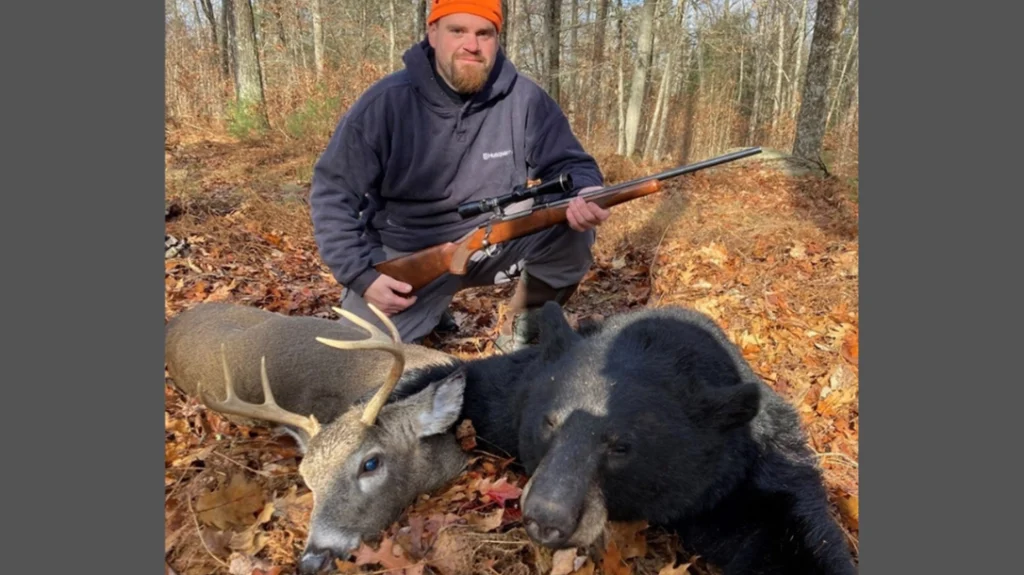
- 562 pounds: The dressed weight of the heaviest 2025 reported bear, harvested in the town of Olive, Ulster County, WMU 3C.
- 668: The number of harvested bears from which DEC received pre-molar teeth to determine the bear’s age in 2025.
- 26 years: The age of the oldest bear harvested in 2024 (the most recent year for which age data are available). The bear was harvested in the town Mooers, Clinton County, WMU 5A.
- 21: Bears harvested per 100 square miles in WMU 3C, the highest harvest density of any WMU for the 2025 seasons.
Black bear harvest data are gathered from two main sources: harvest reports required of all successful bear hunters and the physical examination of bears by DEC staff, cooperating taxidermists, and meat processors. Harvest estimates are made by cross-referencing these two data sources.
WHY OUR ARTICLES/REVIEWS DO NOT HAVE AFFILIATE LINKS
Affiliate links create a financial incentive for writers to promote certain products, which can lead to biased recommendations. This blurs the line between genuine advice and marketing, reducing trust in the content.