Have you ever heard of the chaga mushroom? For many hunters, foragers, and northern outdoorsmen, chaga hunting is a wintertime staple. Chaga is a hardy fungus that grows on birch trees, can only be harvested during specific times, and is used for its potential wellness benefits.
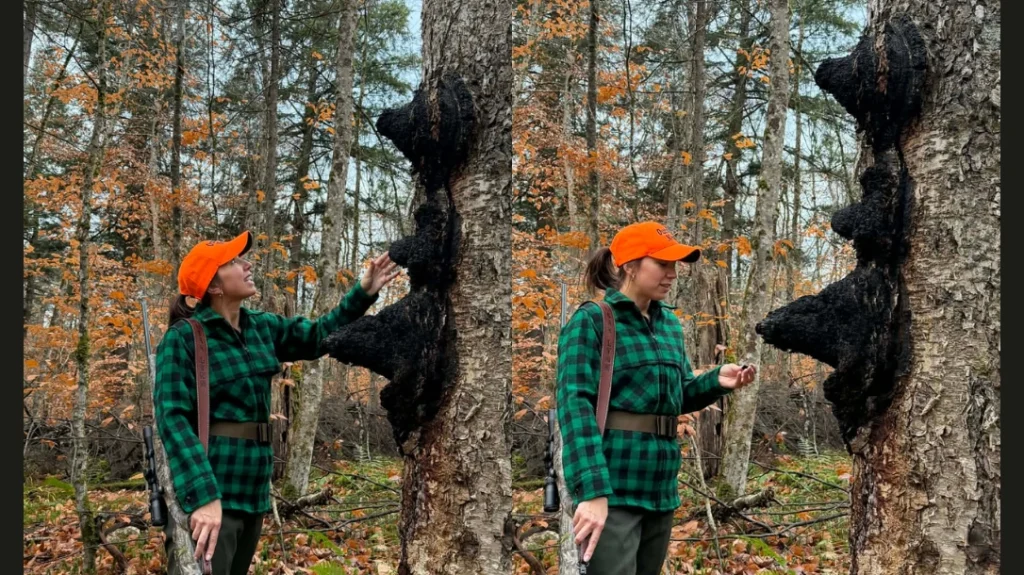
While whitetail hunting this past rifle season deep in the Adirondack Mountains of Upstate New York, I came across a huge chaga mushroom. Chaga thrives in cooler weather climates such as the Northeast region of the country, parts of the Midwest, Canada, and much of Northern Europe. The best time to harvest chaga is late fall through winter, ideally after a few consecutive nights below forty degrees Fahrenheit. Once spring arrives and the sap begins flowing, it is time to leave the chaga mushroom alone until colder temperatures return.
Identifying the Chaga Mushroom
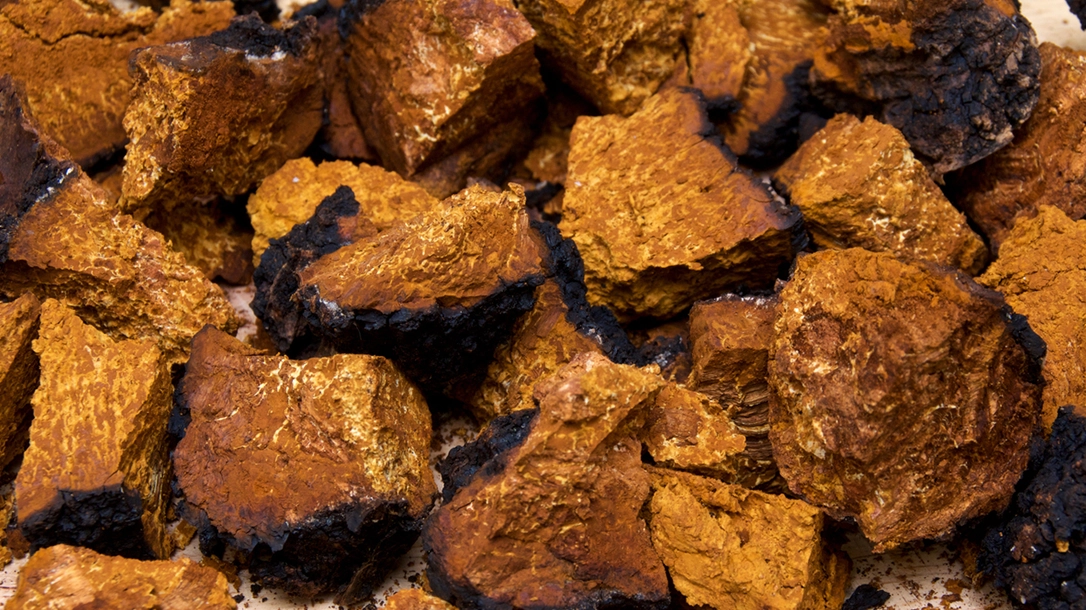
Chaga looks like a black irregularity on live birch trees, usually either yellow birch or paper (white) birch. The dense, woody growths of chaga are called conks. They are black in color and look similar to charred or burned wood. They will feel hard to the touch. This hard exterior protects a more spongy interior that ranges in color from deep orange to rusty gold.
Many mushrooms have toxic lookalikes. Chaga doesn’t have a poisonous twin cousin, but it only grows on birch trees. Make sure you are positively identifying the trees. Birch trees have a papery bark that peels easily. Even though there is no toxic counterpart to chaga, always be 100 percent sure of the identification of any foraged mushroom before harvesting and/or consuming it. If you aren’t 100 percent sure, err on the side of caution and do not consume it.
Harvesting Chaga
When harvesting the nutrient-dense fungi, cut it from the tree carefully, but make sure to leave at least twenty percent of the conk behind, so it can survive and continue to grow.
Advertisement — Continue Reading Below
Cut only into the conk, don’t cut deeper into the wood of the tree. Chaga is a slow-growing mushroom that takes years to mature, so don’t take it unless you will use it. No need to waste good chaga.
After Harvest
The next step is to dry the chaga properly to prevent mold. Start by breaking it into small chunks. Spread them out on a flat surface and allow them to dry near a mild heat source for several days. A sunny window or woodstove works great. Be patient and let the chaga dry fully.
Once fully dried, store chaga in breathable containers like paper bags or baskets covered with cloth, not airtight plastic bags! No ziplock here.
Chaga Benefits
Chaga is said to have a wide range of properties, including immune system support and anti-inflammatory effects.
Advertisement — Continue Reading Below
Several studies have examined compounds found in chaga for their ability to slow tumor growth and inhibit certain cancer cells in laboratory settings. While these findings are promising, researchers emphasize that more study is needed to fully understand chaga’s effectiveness.
One of the easiest ways to consume chaga is by brewing a chaga tea.
Instructions
- Break chaga into 1-inch chunks
- Add a handful to a 1-liter pot of water
- Bring to a boil, then reduce to a simmer
- Simmer for at least one hour, until the water turns a rich reddish-brown
- Strain into a mug and sweeten to taste