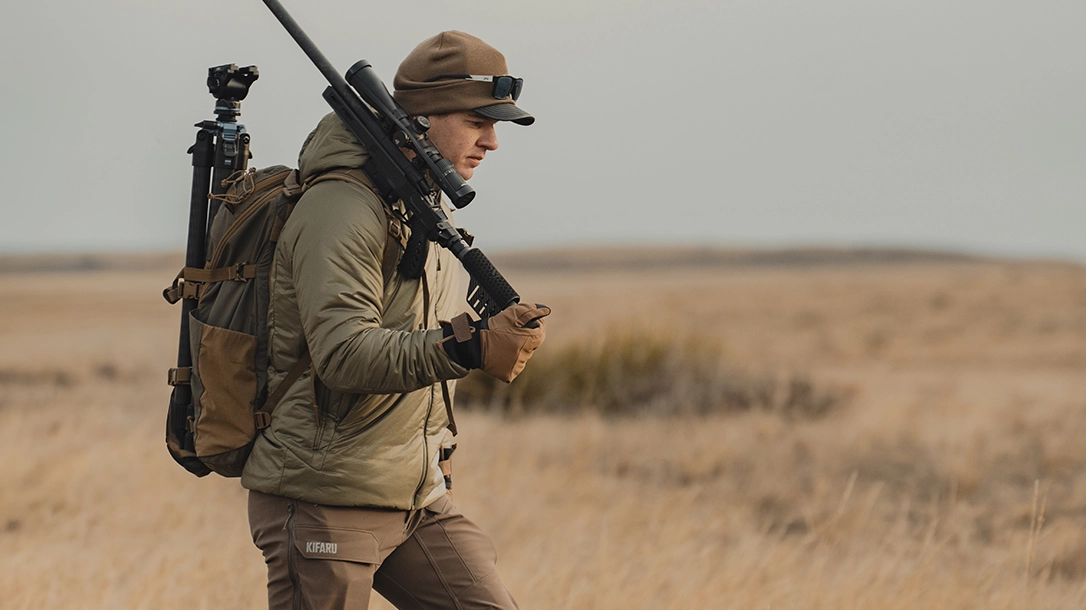
Since 1997, Kifaru has built its reputation on producing uncompromising gear for the harshest backcountry conditions. This March, the Wyoming-based brand expands that legacy with the launch of its first complete hunting apparel system — applying the same durability, functionality, and purpose-driven design that made its packs an industry benchmark.
Built from the ground up, the new system prioritizes real-world performance over trend-driven aesthetics. Each piece reflects a focused approach to materials, fit, and construction, emphasizing mobility, durability, and practical usability in demanding environments.
“A true hunting apparel system was a natural extension of what we’ve already built here at Kifaru,” said Aris Sergakis, Apparel Design Director. “This system is a purpose-driven solution for the tough environments and unpredictable scenarios outdoor enthusiasts encounter. Every piece was designed to help hunters meet those challenges head on.”
Spike 150 Merino Layers
The Spike 150 collection forms the foundation of the system. Built from 17.5-micron, long-staple ultrafine merino wool, these 150-weight layers regulate core temperature, resist odor, and provide next-to-skin comfort during high-output pursuits.
Athletically cut raglan sleeves and flatlock seams enhance durability and comfort, while the hoodie version includes a low-profile hood and thumb holes for added concealment and sun protection.
Advertisement — Continue Reading Below
Temperature Range: 45–80+ degrees
Colors: Wallow, Steppe, Bur
MSRP: $95 (Short Sleeve Crew) | $130 (Long Sleeve Hoodie)
Roam Crosslayer
Designed as either an active midlayer or early-season outer layer, the Roam Crosslayer combines softshell durability with grid fleece insulation in a single woven construction — eliminating bulk while maintaining weather resistance.
Wind- and water-resistant with a PFAS-free DWR finish, it offers stretch, abrasion resistance, and breathable comfort. Seamless shoulders, dual-zip kangaroo pockets with mesh venting, and a low-cut shooter’s neckline add field-focused functionality.
Temperature Range: 40–75 degrees
Colors: Wallow, Steppe, Bur
MSRP: $180
Passbreaker Pant
The Passbreaker Pant is a versatile four-season option built for mobility and durability across changing conditions. Constructed from 100% recycled polyester with a double-weave stretch fabric, it balances toughness with comfort.
Advertisement — Continue Reading Below
Features include cargo storage, zippered side vents with mesh, articulated knees, and knee pad compatibility.
Temperature Range: 40–75 degrees
Colors: Wallow, Steppe, Bur
MSRP: $170
Torlander Pant
For colder and more severe conditions, the Torlander Pant delivers 3-layer softshell protection. Its hydrophobic shell, laminate membrane, and micro-grid fleece backer provide wind and weather resistance while maintaining mobility.
With calf-length venting, multiple cargo pockets, included knee pads, and suspenders, the Torlander is built for late-season hunts where durability and protection matter most.
Temperature Range: 20–50 degrees
Colors: Wallow, Steppe
MSRP: $300
Advertisement — Continue Reading Below
Pointe Synthetic Puffy Jacket
The Pointe Puffy Jacket offers lightweight, packable insulation for unpredictable weather. Featuring a windproof 20D ripstop nylon shell and PrimaLoft® Gold insulation, it delivers warmth even in wet conditions without excessive bulk.
Strategic venting allows hunters to regulate heat during movement, while internal mesh pockets and packable storage make it easy to stow when not needed.
Temperature Range: 20–50 degrees
Colors: Wallow, Steppe, Bur
About Kifaru
Founded in 1997 and headquartered in Riverton, Wyoming, Kifaru pioneered the concept of American-made backcountry hunting packs. The company continues to design rugged, field-proven gear built to perform in demanding environments.
Advertisement — Continue Reading Below
WHY OUR ARTICLES/REVIEWS DO NOT HAVE AFFILIATE LINKS
Affiliate links create a financial incentive for writers to promote certain products, which can lead to biased recommendations. This blurs the line between genuine advice and marketing, reducing trust in the content.