Ice fishing is a rugged sport that depends on cold weather. But humans are not made to stand out in the elements for that long. That is why ice fishing shanties, or structures, were invented. And while hearty anglers are mostly participating for fun these days, it started as a survival mechanism.
For thousands of years, Indigenous peoples across the northern regions of North America relied on ice fishing for food in the winter, using hand-carved spears and holes chipped through frozen lakes to harvest fish.
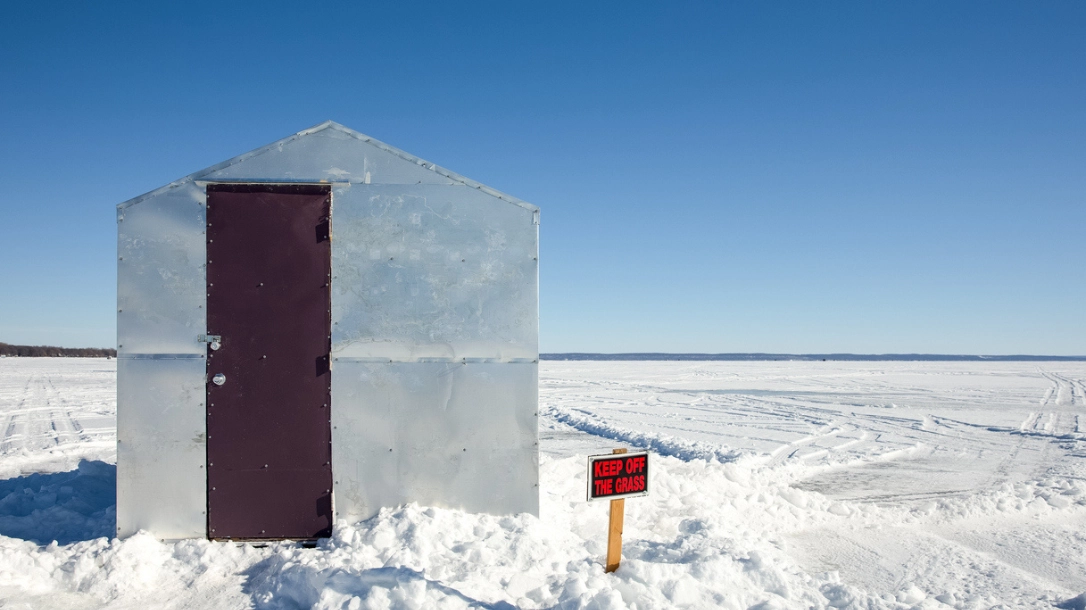
Over time, anglers learned that blocking wind and light dramatically improved comfort and success. Early shelters, usually simple wooden huts eventually evolved into insulated shanties that allowed communities to gather on the ice. By the late 1800s and early 1900s, wooden ice shanties became common across the Great Lakes, New England, the Upper Midwest, and Canada. These were often heavy, box-style huts. Some were mounted on skis or logs, others dragged into place by horses or snowmobiles.
In some regions, these winter fishing areas grew into small, seasonal “villages” that remained intact throughout the winter.
Ice Fishing Shanty Evolution
Anglers have come a long way since makeshift wooden shacks on the ice. Around the 1960’s portable wood and tent-like shelters came onto the market. Inventor Dave Genz introduced the first ever portable flip-over shelter in the 1980s. This was called the Fish Trap.
Advertisement — Continue Reading Below
By integrating a sled, seating, and shelter into one unit, Genz changed how anglers approached mobility on the ice. In 1992, Genz joined Clam Corporation, making Clam the leading ice fishing shelter company in North America by 1993.
In the late 1990s and early 2000s, hub-style shelters emerged, borrowing concepts from camping tents but adapting them for frozen environments. This new design was easier to set up and transport while also allowing much larger interior space than the flip-over sled style designs.
In 2007 Clam is the first company to use thermal trap insulation to make their shelters warmer and tougher than ever. The two major styles of ice shelters nowadays are sled-style or flip-over style and the hub-style.
Flip-Over Style Shanties
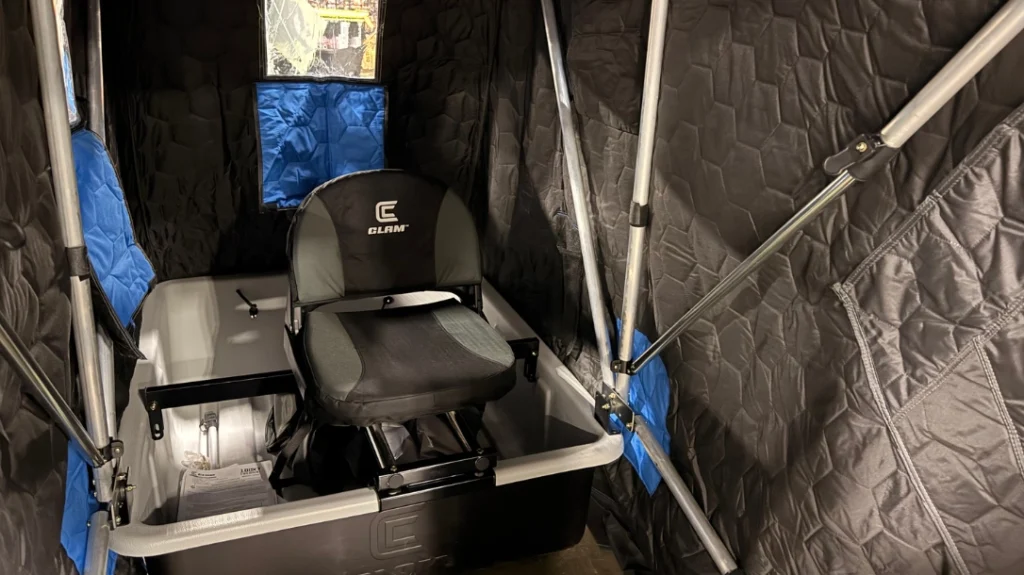
A flip-over or sled-style ice shanty that utilizines a sled with an aluminum frame as the base, with a lightweight nylon or similar material that flips up and over for a cover. The major benefit of a flip over style is transportation and ease of use.This design provides built-in seating, plenty of storage in the sled area, and a set up time of approximately a few minutes. There is less gear to haul around the ice because the shanty is designed to be an all-encompassing setup. The most common complaint with the flip-over style is that they only seat one or two people and does not offer a lot of space to drill multiple holes. The weight also can be an issue compared to a hub-style which is more compact and lighter.
Advertisement — Continue Reading Below
Pros
- Extremely fast setup
- Built-in seating and gear storage
- Great for solo anglers or one partner
- Easy to tow and ideal for hole-hopping
Cons
- Limited space (typically 1–2 anglers)
- Heavier to transport
- Less room for multiple holes or larger groups
Hub-Style Shanties
The hub-style ice shanty is similar to a tent, with a polyester or nylon fabric outer shell on an aluminum frame. The outershell is often treated with a waterproofing coating to keep moisture out. There are also thermal or insulated versions, which prevent more heat loss and increase comfort while ice fishing. These thermal fabrics are heavier but significantly warmer, making them popular for long days or extreme cold.
Hub-style ice shanties are fairly quick to set up, lightweight, and spacious. They can easily accomodate two anglers. Larger versions can even accomodate up to eight people and gear.
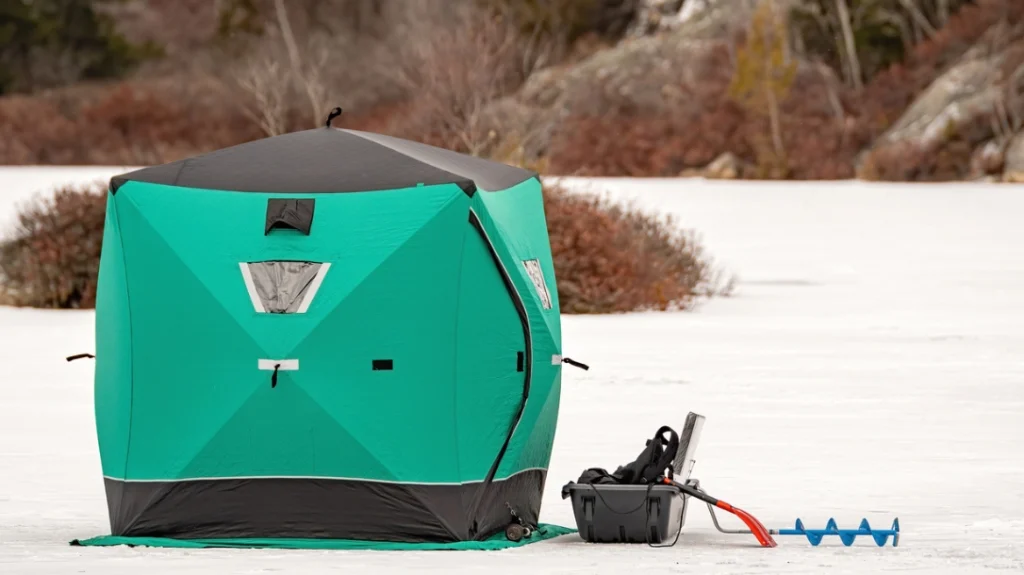
One key factor of a hub-style shanty is the ability to customize your floor pan for each outing. Because it is an open floor plan, you get to arrange it however it makes the most sense for that day. This also allows you to put your ice fishing gear in a seperate sled. Having the shelter separate from your sled will allow you to pick and choose which gear you bring with you on the ice for each trip and have much more storage room in your sled for other gear.
Pros
- Lightweight and compact
- Quick setup and teardown
- Plenty of room for multiple anglers and holes
- Flexible gear customization
Cons
- Requires separate sled and seating
- Slightly longer setup than flip-overs
- Less mobile once set up
WHY OUR ARTICLES/REVIEWS DO NOT HAVE AFFILIATE LINKS
Affiliate links create a financial incentive for writers to promote certain products, which can lead to biased recommendations. This blurs the line between genuine advice and marketing, reducing trust in the content.
Advertisement — Continue Reading Below