Up here in Michigan when the water temps are below 32 degrees Fahrenheit, our fishing season changes from chasing fish by casting to jigging through the ice for our target fish. According to the U.S. Coast Guard, the ice thickness must be at a minimum of 2 inches to safely support one angler for ice fishing. Personally, I wait until we have a minimum of 4 inches to be on the safer side.
Beware that thickness will vary on all areas of a lake as well. Some areas may be 4 inches while other areas may be 2 inches. This is due to many factors including moving waters, previously broken ice or even wildlife interference. Either way, first step of ice fishing is always safety. That being said, the second step of ice fishing is checking your gear and checking the ice. Let me break down the steps from first starting to getting on the ice and catching some fish!
Ice Fishing Gear
Like any new hobby or sport, you want to do your research before buying every piece of gear that may not be right for you. Having ice on the lakes means it’s cold, so first step is getting cold weather gear to ensure your safety from the temperatures and possible wetness. Make sure you have solid waterproof boots since the top layer on the ice is usually wet with melted snow. Warm socks and boots that are dry are very important. I use the Frabill Ice Hunter suit since the bibs and jackets are warm, waterproof and provide plenty of safety features such as integrated ice spikes in case of falling in and needing to climb out of the ice. Once you are warm, waterproof and safe with your clothing, next step is the safety gear for the ice itself.
Checking The Ice
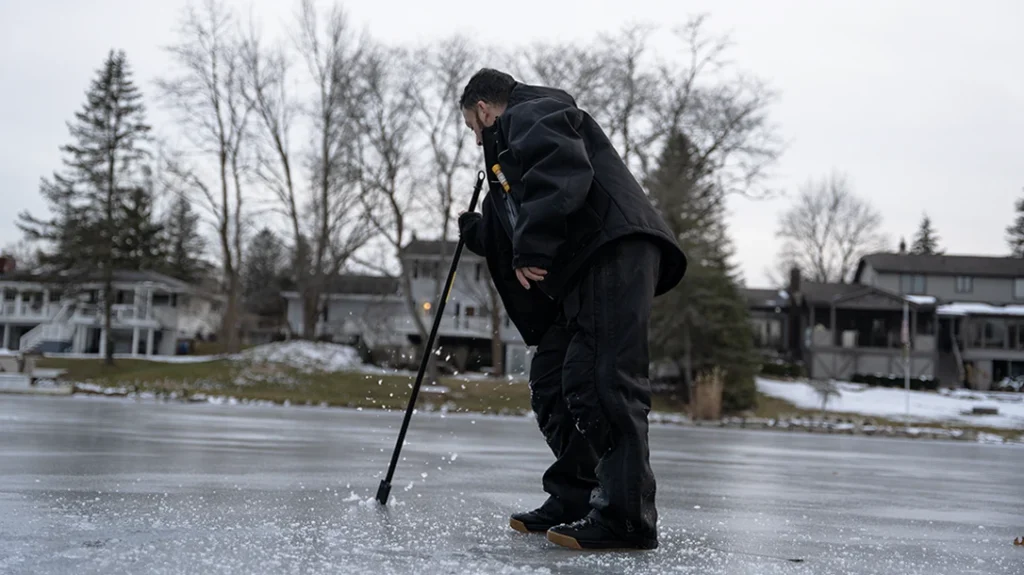
A “spud” or ice chisel is the first piece of gear you should use when going ice fishing. This long and heavy steel bar is equipped with a sharp chisel at the end to stab into the ice and check for the thickness as you walk. You stab at the ice ahead of you before each step to make sure that you have a safe thickness to walk and fish on. This is a very important first step that can determine whether or not you should be even on the ice that day.
Advertisement — Continue Reading Below
Next step is a solid sled to haul your gear. Do not get caught trying to carry all of your gear as you walk out. It usually will end up with you dropping things or having to set your gear in the snow. The sleds will help you slide the gear out to your spot and also give you a dry area to keep your belongings. An unexpected issue you can have without a sled is your gear will freeze into the ice itself. This is the easiest way to break a small and fragile ice fishing rod when trying to free it from the frozen ice after setting it down for a period of time.
Rod & Tackle
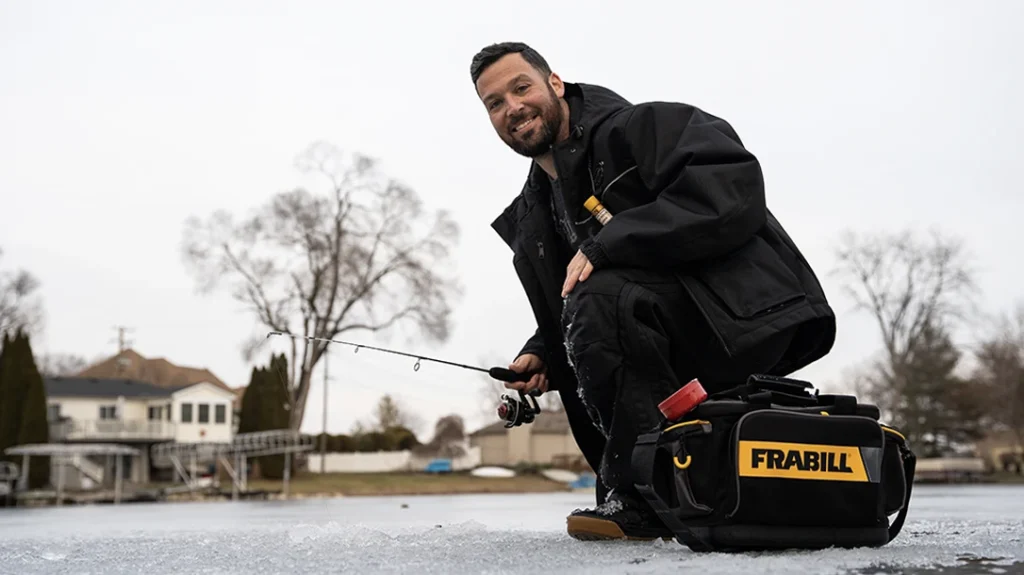
Lastly, your rods and tackle. I mostly use 24” -26” ice rods for a mixture of strength and sensitivity. On the end of my ice line, I’ll tie on a teardrop jig head with a DMF bait wax worm on the end. The reason we use tiny jig heads and small worms for ice fishing versus the larger tackle that we use in the warmer months is due to two main reason. Firstly, the fish are in freezing water temps and this changes their behavior dramatically. The fish have a tougher time with digestion so the smaller meal will be much more attractive for them versus a larger meal that they wouldn’t be able to digest or metabolize. Secondly, since they slow down their movement so much in the cold waters, not having to chase a meal and being able to grab an easy target is very helpful.
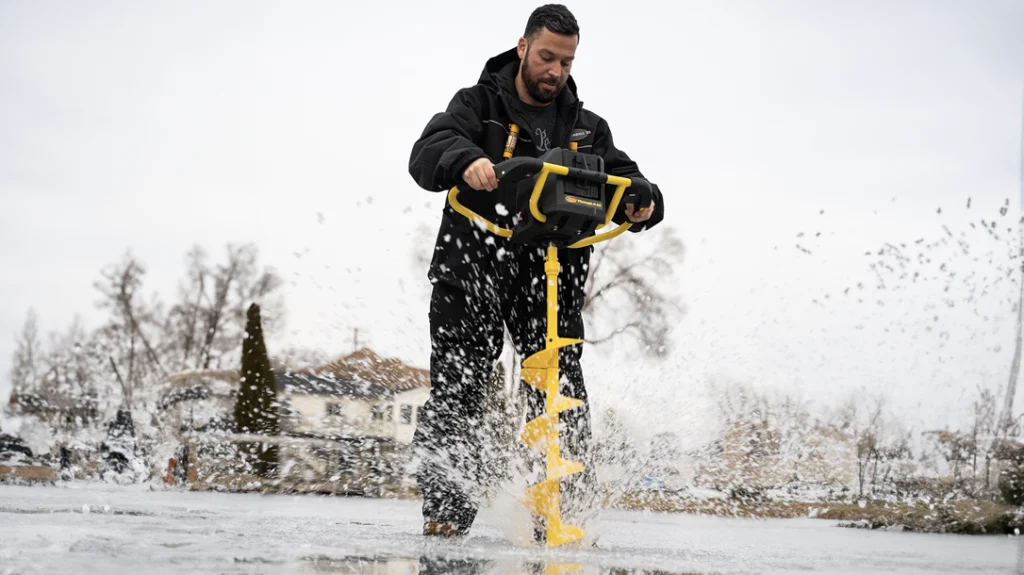
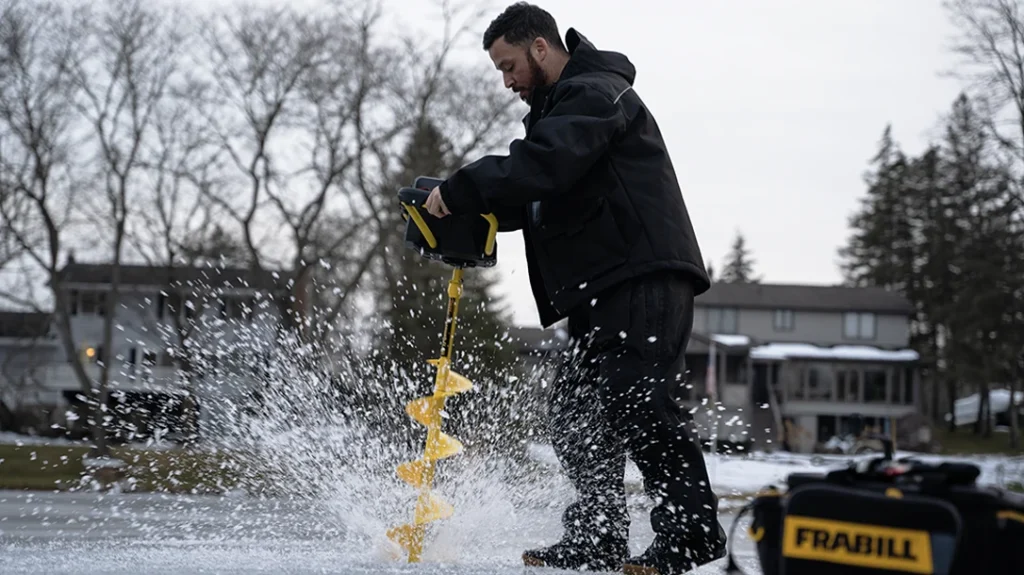
Now that you have all the gear you need to hit the ice, grab a trusty auger to drill your holes and an ice scoop to clean it out and you are all set! I use an electric 8” or 10” auger depending on what species I am fishing for. You don’t want to drill a 6” hole and then try to pull out a larger fish that you find out will not fit.
Advertisement — Continue Reading Below
Ice fishing can be a whole lot of fun and a good way to spend some time with your friends and talk while you fish. I think you will find that it is very different than open water fishing and has some benefits for sure. Go out with the mentality that you just want to have a good time and you will never be disappointed. Safety first, then fishing second.