Has the 12-gauge reign come to an end? With the introduction of Tungsten Super Shot (TSS), the 12 gauge is getting some stiff competition. The rules have been turned on their ear, and waterfowlers are flocking (pun intended) to the sub gauges, which are now becoming commonplace in many duck blinds and goose pits. Although the 12 gauge offers the advantage of massive payloads, many waterfowlers are finding sub-gauges effective and, more importantly, humane, while remaining easy on the shoulder.

Downsizing the Gauge for Waterfowl – Modern Hunting
A standard 12-gauge steel shotshell with a 3-inch shell has a payload of 1 1/8 oz. For this example, we will look at size #2 shot, which is a standard for many waterfowlers. The steel pellet has a density of 7.8 grams per cubic centimeter, which is rather light when compared to lead, bismuth, or TSS.
Due to the extreme density of TSS, which is more than 2 ¼ times denser than steel shot, the size of TSS shot can be reduced and still retain more than enough energy to humanely dispatch ducks or geese. The smaller pellet retains more energy than the much bigger pellet. Testing in ballistic gelatin shows that a #9 TSS pellet will outpenetrate the much larger #2 steel pellet.
The Numbers
Another advantage of the smaller TSS shot is that there are more pellets in the shot cup. The steel loaded with #2s will hold about 141 pellets. The same 1 1/8oz loaded with TSS #9s will have 362 pellets, more than 2 ½ times the amount of the #2 steel.
Advertisement — Continue Reading Below
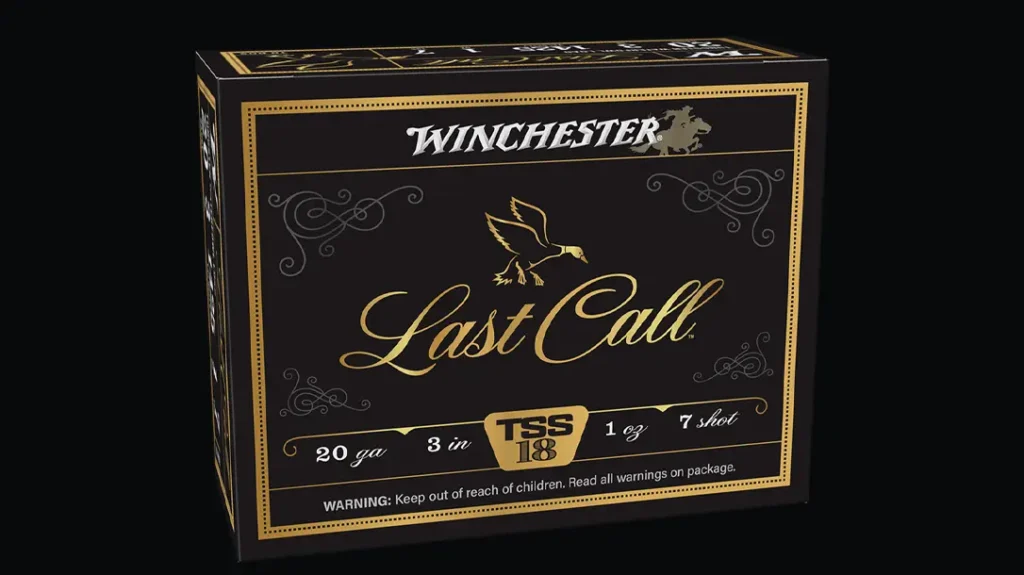
Boutique shell companies have been custom-loading TSS for many years, and now the major ammunition companies have started loading TSS, as well as blended ammunition, which is a combination of TSS and larger steel pellets. The blended ammo is a cost-saving effort, as TSS is rather expensive to shoot.
A Pros Take
Foster Bartholow, Winchester pro staffer and co-host of Premier Outdoors, is a big proponent of sub-gauges and regularly hunts geese with a .410. Bartholow is also a world-class trap shooter and shoots more in a summer than most waterfowlers will in a lifetime.
“For sub-gauge waterfowl hunting, no question, TSS is a must when you see the patterning performance. As you start getting down into the sub-gauges, TSS is perhaps the most ethical shot you can use,” says Bartholow. “If you are planning on using a sub-gauge on waterfowl, go to the range and figure out the leads you need to be the most ethical hunter you can be. I could not believe the difference between the 12 gauge and the .410 as far as leads. It was almost double the lead using the .410 even at 20 yards because the round is much slower.”
You will have to do a little homework. Many of the sub-gauge loads are a bit slower than the 12 gauge, but the extra density of the TSS and the pattern more than make up for the slight speed advantage of the 12 gauge.
Advertisement — Continue Reading Below
TSS-Not for All Shotguns
TSS is much harder than steel and can damage the inside of the barrel by scratching and scoring it. The results are not good. How do you know if your barrel can handle TSS? If the barrel is safe for steel loads, it is safe for TSS.
Choke constriction also needs to be explored by patterning the shotgun with the load you are planning on using and a variety of chokes. One to two sizes is the recommended starting point.

Downsizing the Gauge for Waterfowl
So, is the 12-gauge being replaced? I’m not ready to give up my 12 gauge just yet, but this year I did spend a morning in the duck blind with a 20 gauge loaded with TSS.
Check out this article!: Which Choke To Use For TSS
Advertisement — Continue Reading Below
For more info, please visit Winchester.
WHY OUR ARTICLES/REVIEWS DO NOT HAVE AFFILIATE LINKS
Affiliate links create a financial incentive for writers to promote certain products, which can lead to biased recommendations. This blurs the line between genuine advice and marketing, reducing trust in the content.