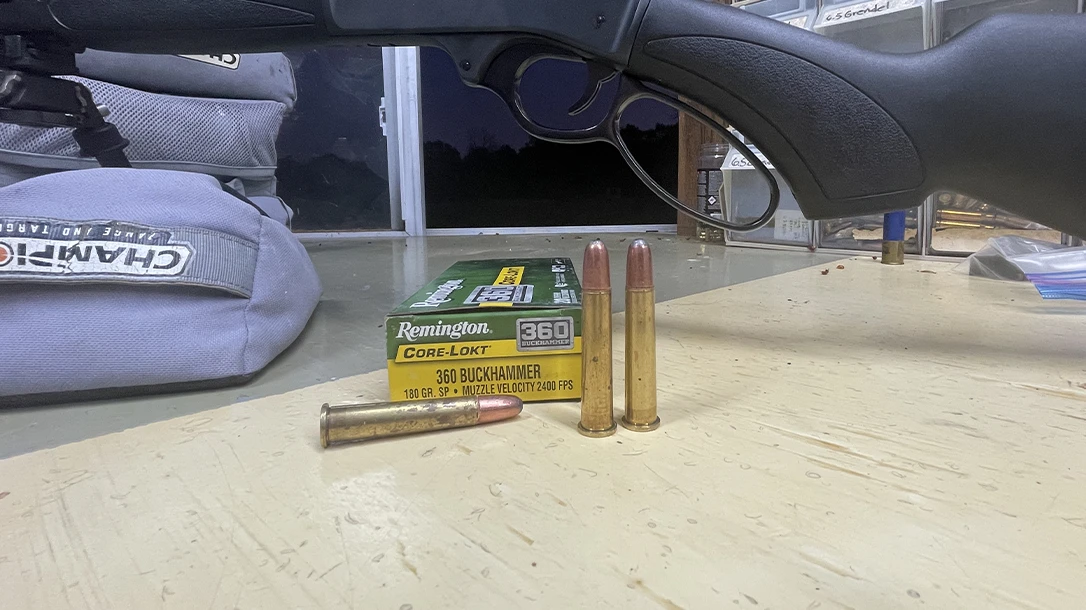
The .360 Buckhammer is one of those rare introductions that instantly makes sense. It consists of a rimmed and straight-walled cartridge whose parent case is the classic .30-30 Winchester. Like its great ancestor, the .360 Buckhammer is optimized for lever guns. It’s also legal for hunting within those states that now permit straight-wall cartridges for deer season.
Henry Repeating Arms moved quickly to embrace the .360 Buckhammer. The company offers multiple lever-action configurations that play to the round’s strengths while giving hunters a familiar, confidence-inspiring long-gun.
Henry’s .360 Buckhammer lineup includes the Steel Lever Action Side Gate, the more modern Lever Action X Model with synthetic furniture and additional trims. All Henry lever action models share the same core DNA. They include side-gate loading with a removable magazine tube, a smooth, robust action and sensible hunting ergonomics.
The Steel Lever Action variant keeps the classic look with a walnut stock, some blued steel, a 20 inch barrel and adjustable iron sights. Henry X Models add practical upgrades for contemporary hunters. X Model wear durable synthetic furniture, and their fore-ends include M-LOK slots along with a short Picatinny rail section for a bipod or light. More importantly, its muzzle is threaded with ⅝ × 24 TPI in order to accept various muzzle devices . Both of these Henry-produced rifles use a 1:12 twist to stabilize the common .358-caliber bullets found in .360 Buckhammer loads. Typically, tubular magazine capacity runs to five in the tube.
.360 Buckhammer Origins
Advertisement — Continue Reading Below
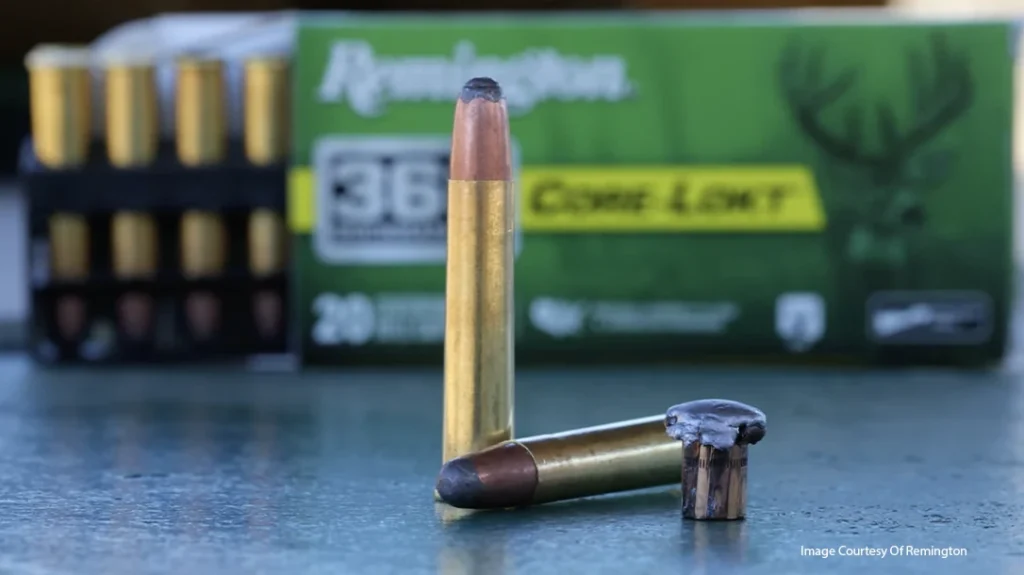
The .360 Buckhammer cartridge was developed by Remington to extend the useful envelope of straight-wall rifle cartridges in deer woods.
Back in July of 2021, I got a preview of the cartridge at Remington’s ammunition plant. That’s where I met Rick Buckmaster, an ammunition engineer at Remington Ammunition for many decades.
Joel Hodgdon, Remington’s Public Relations Manager at the time, shared the inside scoop on the creation of the cartridge.
“Rick retired in 2023 or so, but he led the 360 project which we referred to internally as ‘358 Buckmaster’ in his honor.”
“He spent decades leading ammo engineering projects at Remington. When time came to market and launch the cartridge, we rounded up to 360 to show the round’s difference in size vs 350 legend. We also changed “Buckmaster” to “Buckhammer” for copyright and marketing purposes. I haven’t kept up with Rick, but I hope he’s proud of the acceptance and love I’ve seen his namesake cartridge attain.”
Advertisement — Continue Reading Below
Remington introduced the .360 Buckhammer at the 2023 SHOT Show in Las Vegas. The Sporting Arms And Ammunition Institute (SAAMI) accepted it by January 15 that same year.
SAAMI max pressure for the .360 Buckhammer is set at 50,000 psi, a rather lively amount for a straight-wall rifle cartridge. Early factory loads centered on 180- and 200-grain Core-Lokt round-nose bullets with 20-inch barrel muzzle velocities of 2,400 and 2,200 fps respectively.
.360 Buckhammer Performance
The .360 Buckhammer sits neatly between the historical .35 Remington and modern .350 Legend. Besides working well in lever guns, the .360 Buckhammer carries better energy retention than the .350 Legend. Its other advantage over the .350 Legend is that the .360 Buckhammer uses the more common .358 diameter rifle projectiles rather than the .355 diameter bullets of the .350 Legend. As a result, the .360 Buckhammer enjoys a lot more options for bullets suitable for whitetails.
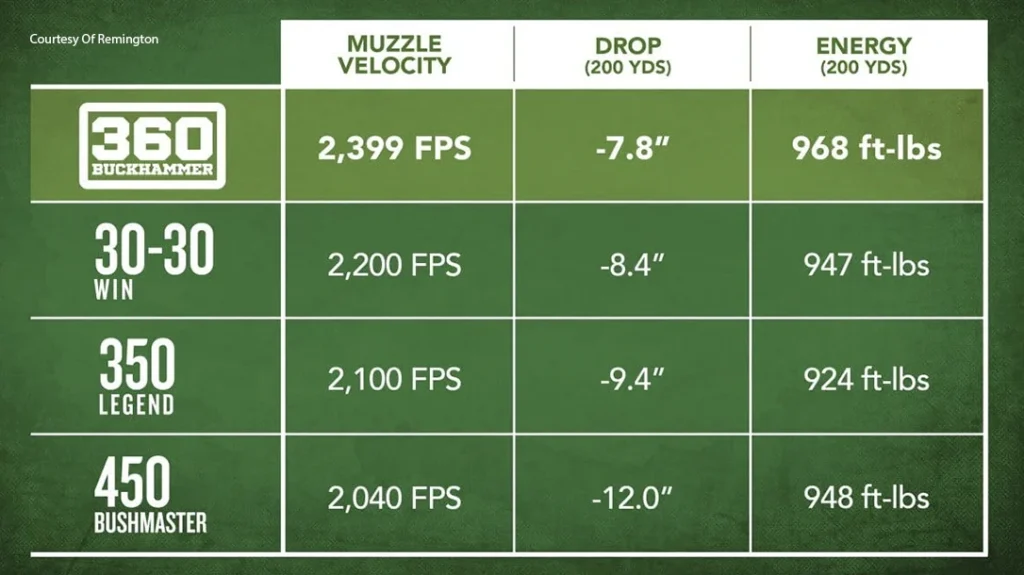
Practically speaking, the .360 Buckhammer gives ethical reach to 200 yards in the right hands. And it does so with a flatter trajectory than many legacy options. This makes the cartridge the sweet spot for most whitetail setups east of the Mississippi. Where the .360 Buckhammer makes the biggest difference is for hunters in “straight-wall states.”
Advertisement — Continue Reading Below
Over the past decade, several Midwestern and Eastern states that once mandated shotguns for deer have opened seasons to straight-wall centerfire rifles. The Buckhammer was purpose-built for that landscape. It offers rimmed-case reliability for lever actions and the trajectory to stretch confidently beyond 100 yards without drifting into magnum recoil or expense.
Are there downsides? Two come to mind. First, ammunition selection is still narrower than legacy .30-30 Winchester or .35 Remington. Remington led the charge with Core-Lokt, but broader bullet varieties (bonded, copper, polymer-tip) are still catching up.
Second, cost and availability can be cyclical for any new cartridge including the .360 Buckhammer. Neither is a deal-breaker, and both are likely to improve as adoption widens, but they’re worth noting if you like to buy a season’s worth of ammo whenever you pass a rural hardware store.
360 Henry X
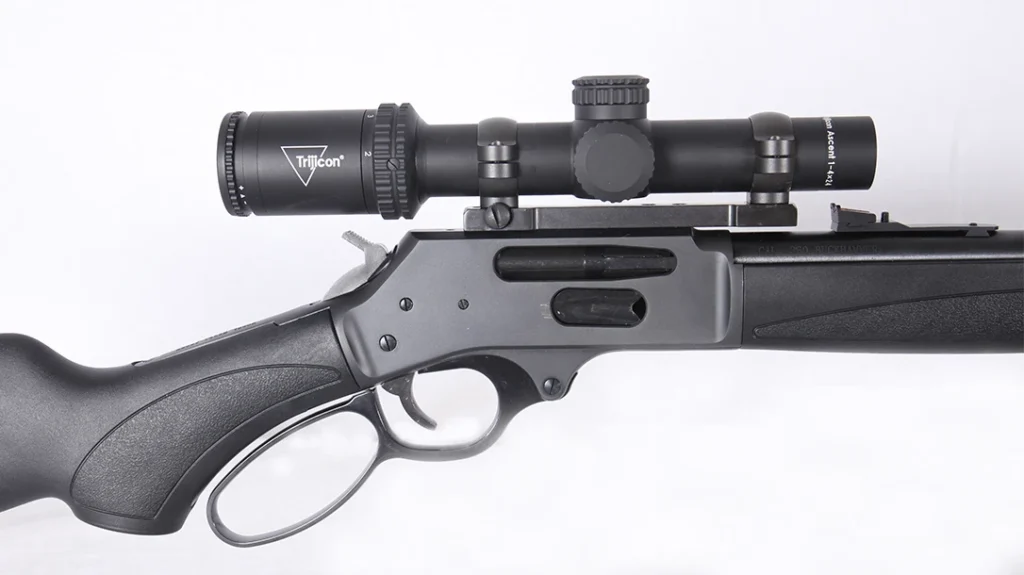
At the bench, Henry’s action remains the star. The side-gate loading system is genuinely useful: top-off the tube quickly from the gate, or unload safely via the removable magazine tube. This means not cycling live rounds through the chamber—ideal for tree-stand climbs or truck-to-stand transitions. Triggers on recent samples have been crisp enough for hunting work. Henry’s reputation for smooth cycling is intact. These rifles feed the rimmed Buckhammer case reliably, which isn’t a given with every lever gun brand.
Advertisement — Continue Reading Below
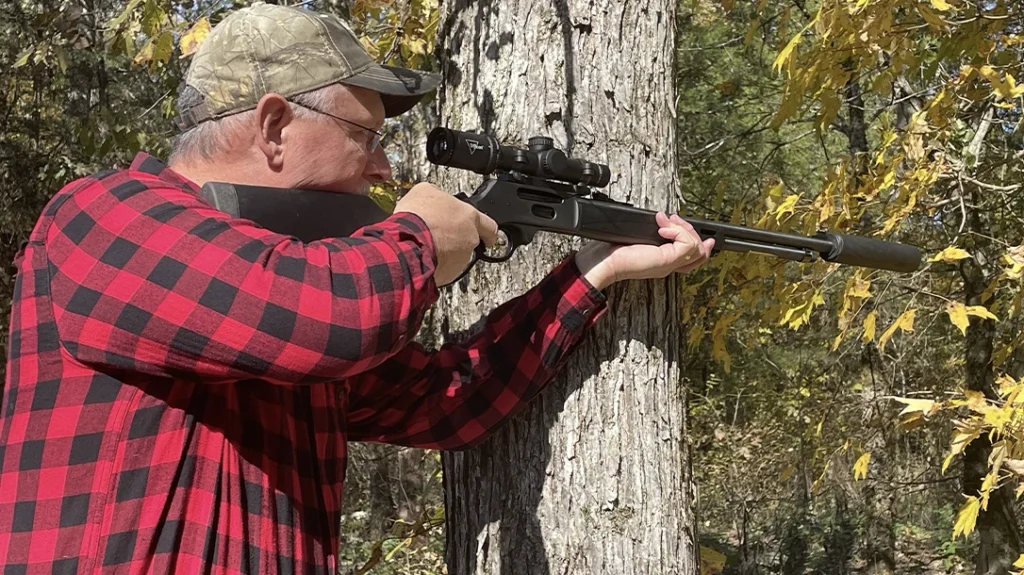
If you want the most traditional “Henry” experience, the Steel Lever Action Side Gate scratches that itch. It points naturally with its 20-inch barrel and provides the shooter a classic sight picture. If you favor modularity, the X Model is the clear pick. This gun lets you mount a low-power variable optic (LPVO) or a compact 1-5x without giving up backup irons. Attaching a sling isn’t fussy, nor is running a suppressor.
The Buckhammer/Henry pairing really shines out in the field. The round-nose Core-Lokt bullets are built for moderate velocities, open reliably, and carry enough weight for clean pass-throughs on broadside whitetails. Recoil from the Henry lever guns is firm but absolutely manageable—think “.30-30 plus” rather than “.45-70 lite.” The straight-stock geometry plus Henry’s recoil pad keep follow-up shots quick too.
In testing, I’m seeing groups in the 1.5–2.5 MOA range with factory ammunition, which is more than adequate for a 200-yard deer rig. My best 5-shot 100-yard group with the 180-grain Remington Core-Lokt measured 1.502 inches. That practical accuracy figure reflects both the cartridge design and Henry’s barrel quality.
Henry Configuration Details
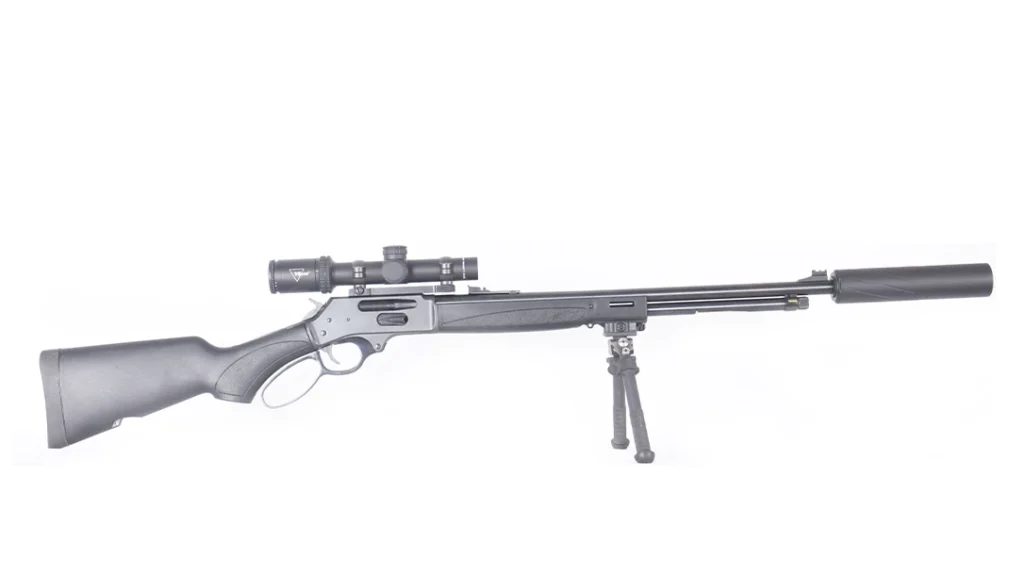
The Henry X Model’s factory threading makes it the more versatile do-all choice, especially if you plan to shoot suppressed or appreciate the option to tune recoil with a brake. Its fiber-optic irons and longer barrel give you a bright, fast sight picture and a hair more velocity. Its stock’s sling studs and accessory interfaces make it easy to set up for your style of hunting.
Advertisement — Continue Reading Below
Published retailer specs list the X Model’s weight around 8 pounds with a 5+1 capacity. There’s also its 1:12 twist and overall length just over 40 inches. I find it balances well with a lightweight scope.
The Steel Lever Action Side Gate model stays closer to the classic 20-inch profile and unthreaded muzzle. It is perfect if you prefer the timeless Henry look and intend to run a compact 2-7x scope or a peep sight.
On the Range & The Bottom Line
Checking velocities with a Garmin chronograph I found that actual velocity averaged 2,351 fps, which is about 50 fps slower than factory data. With a 100-yard zero this load will drop 2.4 inches at 150 yards, 7.7 inches at 200 and 16.7 inches at 250 yards. Although farther than I would consider shooting with this setup, the same zero sees the bullet drop 30.5 inches at 300 yards. Bullet impact energy and penetration are the biggest limiting factors on effectiveness on game, and I really like big game bullets to have 1,000 ft/lbs of energy left when they hit their intended target. This round drops below that threshold just shy of 200 yards.
For realistic whitetail distances inside of 200 yards, there’s little practical advantage to bulkier rifles or more exotic chamberings. Add an LPVO or a compact scope, zero two inches high at 100, and you’re holding mid-chest to the 175 to 200-yard mark with minimal fuss.
Advertisement — Continue Reading Below
Bottom line: Henry’s lever-action rifles in .360 Buckhammer deliver a near-ideal blend of classic handling and modern, straight-wall performance. If you hunt the hardwoods, prefer the speed and safety of a lever gun and want a legal and effective straightwall cartridge, this combo deserves a top spot on your shortlist.
WHY OUR ARTICLES/REVIEWS DO NOT HAVE AFFILIATE LINKS
Affiliate links create a financial incentive for writers to promote certain products, which can lead to biased recommendations. This blurs the line between genuine advice and marketing, reducing trust in the content.